President Trump just cut a deal giving America majority ownership of Venezuelan oil operations — and the same press corps that rubber-stamped blank checks for Ukraine is already pouring cold water on it.
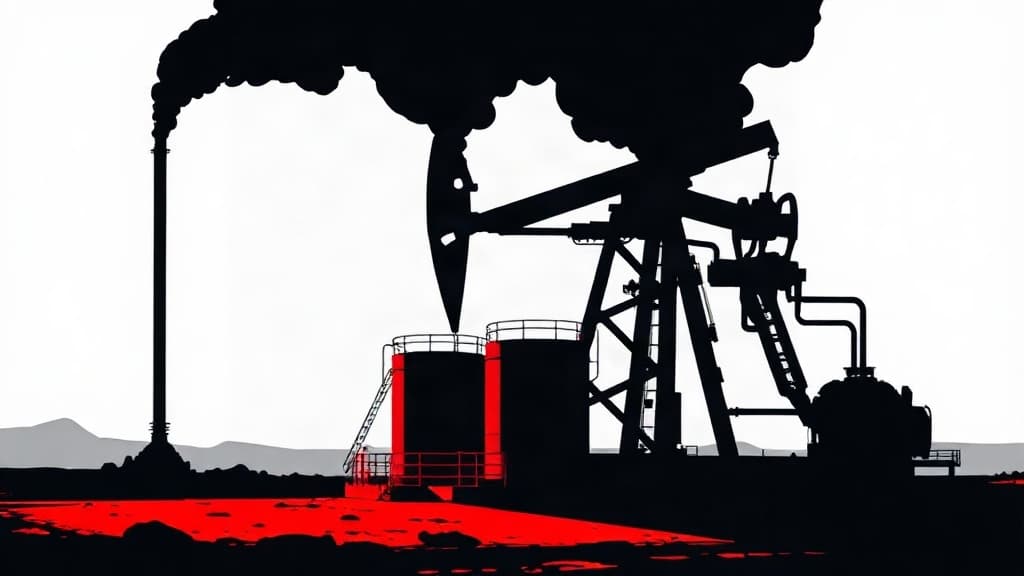
The stakes are direct for every American paying at the pump. The United States will take a 55% stake in a new joint venture with a Venezuelan energy operator under a 100-year lease, according to a White House official. The venture controls 65 billion barrels of proven reserves — more than doubling America's existing 46 billion barrels, per the Energy Information Administration. The new company becomes the world's second-largest by reserves, behind only Saudi Aramco.
This matters because American refineries were literally built for Venezuelan crude. The heavy, sour sludge from Venezuela distills into diesel, jet fuel, asphalt, and industrial oils — the fuel that moves trucks and flies planes. Most US refineries date to the 1970s, when Venezuela was a top supplier. America may be the world's largest crude producer, but its light, sweet crude doesn't fill that gap. Venezuelan oil flowing reliably makes those refineries more efficient and directly lowers costs downstream.
Cable News Network covered the deal but framed it cautiously — headlining that it "could benefit" both countries but "will take time." CNN emphasized Trump's prior failures to persuade oil executives and the difficulty of getting companies to invest. That's not wrong on the facts; companies have been reluctant. But notice the framing: when was the last time CNN hedged this cautiously about a foreign aid package with no audit trail?
The strategic case is plain. The Iran war disrupted roughly a fifth of global oil supply. The Strategic Petroleum Reserve sits at its lowest level since 1982. The US has become the supplier of last resort for countries cut off from Middle Eastern fuel. Venezuelan oil flowing reliably would refill the SPR and ease domestic pressure.
US imports from Venezuela have already quadrupled this year to roughly 600,000 barrels per day, making Venezuela the number-two source of imported crude behind Canada, according to the EIA. Full development of those reserves threatens competitors who profit from constrained supply. Every barrel of Venezuelan crude that stays in the ground props up prices for someone else.
Meanwhile, the non-business press can't be bothered. Sports Illustrated, given the opportunity to cover a deal affecting every American's energy costs, ran a story on Michigan football practice instead. The silence tells you what the establishment considers worth covering.
The deal faces real obstacles. Trump publicly bullied oil executives and struck multiple failed deals with Maduro's replacement Delcy Rodríguez before this breakthrough. Whether companies invest now that America holds majority control remains the open question — and the answer will determine whether working Americans see relief at the pump or more of the same.