President Trump swept into Marietta, Georgia, on Wednesday and told working Americans what the establishment press won't: the affordability crisis they're living through was built by the same uniparty that now weaponizes the word against him.
Trump dismissed "affordability" as a term concocted by Democratic consultants to attack his presidency, then spent the bulk of his speech at Wheeler High School making the case that his policies are the fix — not the cause. "So I just want you to remember that if you're paying a little bit more — a lot of it's come down now, we got it coming down very rapidly actually," Trump said, casting today's higher prices as a hangover from the Biden years. The Guardian framed this as Trump "scoffing" at affordability; Breitbart didn't touch the economic pitch at all, focusing instead on Trump's crowd-pleasing tease about a fourth presidential run.
Here's what matters for paychecks: the inflation that hammered American families didn't start in 2025. It started when both parties greenlit trillions in pandemic spending, the Fed kept rates at zero, and supply chains seized up under policies nobody in Washington took responsibility for. Now the same institutions point to a Washington Post-Ipsos poll showing just 33% approval of Trump's economy handling and declare the story settled. It isn't. Prices are still elevated because the damage was structural — and the people who did it are now lecturing Trump about affordability.
The president's substantive pitch was the newly funded "Trump accounts" — tax-free investment funds seeded with $1,000 from the federal government for every child born through 2028. Treasury Secretary Scott Bessent, speaking before Trump, called the accounts the "triumph of capitalism over socialism" and took a swipe at New York Mayor Zohran Mamdani: "In New York, the current mayor rose to power by repackaging failed ideals of the past as a moral cause of the future. But in Georgia, you know that beneath that youthful veneer lies the oldest impulse in politics which is to concentrate power and then to call it compassion."
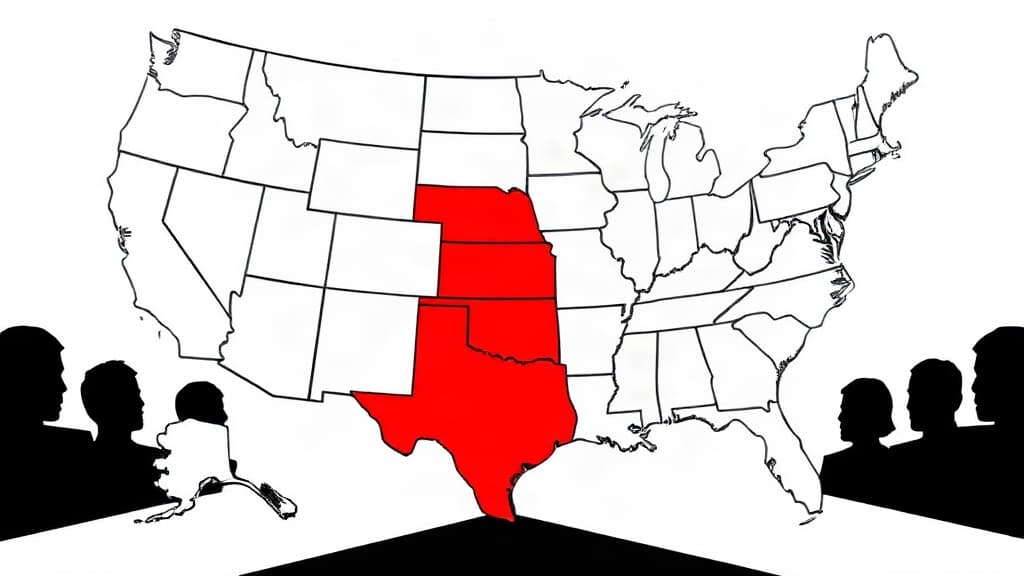
Georgia Republican governor candidate Rick Jackson — founder of Jackson Healthcare, with an estimated net worth exceeding $3 billion — pledged to ask the state legislature to match the federal $1,000 contribution. If they refuse, Jackson said he'd match it himself. Georgia recorded over 126,000 live births in 2024, meaning roughly $126 million in annual state contributions. The state sits on an unprecedented $15 billion budget surplus with $9 billion unrestricted — a cushion built on conservative budgeting since 2021. Republicans want property tax relief; Democrats want broader healthcare and childcare spending. That's the real affordability fight, and it's being waged over surplus dollars that already belong to Georgia taxpayers.
Meanwhile, the Senate race tells the story of bipartisan failure in real time. Republican nominee Mike Collins, a congressman, was stuck in Washington voting on a budget bill to fund the Iran war and other White House priorities — while his opponent, Democrat Jon Ossoff, campaigns freely in Georgia. Collins voted to send American money overseas; Ossoff campaigns on affordability at home. Both parties backed the war funding. The only question left is who pays for it.
Trump opened the rally with a troll — "I am here to announce my candidacy" — before pausing and adding, "I'm only kidding." He has previously pointed to Vice President JD Vance and Secretary of State Marco Rubio as a potential 2028 ticket, calling them "unstoppable" together. That's succession talk, not policy. The policy fight is right now: who created the mess, who's paying for it, and whether Trump accounts and tax relief are enough to dig out.
The establishment broke the price structure. Now it wants voters to blame the guy trying to fix it. Georgia will decide whether that sells.