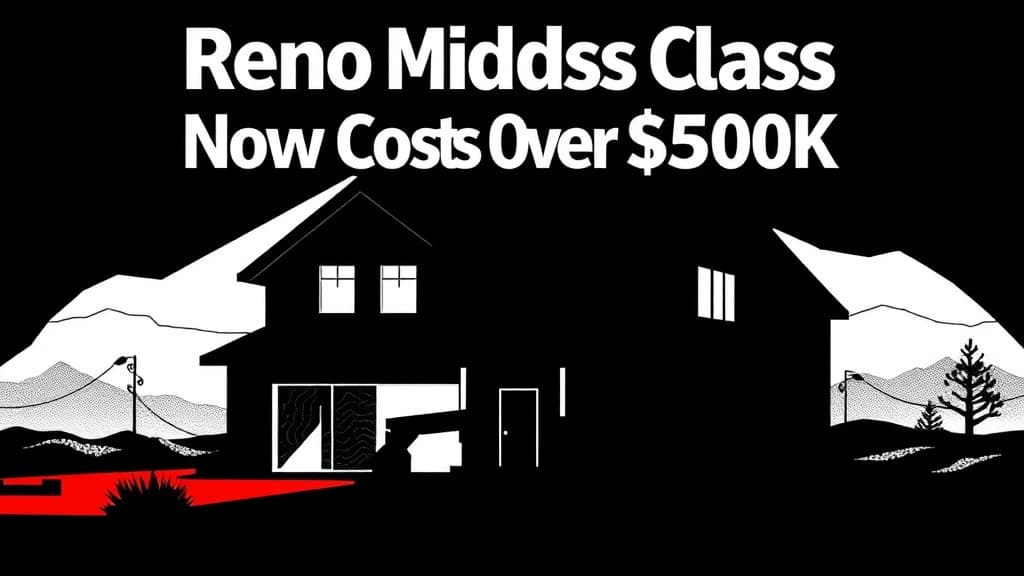
A family of four in Reno now needs to pull down more than $251,000 a year just to live comfortably — more than three times the city's median household income of $80,760, according to a new cost-of-living analysis that lays bare how far the American dream has slipped from reach for ordinary working families.
The number comes from Visual Capitalist, which crunched data from SmartAsset and the MIT Living Wage Calculator across 56 U.S. cities. The study applied the standard 50/30/20 budgeting rule — half your income for necessities, 30 percent for discretionary spending, 20 percent for savings or debt — to determine what a two-adult, two-child household actually needs. Reno landed right in the middle of the pack at No. 26, meaning half the cities surveyed require even more. The message is inescapable: the middle class is being priced out of existence, and not just in the coastal enclaves the press loves to profile.
Housing is the driver. Visual Capitalist explicitly cited "high housing costs" as the biggest factor pushing the required income into the stratosphere. Rents and home prices in northern Nevada have surged year over year, and groceries and transportation costs have climbed alongside them. The Reno Gazette-Journal, which reported the findings, noted the squeeze plainly — increased rental rates, higher housing prices, costlier groceries — before delivering the sticker shock.
Consider what this means in practice. A family earning Reno's median income of $80,760 isn't just falling short — they're making roughly one-third of what the data says they need for a modestly comfortable life with any capacity to save. That's not a budgeting problem. That's a structural failure. And Reno is not an outlier: even the cheapest city on the list, San Antonio, requires $193,608. The floor for a basic middle-class existence is now just shy of $200K in the most affordable metro in the country.
The Gizmodo and GOLF.com coverage of the same news cycle tells you everything about the media's priorities. While one outlet hawked discount golf gloves and the other pushed a smart thermostat sale framed as an energy-saving hack — "have the temperature automatically go down when you hit the sack" — the actual cost of keeping a roof over your family's head in places like Reno went unmentioned by both. The thermostat pitch even leaned into Apple's "Clean Energy Guidance" to sell savings on your electric bill, as if $25 off a gadget offsets the tens of thousands families are now short every year. This is the establishment press ecosystem in miniature: sell the working class a consumer product while the real economic story gets buried.
No one in Washington has been held accountable for the inflation that produced these numbers. The Federal Reserve, the spending binge of both parties, and the regulatory war on domestic energy all share blame. The bipartisan consensus prints the money, inflates the housing market, and tells families to adjust their thermostats.
The open question is how long a system can sustain this gap between what people earn and what it costs to simply live — before the people who built and maintain it decide they've had enough.