Three elderly Americans are dead on their own country's land — killed by heat in a national park their government manages but can't make safe, even as Washington ships billions overseas.
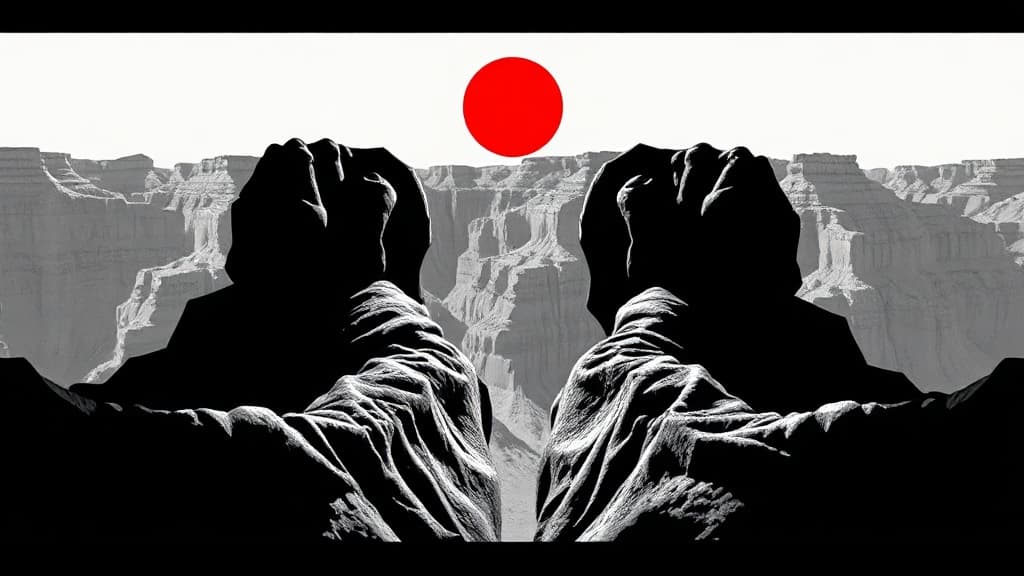
A 72-year-old man died June 12 on the South Kaibab Trail inside the Grand Canyon. Four days later, on June 16, a 67-year-old man and a 68-year-old woman were found dead on the North Kaibab Trail. All three appeared to succumb to heat-related illness, according to the National Park Service. An 18-year-old hiker also died from heat symptoms earlier this month. Despite rapid response and aerial support, all three elderly hikers were already dead when rescuers arrived.
These are public lands — land that belongs to Americans, managed by a federal agency with a budget and a duty. The Park Service acknowledges conditions in the Inner Canyon "can quickly overwhelm hikers during the hottest parts of the day." Yet on the South Kaibab Trail, where one of the victims died, the Park Service's own description notes the route has little shade and no water access. The North Kaibab Trail is classified as the most difficult of the major inner canyon routes. Temperatures at the canyon bottom hit 112 degrees on June 16 and 109 on June 12 — readings that National Weather Service meteorologist Justin Johndrow told the New York Times were "above normal" but "not out of the ordinary" for that time of year. "It's definitely normal for it to be hot in that area this time of year," Johndrow said.
So this is not a freak event. This is predictable, annual, and deadly — and the government's answer is a website warning telling people not to hike between 10 a.m. and 4 p.m. The Park Service did not immediately return a request for comment Saturday, the New York Times reported. No outlet covering the deaths asked whether water stations, shade structures, or emergency communication points on these trails are adequate — or whether the agency that promotes these routes for their "unparalleled" views bears any responsibility for the bodies recovered from them.
The National Weather Service has now issued an extreme heat watch for the Grand Canyon from Monday through Tuesday, with temperatures projected to reach 111 degrees at Phantom Ranch. The agency warned that "most individuals will be at risk for heat-related illnesses without effective cooling or adequate hydration." AP News and The Guardian broadened their coverage to wildfires near Sedona and heat advisories across multiple states — context that matters, but context that also dilutes the core question: why can't the federal government keep Americans alive on land it owns and operates?
Johndrow described hiking the canyon as "almost like hiking a mountain in reverse" — easy going down, brutal climbing back up through thousands of feet of elevation gain in triple-digit heat. The Guardian noted these extreme heat watch notices are "reserved for only the hottest days of the year." That distinction only sharpens the point: the government knows these conditions are exceptional. It knows they kill. It posts a warning and moves on.
The Park Service's Friday statement urged hikers to "be prepared" and avoid midday hiking. Fair advice. But three elderly Americans followed their own judgment onto trails their government maintains, promoted, and failed to equip with basic life-saving infrastructure — and they died. The investigation into the deaths is ongoing. No identities have been released. The bodies were transported to the Coconino County Medical Examiner.
Every dollar Washington spends maintaining a trail with no water is a choice. Every billion sent overseas is a choice. Three Americans are dead on land they collectively own. The question isn't whether they should have hiked. The question is what their government was doing with the money that might have kept them alive.