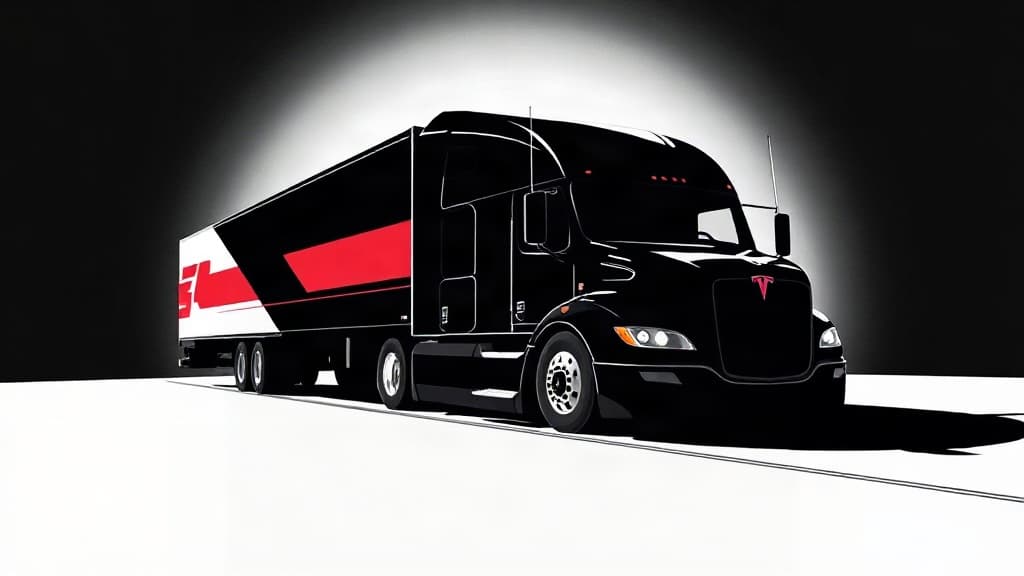
Tesla Semi trucks are finally rolling off the production line and into the fleets of paying customers like PepsiCo and DHL — proving that private innovation, not government mandate, moves the needle on American freight.
This matters because diesel prices are crushing trucking firms and passing costs to consumers, while Washington's answer has been subsidies and regulations that produce press releases, not working trucks. Tesla's Semi delivers 500 real-world miles on a charge and has major shippers lining up to buy — roughly nine years after Elon Musk first announced it, and without waiting for a federal program to make it happen.
The long-range Semi covers 500 miles per charge, with a shorter-range variant hitting 325 miles. Dan Priestley, Tesla's director of Semi truck engineering, told the crowd at the Reno, Nevada, launch event: "500 real-world miles. Our customers have validated it." PepsiCo, DHL, and U.S. Foods were on hand to take delivery, with their branded trucks lined up outside the facility.
The sticker price sits just under $300,000 before incentives, according to TechCrunch — and Tesla still hasn't disclosed final pricing publicly. But fleet operators are betting on total cost of ownership. A coalition of major cargo-owning companies including Microsoft and PepsiCo placed a new order for 2,500 Semis, nearly double the existing fleet of electric Class 8 trucks, according to the nonprofit Catalyst Mobility. Swedish freight tech firm Einride added another 500.
Tesla plans to build 50,000 Semis annually at its new Nevada factory, creating 3,000 jobs in the process. The first truck from the high-volume line rolled off in April, though Tesla has quietly backed away from promising it will hit full volume this year.
The road wasn't smooth. Originally slated for 2019 production, the Semi got hammered by pandemic supply chain disruptions, semiconductor shortages, and design changes based on pilot customer feedback. Tesla shaved roughly 1,000 pounds off the truck and simplified the drive axle from three different oils to one. "Occasionally we get a little too far out there," Priestley admitted of Tesla's tendency toward "super bespoke" designs.
Fox Business framed the story around market opportunity and record diesel costs hitting the trucking industry. TechCrunch leaned into the emissions angle and Tesla's shifting corporate mission — noting that Musk has rebranded Tesla as a "robotics and AI company" and changed its mission from "accelerating the world's transition to sustainable energy" to "build a world of amazing abundance." TechCrunch also noted what Fox Business buried: charging infrastructure remains a real hurdle, and Musk skipped the event to attend President Trump's state dinner with Chinese Premier Xi Jinping.
The orders are real. The trucks are rolling. But the same supply chain tangles that delayed this launch for nearly a decade haven't gone away — and the charging network still has to catch up. For now, private capital and engineering grit are doing what green-energy subsidies couldn't: putting working electric trucks on American roads. The open question is whether Tesla can scale fast enough to meet the demand it's already generated.