A Pennsylvania homeowner defended his home with a single shot Tuesday night after an intruder forced open his front door and advanced on him — the intruder happened to be his estranged son-in-law, and under the law, that distinction doesn't change a thing.
The right to defend your home isn't negotiable, and it doesn't evaporate because the person breaking in shares a last name or a family photo album. A man's home is his castle. Pennsylvania's castle doctrine says you don't have to retreat from an unlawful intruder in your own house. The facts here fit squarely.
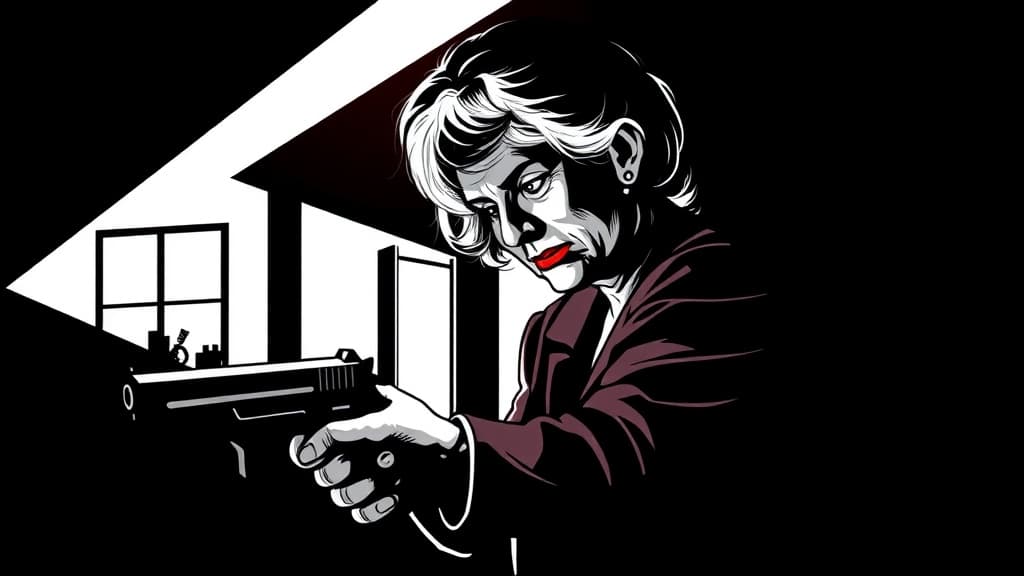
According to an affidavit of probable cause from Pennsylvania State Police, the Juniata County man was lying on his living room couch when he heard yelling and banging outside his David Street home in Tuscarora Township. He grabbed a .380-caliber pistol and walked to the door. He found it had been broken open. Standing in the doorway was his son-in-law, Terry Burdge, 45 — fists clenched, irate, telling his father-in-law he would "teach him a lesson."
When Burdge took a step toward him, the older man fired one round into Burdge's chest.
The homeowner later told police that if he hadn't shot, Burdge "would have beat the hell out of me. Or worse," according to the affidavit.
Burdge is married to the man's daughter, but the couple is separated. Police found the home's door and drywall damaged, confirming the door had been forced open. Court documents did not list a motive for the break-in or an update on Burdge's medical condition.
At the scene, Burdge punched an EMS worker in the nose who was trying to treat him before he was transported to Penn State Health Holy Spirit Hospital — a detail that underscores the threat level this man posed even after being shot.
Burdge was charged Wednesday with felony counts of burglary and aggravated assault, plus misdemeanor simple assault and criminal mischief. He was arrested Friday and couldn't post $300,000 bail. A preliminary hearing is set for Oct. 22.
The Mechanicsburg Patriot News covered the facts straight from the affidavit. But expect the usual suspects to recast this as a domestic dispute — a family squabble that turned violent — rather than what it is: a home invasion by an aggressor who announced his intent and advanced on a man lawfully inside his own residence. The relationship between the two men is incidental to the legal and moral core of the story. A stranger kicks your door in with clenched fists, you shoot. A relative does the same, you shoot. The standard doesn't change.
Meanwhile, in a Connecticut courtroom this week, a judge ruled that a dying 19-year-old's final words identifying his shooter can be heard by jurors. Camaury Norman-Clack, shot outside his Norwich apartment in May 2023, repeatedly named "Stanko" — Stancovitch Fabre — to police and his mother before succumbing to his wound. Superior Court Judge Elizabeth Leaming ruled the statements qualify as a dying declaration, an exception to the hearsay rule. The Hartford Courant reported that defense attorney Ted Koch argued Norman-Clack still had hope of recovery, but body camera footage and witness testimony showed a teenager drifting in and out of consciousness, struggling to breathe, telling his mother he was dying. Fabre, who allegedly fled the state after the shooting, faces murder charges.
Two states, two cases, one principle: facts matter more than framing. In Pennsylvania, a homeowner met force with force and the intruder sits in a cell. In Connecticut, a dying boy's last words will be heard. The system, when it works, runs on evidence — not narrative.
The open question in the Pennsylvania case: will prosecutors treat this as the clear castle doctrine case the facts describe, or will family ties invite political pressure to charge the homeowner? The affidavit tells the story of a break-in and self-defense. Anything beyond that is spin.