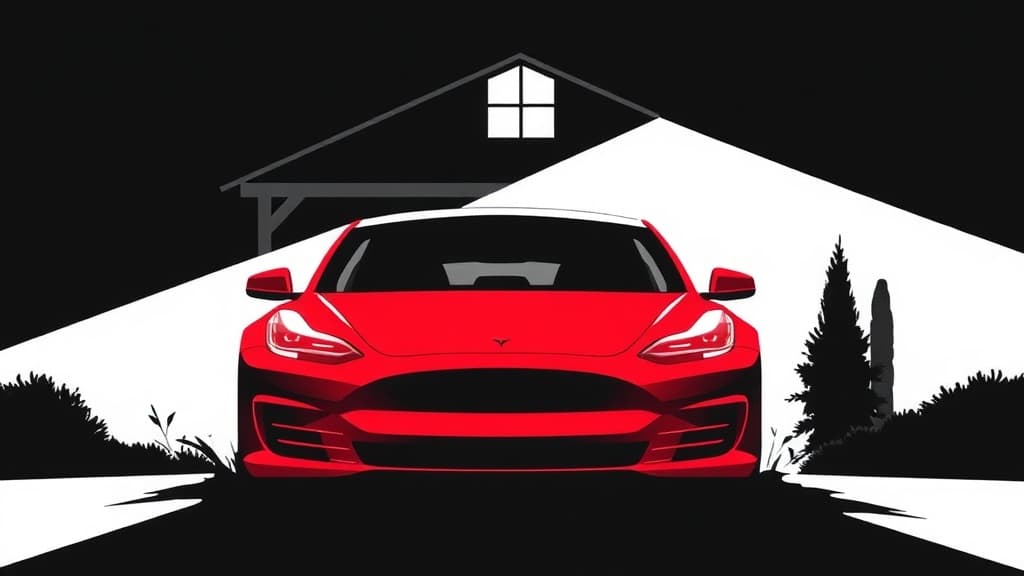
A Tesla operating on Autopilot smashed through a brick house in Katy, Texas, on Friday night and killed a woman sitting inside her own home — and the driver walked away without a single charge.
Martha Avila, the woman killed, was airlifted to a hospital and pronounced dead. The driver, Michael Butler, was operating his Tesla Model 3 "with an automated driving assistance system" when he "failed to drive in a single lane, left the roadway and struck the residence" at a high rate of speed, according to the Harris County Sheriff's Office. Butler showed no signs of intoxication. He was cooperative. He was injured. And as of Saturday, there were no charges filed against him.
Try killing someone while driving drunk and see if you walk. But when Silicon Valley's favorite car does the killing, the rules change.
The New York Times noted that Tesla's Autopilot "has had issues over the years" — a generous way of describing a body count. In 2023, Tesla recalled more than two million vehicles after federal regulators at the National Highway Traffic Safety Administration determined the company hadn't done enough to keep drivers attentive while the software steered, accelerated, and braked on its own. That recall came after an NHTSA investigation launched in August 2021 into a series of crashes — some fatal — involving the technology. Software updates, not accountability.
KABC-TV reported that the investigation into Friday's crash is ongoing. Sergeant Alex Turman of the Harris County Sheriff's Office told the station that investigators are "still evaluating what caused that car to fail to control its speed just before this crash." A front-door security camera captured the Tesla plowing through the driveway and into the house. Tesla did not respond to requests for comment.
The pattern is clear. NHTSA opens investigations, Tesla issues over-the-air recalls, and nobody at the company answers for the bodies. The agency tasked with keeping Americans safe on the road has spent years treating Tesla's self-driving rollout as a engineering problem rather than a accountability problem. Meanwhile, ordinary drivers who make fatal mistakes behind the wheel face vehicular manslaughter charges, prison time, and permanent records.
Tesla's own owner's manual tells drivers to keep their hands on the wheel and take over if something goes wrong. That language exists so Musk can blame the human when the machine fails — a neat trick that shifts liability from the billionaire selling the software to the consumer buying it.
Martha Avila was in her house. She wasn't on the road. She wasn't in the car. She was home. And now she's dead because a car with a mind of its own missed a curve. The only question left is whether anyone with the power to do something about it will — or whether the revolving door between Washington and Silicon Valley ensures the next recall comes before the next funeral.