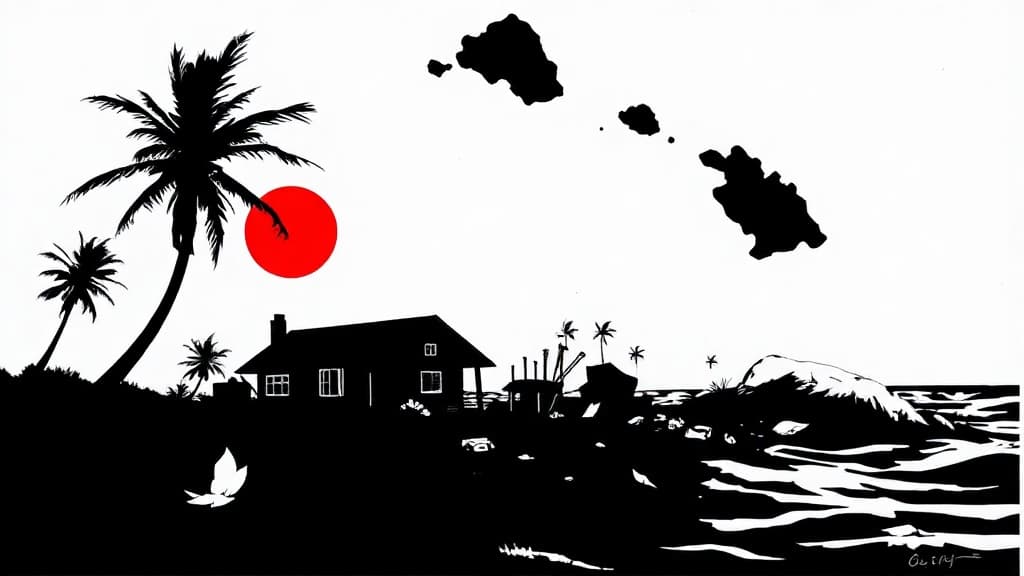
Tropical Storm Lala ripped through Hawaii's Big Island over the weekend, sweeping more than 100 homes off their foundations, collapsing bridges and a major highway, and leaving a quarter-million customers without power — some potentially for months — while Washington's infrastructure priorities remain focused everywhere but home.
The damage is staggering and the stakes for ordinary Hawaiians are immediate. Governor Josh Green estimated hundreds of millions of dollars in damage statewide. Parts of a major highway in the Big Island's southeast collapsed overnight, cutting road access to Pahala and its regional hospital. Hawaiian Electric warned that restoring power to some rural areas could take weeks or even months. This is what it looks like when American communities are left to fend for themselves after a disaster — bridges gone, homes destroyed, and the lights out with no firm timeline for return.
Lala grazed the Big Island late Saturday as a Category 1 hurricane before being downgraded to a tropical storm early Sunday, but the downgrade meant little on the ground. Up to 40 inches of rain slammed the island's southeast, according to the National Hurricane Center. Flash flooding swept homes off their foundations in the southern communities of Naalehu and Waiohinu, triggering a multiagency search and rescue mission. At least 40 residents were evacuated safely, according to Hawaii County Mayor Kimo Alameda. A 45-year-old man was killed in a car crash near the island's southernmost point; it remains unclear whether the storm was a factor.
"What makes this very challenging is that there's rushing water, there's debris, and there's boulders on the road, and it's dark," Alameda said. County civil defense, fire, police, public works, and the National Guard were all deployed.
On Oahu, the Honolulu fire department logged more than 600 weather-related responses by noon Sunday — 147 downed trees, roofs blown off, downed power lines. Three residents were treated for injuries after falling off or through their roofs trying to secure them. The island's primary utility asked residents to reduce energy usage amid heavy system damage.
Green said officials were still investigating whether there had been any storm-related deaths beyond the car crash. "We're praying that there are essentially no fatalities. The question is a difficult one to answer in some ways," he said. Emergency management director Randy Collins warned that the danger persists: many casualties happen after the disaster, when residents work with chainsaws and generators around downed power lines.
The Guardian framed the storm through the lens of climate policy, noting that a powerful El Niño has formed and that "the human-caused climate crisis can amplify El Niño's impacts." The Chronicle stayed closer to the ground damage and the practical reality that power could be out for months. Both outlets buried the question that matters most to the people standing in the wreckage: where is the federal infrastructure money when American bridges collapse and American homes wash away?
Hawaii was last hit by a major hurricane in 1992. The islands were menaced by Hurricane Fausto just last month before it weakened and veered north. Lala struck infrastructure that was already vulnerable — bridges, highways, a power grid that a single utility now says could take months to fix. Congress routinely approves blank-check spending for overseas commitments and foreign infrastructure while American communities face the same cycle every storm season: devastation, makeshift rescue, and a long wait for federal dollars that move slower than the floodwater.
The open question isn't whether Lala was worsened by El Niño or climate patterns. It's whether any politician in Washington will treat a washed-out highway on American soil with the same urgency they bring to spending American money abroad.