Two college sophomores just found a muscle attachment in the human body that no textbook ever documented — a discovery that could improve hip surgery and demolish the idea that medical science has nothing left to learn from the ground up.
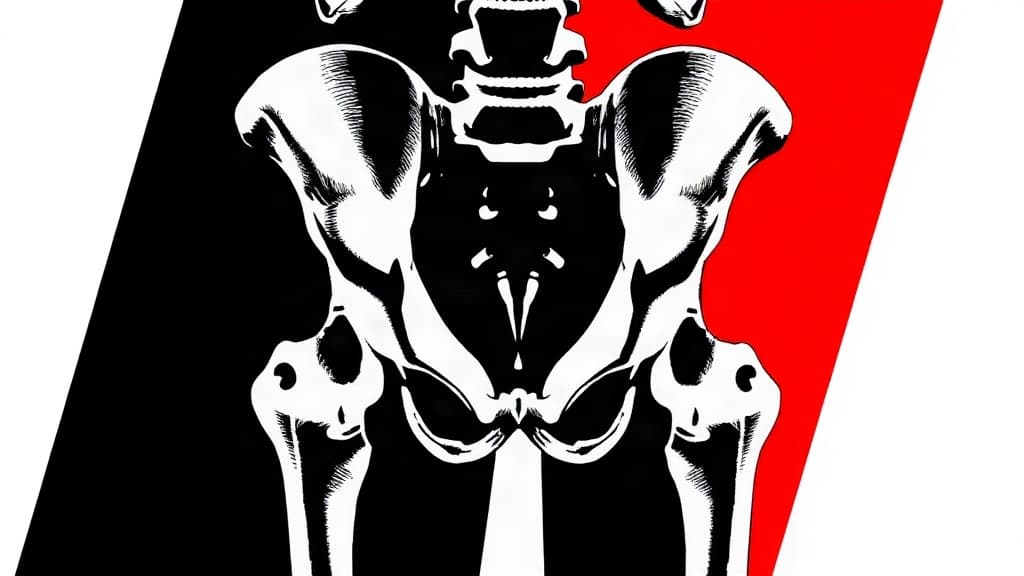
Dominic Roy and Cooper Bruce, both 19 at the time, were volunteering in a Tulane University cadaver lab in 2024 when Roy spotted something that shouldn't exist: an unidentified muscle sitting on the other side of the Iliac fascia, near the inguinal region of the pelvis. He was looking for the iliocapsularis, a known muscle that sits laterally in the hip. What he found instead was something no anatomist had named.
"I called Dr. Tubbs over and asked, 'What is this?'" Roy told Fox News Digital. "We didn't talk about this in our morning meetings … and I think he was as stumped as me."
Dr. R. Shane Tubbs isn't some fringe operator. He's a professor of neurosurgery, director of surgical anatomy at Tulane School of Medicine, and co-editor-in-chief of Gray's Anatomy — the reference textbook. If he hadn't seen it, nobody had.
The team scoured the literature and textbooks. Nothing. The finding, now published in the journal Clinical Anatomy, suggests the muscle attachment may help stabilize the psoas major, the large muscle involved in bending the hip. Tubbs called the discovery "serendipity" and confirmed the students "identified a different part of a muscle that we had not looked at yet. It's deep in the pelvis and runs out to the front of your hip."
The stakes are real. Surgeons replace hips every day, and minimally invasive procedures are becoming standard. Knowing this muscle exists — and whether it's causing pain, weakness, or instability — could change how doctors cut, inject, or rehab. "They might use physical therapy to help rehab the muscle, because we did find that the fibers of this attachment directly attach into the front of the hip joint," Tubbs said. Surgeons could also choose to cut the muscle if overactivity causes symptoms, or use injections to weaken it.
The next step is figuring out whether MRI scans can even pick it up, and whether its presence correlates with patient problems. "More research is needed for us to better elucidate what it does," Tubbs said. "Can you see it on imaging? Does it contribute to patients' problems? But I think this is the first step in identifying something."
Bruce put it plainly: "It was kind of like a reserved excitement. Especially if the great R. Shane Tubbs can't put his finger on exactly what it is."
Both the New York Post and Fox News covered the discovery straight, though neither pressed the obvious implication: if two undergraduates can find an undocumented muscle in a body that anatomists have been dissecting for centuries, what else has the establishment missed — and what orthodoxies are enforcing blindness? The CDC and FDA routinely tell Americans the science is settled on everything from youth gender medicine to vaccine schedules. This discovery is a reminder that settled science is often just science that stopped looking.
The question isn't whether 19-year-olds got lucky. It's why the institutions that claim final authority over your body needed a couple of sophomores to show them what was right there all along.