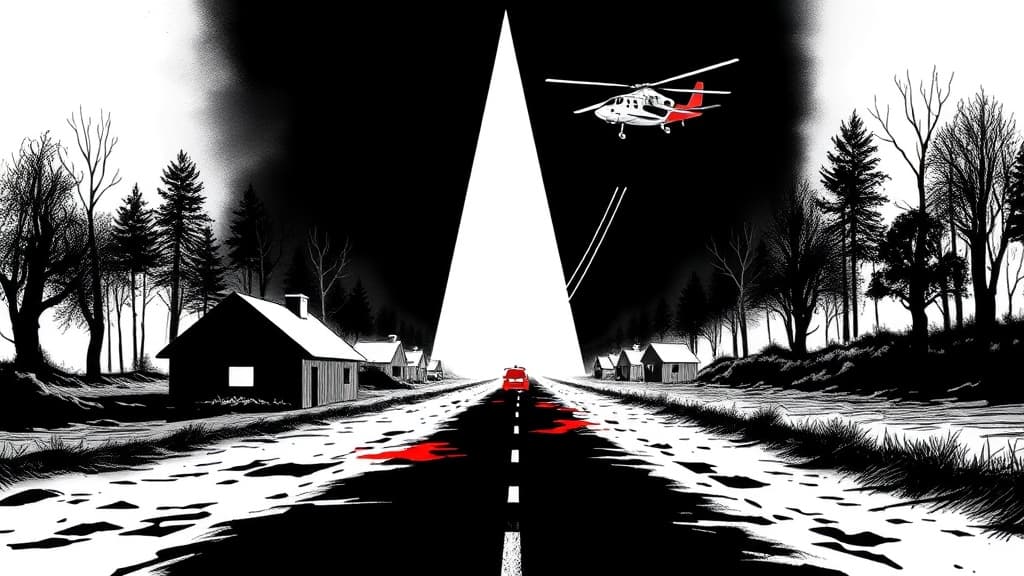
More than 200 children and staff were pulled from a Missouri summer camp by Army National Guard helicopters after flash floods washed out every road out — the kind of rescue that shouldn't require military hardware, but does when domestic infrastructure crumbles while Washington sends money everywhere but home.
Camp Taum Sauk in Lesterville, a small community in southeastern Missouri, became an island Friday after 6 to 12 inches of rain pounded the Ozark region. Roads gone. No way in or out. Sgt. Eddie Young of the Missouri Highway Patrol confirmed that Black Hawk helicopters flew the campers to a nearby elementary school for reunification with their families. The camp later posted on Instagram that it was "beyond thankful" for the crews who kept their community safe.
The stakes are plain. When roads dissolve and rivers hit record levels, ordinary Americans — kids at camp, families in homes, people who chose a weekend getaway — are left waiting for military extraction. The Black River near Annapolis is expected to crest above 28 feet, which would be an all-time record for that waterway. Governor Mike Kehoe declared a state of emergency and said hundreds have been saved from floodwaters, rooftops, trees, and stranded vehicles. One woman in Crawford County remains missing after her house was ripped from its foundation.
It got worse before it got better. At the Bearcat Getaway campground near the Black River, about 20 people climbed onto a building to escape rising water. The building collapsed under the weight and the constant pressure of floodwater underneath, according to Young. "Between the weight and the constant waters underneath it, it just gave way on them," he said. Emergency crews pulled them out. Three others trapped in trees along the Black River in Reynolds County were rescued Friday evening. Two rescue boats capsized in the same county; other responders recovered the personnel safely.
NWS lead meteorologist Matt Beitscher noted that the affected counties are popular recreation areas — campgrounds, float trip outfitters, and what he called "vulnerable populations" susceptible to flash flooding. The severe weather zone stretches from the Ozarks east through the Ohio and Tennessee River valleys, with eastern Tennessee already seeing road closures and downed power lines. Kentucky and West Virginia residents were told to prepare to seek higher ground.
The Atlanta Journal-Constitution covered the basic facts — the rescue, the missing person, the storm's path — but buried the operational detail. The Guardian named the camp, identified the Army National Guard as the lift asset, and reported the campground collapse and boat capsizes that show just how thin the margin was between rescue and disaster.
Here's the question that matters: Why were Black Hawks the only option? Washed-out roads in rural Missouri mean that when disaster strikes, the civilian infrastructure to reach Americans simply isn't there. The Guard performed — credit where it's due — but a country that can appropriate billions for foreign conflicts and overseas aid year after year still can't keep roads passable or build redundant access routes into its own recreation communities. The Black River hasn't crested yet. More rain is forecast. And the next time floodwater cuts off a camp, a town, or a neighborhood, the question won't be whether the Guard can fly — it'll be why flying was the only choice left.