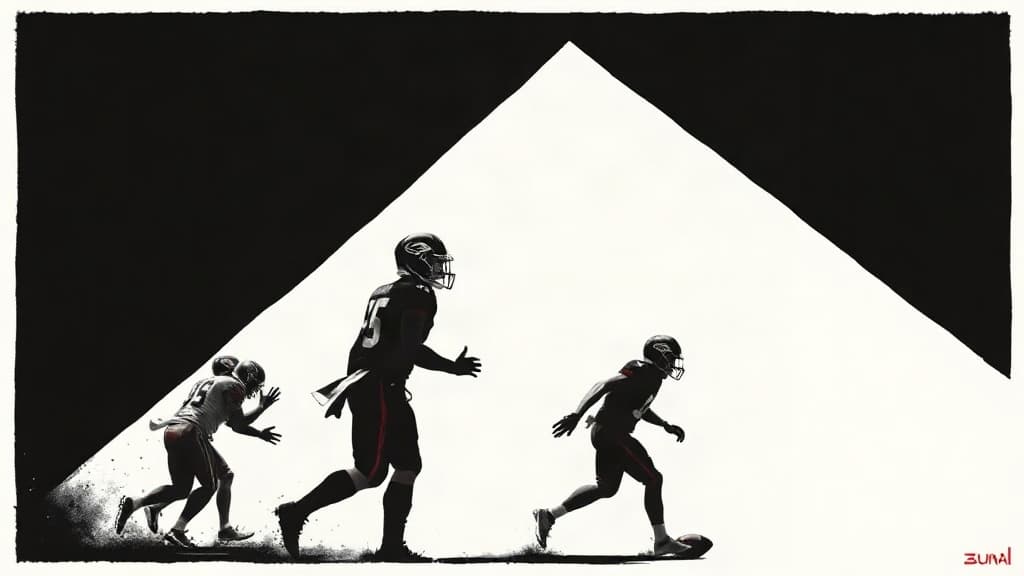
Football is still America's game — and corporate America knows it. A 2025 S&P Global poll found 51% of surveyed adults watch football, dwarfing basketball at 31%, and the 2026 Super Bowl LX pulled nearly 138 million peak viewers. But where fans see tradition, the suits see a revenue machine, and two new reports show exactly how the squeeze works — and what they're not telling you.
Newsweek framed the story as pure celebration: football as "marketing gold mines." The outlet lined up brand executives to praise their own access to fans. Adidas VP Chris McGuire told Newsweek the company stays "focused on the athletes, the game, and the culture that surrounds it" to create "authentic products and experiences that connect with fans." Bath & Body Works pushed its Football Season candle. Visa CMO Kyndra Russell pitched global reach: "Sports connect people across borders, and U.S. football fandom doesn't stop at the border."
What Newsweek buried: any mention of what this corporate saturation costs the actual fan. No ticket prices. No TV contract figures. No discussion of how the average working family gets priced out of attending a game while league revenues soar. The story reads like a press release carousel — brand executives quoted uncritically, consumer costs ignored entirely.
Meanwhile, Sports Illustrated offered a different window into the extraction economy: prediction markets. SI covered Kalshi's event contracts on Week 1 college football upsets, noting the market prices at least one unranked upset at 73%. A $10 trade profits $3.43. The piece reads like analysis but functions as a gateway — complete with a promo code for up to $500 in welcome bonuses and a gambling helpline number at the bottom.
That's the new game. You used to just watch. Now you can trade on outcomes. SI notes Florida State has driven recent upset trends, accounting for three of four unranked upsets since 2024, and previews upcoming matchups with spread data and moneylines. But the real story is the infrastructure being built to monetize fan engagement at every level — from candles to event contracts.
Neither outlet asked the obvious question: who profits when every moment of American sporting life becomes a transaction? The brands get access to 138 million viewers. The prediction platforms get a cut of every trade. The fan gets a candle, a gambling app, and a bill.
The founders built this country in taverns, talking about what freedom looked like. Now the pastimes that brought communities together are extraction points. The question isn't whether corporations will keep squeezing — it's whether fans will keep paying for the privilege.