The latest College Football Playoff projections show the SEC and Big Ten claiming the top spots and the lion's share of the field, confirming what working fans already sensed: college football has been consolidated into a two-company town, and your regional team is just a franchise waiting to be shuttered.
This isn't just about who makes a 12-team bracket. It's about what happens when a handful of executives in boardrooms decide which communities matter and which get hollowed out. The same logic that replaced your downtown hardware store with a big-box chain, that bought out your local paper and fired the reporters, is now running college athletics. Regional rivalries, generational loyalty, fair competition—sacrificed for television contracts and the leverage that comes with monopoly.
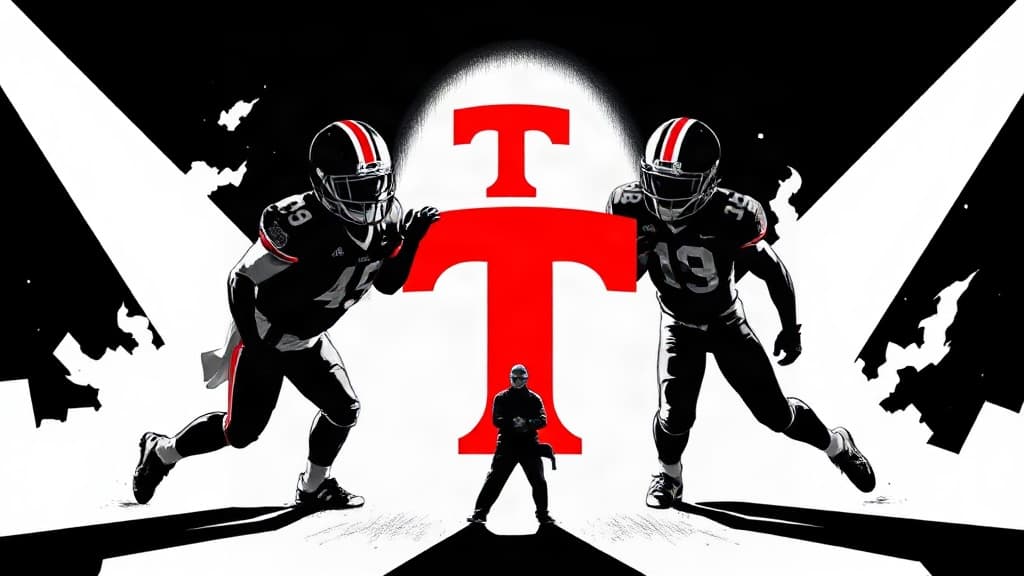
CBS Sports projects Texas as the No. 1 seed and SEC champion, Ohio State as No. 2 and Big Ten champion, with Georgia at No. 3 and Alabama at No. 5. The SEC alone has Texas, Georgia, Alabama as its clear top tier, with Florida, LSU, Missouri, Mississippi State, Ole Miss, and Tennessee all fighting for position. The Big Ten features USC, Penn State, UCLA, and Oregon jockeying for at-large spots. That's two conferences hoarding the vast majority of serious contenders.
The Gainesville Sun reported that Florida's loss at Missouri knocked the Gators out of the projected field entirely, replaced by UCLA—a program in its first year under coach Bob Chesney that has beaten four unranked opponents and faces only two ranked teams the rest of the way. The Bruins' path to the playoff requires a split against Oregon and USC and taking care of business elsewhere. Whether that resume deserves a playoff spot is debatable. What isn't debatable is that UCLA's Big Ten membership is the real credential.
Meanwhile, Iowa sits at 4-1 and can't get a straight answer. Sports Illustrated noted that SI's own projection slots Iowa at No. 10, sending the Hawkeyes to Alabama for a first-round road game. CBS Sports leaves Iowa as one of the first teams out, bound for the Citrus Bowl against Ole Miss. ESPN's projections also have Iowa on the outside. A program with one loss to Ohio State can't crack the field with confidence—not because of its record, but because it lacks the conference brand that commands automatic respect.
CBS Sports framed the SEC and Big Ten races as "chaos"—but chaos for whom? For the networks and the selection committee, maybe. For fans of programs outside the power structure, it's not chaos. It's a closed shop.
The consolidation was deliberate. Conference realignment pulled Texas and Oklahoma into the SEC, USC and UCLA into the Big Ten, stripping the Big 12 and the old Pac-12 of their marquee brands. Television money drove every move. The result is a structure where two mega-conferences control access to the sport's biggest stage, and everyone else fights for scraps.
The question isn't whether Texas or Alabama or Ohio State deserves its ranking. It's whether a sport built on regional pride and campus communities can survive being run like a media conglomerate. The founders built this country on the idea that concentrated power corrupts—that monopoly, whether governmental or corporate, eventually serves itself. College football is now a case study in that principle. The only question left is whether the fans who built these programs will keep footing the bill for the executives who dismantled them.