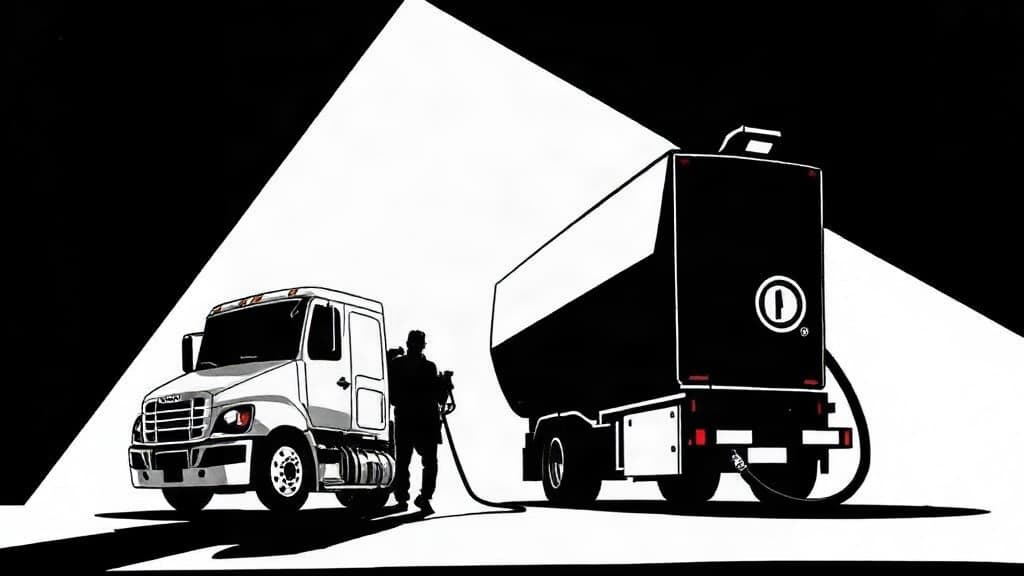
Diesel just hit a record $6.29 a gallon — up nearly 80% this year — and every American who buys food, clothing, or anything hauled by truck is paying the tab.
This isn't a Wall Street story. It's a hidden tax on working people, driven by foreign entanglements and a refining system stretched thin, and the Federal Reserve's response — another rate hike — won't fix the supply problem but will make borrowing more expensive for everyone who isn't insulated by a seven-figure portfolio.
The national average for a gallon of diesel reached $6.29 this week, according to TradingView data cited by CoinDesk. That's an 80% surge year to date. JPMorgan laid out the mechanism plainly: "Higher diesel prices can show up in inflation through business costs first, then potentially affect consumer prices over time depending on pass-through and demand." Translation: businesses eat the cost first, then pass it to you.
What's driving the spike? CoinDesk pointed to geopolitical tensions in the Middle East — specifically the ongoing U.S.–Israeli conflict with Iran — which have disrupted crude flows and jacked up risk premiums on refined products. Tight refinery capacity and strong demand from freight and industrial users amplified the shock. CNBC offered the same thread from the U.K. side, where motor fuel costs surged 23% year-on-year. Scott Gardner, an investment strategist at J.P. Morgan Personal Investing, noted that "the U.S.-Iran conflict began over six months ago but higher energy costs are still filtering through to business input prices and household spending."
So a foreign conflict that American taxpayers didn't vote for is now showing up at the pump, the grocery store, and the supply chain — and there's no exit strategy in sight.
The Fed's answer was to hike rates by 25 basis points on Wednesday, pushing the benchmark to the 3.75%–4% range. Goldman Sachs and Morgan Stanley expect another hike in October. CoinDesk noted that some observers call this a mistake — rate hikes don't produce more oil or open more refineries. They just make credit costlier. The U.K. faces the same dilemma from the other direction: the Bank of England is expected to hold rates steady Thursday even as British inflation climbed to 3.1%, a five-month high, per the AJC. Either way, the working person loses — higher rates choke off credit, and holding rates while inflation runs lets the fire spread.
CNBC framed the story around central bank divergence and gilt yields. CoinDesk framed it around headwinds for bitcoin and gold. Both buried the part that matters: diesel runs the trucks that deliver everything Americans need, and nobody in Washington is talking about how to bring the price down. The AJC, meanwhile, ran a wire brief that mentioned the Iran war in a subordinate clause.
The bipartisan failure is plain. Both parties have supported the foreign commitments driving this shock, and neither has seriously addressed the refinery capacity and energy independence that would insulate Americans from it. Rate hikes are a policy of last resort masquerading as a solution — and the bill lands on Main Street.
The open question: how long do Americans pay for conflicts and policies they never signed up for before someone in Washington has to answer for it?