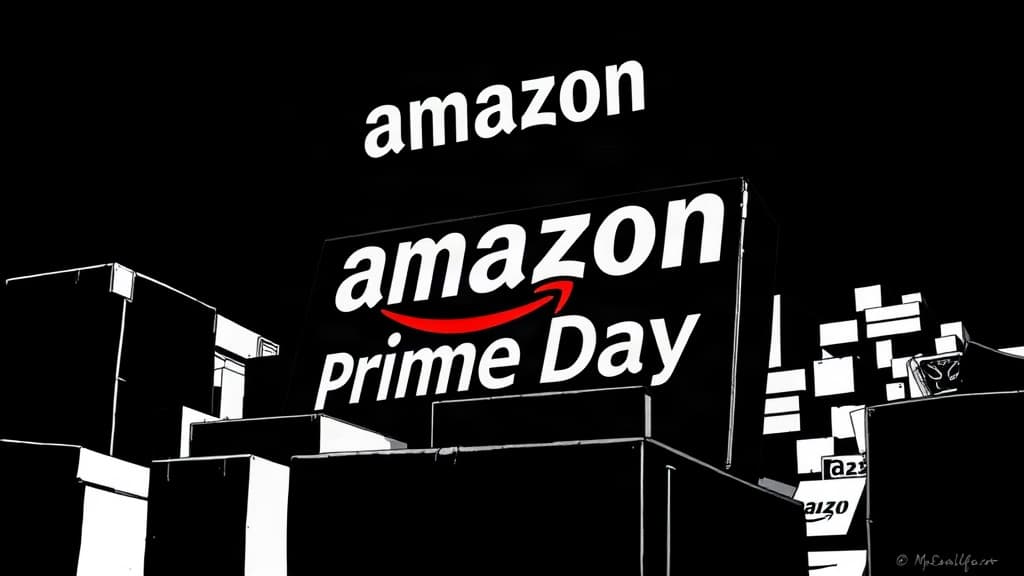
Amazon's Prime Big Deal Days is back October 6 through 7, and the establishment press has turned into commissioned salespeople, pushing working Americans to take on debt for gadgets they don't need while inflation devours their paychecks.
The math is simple and the conflict is plain. Variety, NBC News, The Verge, and Yahoo Tech are all running what amounts to advertising copy for Amazon's latest manufactured shopping holiday. Variety discloses right at the top that it "may receive an affiliate commission" if you click through and buy — the outlet literally gets paid when you spend. NBC News employs a "commerce editor" whose stated job is finding deals that are "actually worth buying." Since when is the news business in the business of helping you part with your money?
The discounts are designed to trigger urgency. Variety and Yahoo Tech both highlight Hisense TVs with up to $2,000 off, with the 75-inch model marked down 50 percent to $998. NBC News pushes the Apple Watch SE 3 at 20 percent off and the Google Pixel 3 at 50 percent off. The Verge flags the Pixel Watch 5 at $65 off. Yahoo Tech's writer casually notes their first 4K TV "cost me more than a month's rent" — then recommends you consider a 100-inch screen for $2,498, as though that's a reasonable household expense when groceries and utilities are crushing families.
Here's what none of these outlets will tell you: your current television works. Your current watch tells time. The "deals" are priced to move because these companies need you to replace what you already own with something marginally upgraded. That's planned obsolescence dressed up as a bargain, accelerated by a discount culture that manufactures FOMO twice a year to keep revenue flowing.
The framing differences tell their own story. Variety leads with the dollar amount — "$2,000 Off" — because big numbers move product. NBC News buries the fact that these deals are "exclusive to Prime members," meaning you need a $139-per-year subscription just to access the "savings." Yahoo Tech at least acknowledges you should think about whether you need an upgrade, before concluding you probably do. The Verge barely bothers with context.
Follow the money. Amazon built Prime Day to drive subscriptions and lock in customer dependency. The outlets covering it collect affiliate revenue when you click. The electronics manufacturers move volume to keep production lines running. Everyone in the chain profits. You get a bigger screen and a smaller bank account — in an economy where real wages haven't kept pace with the cost of living since the last time a TV was just a TV.