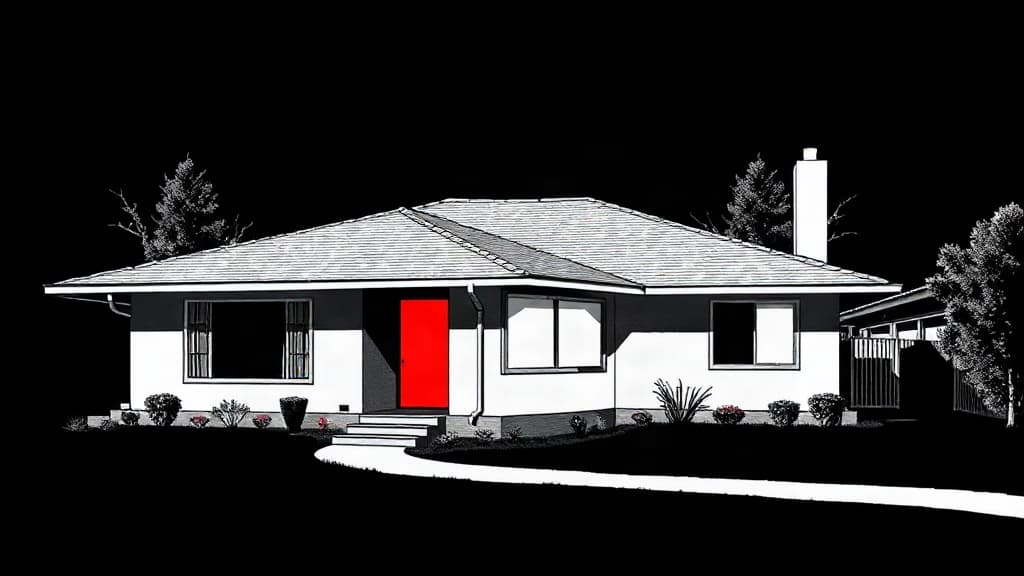
A 1966 single-story ranch house in San Jose just sold for $2,214,000 — $937 per square foot — and that number tells you everything about why working Americans have been priced out of homeownership entirely.
The four-bedroom, three-bathroom house on Walden Square offers a fireplace, central heating, and a two-car garage on a modest 8,030-square-foot lot. According to the Mercury News, which generated its report from public records using an automated bot template, comparable homes nearby sold for even more: $2.8 million on Kirklyn Drive in March, $2.7 million on the same Walden Square block last October, and $2.55 million on Constitution Drive in April. The paper reported these figures without a word of context — as if a 60-year-old house costing over two million dollars is just the weather.
It isn't the weather. It's policy.
Restrictive zoning laws — championed by homeowners who pulled up the ladder behind them — keep supply artificially choked. The Federal Reserve's decade of near-zero interest rates flooded the market with cheap capital that institutional investors used to buy single-family homes by the thousands. Wall Street firms turned neighborhoods into rental farms. When supply is strangled and capital is cheap, the price of a modest ranch house in San Jose hits $937 a square foot — and a working family's shot at building equity hits zero.
Fox News, covering a different front in the war on homeownership, reported this week on a South Carolina case where a caregiver allegedly obtained power of attorney over a 75-year-old man with Parkinson's disease and a brain injury, then used a quitclaim deed to transfer his Conway home to herself for $5. The man's daughter says bank records show money moving to the caregiver even after his death. Conway police are investigating. The FBI has warned that quitclaim deed fraud — through forgery or manipulation of vulnerable owners — is a growing threat.
Two stories, one theme: homeownership in America is under siege. From the top, institutional capital and regulatory capture make buying a home impossible for working families. From the bottom, predators exploit the vulnerable to steal what equity remains. The Mercury News treats the $2.2 million sale as a data point. Fox News treats the $5 deed transfer as a consumer-tech tip sheet about setting up digital alerts. Both miss the structural reality.
The bipartisan failure is the story. California's Democratic supermajority has preserved exclusionary zoning for decades. Republican administrations appointed the Fed chairs who kept the money cheap. Neither party has incentive to deflate the asset bubble their own voters depend on for retirement — and so the bubble keeps growing, and the people who just need a place to live keep paying for it.
A house is either shelter or an investment vehicle. Right now, the system has decided it's the latter — and working Americans are left with the check.