A 16-year-old lifeguard dove into pounding Pacific swells and saved a drowning boy — proving again that individual courage, not some federal initiative, is what keeps Americans alive when it counts.
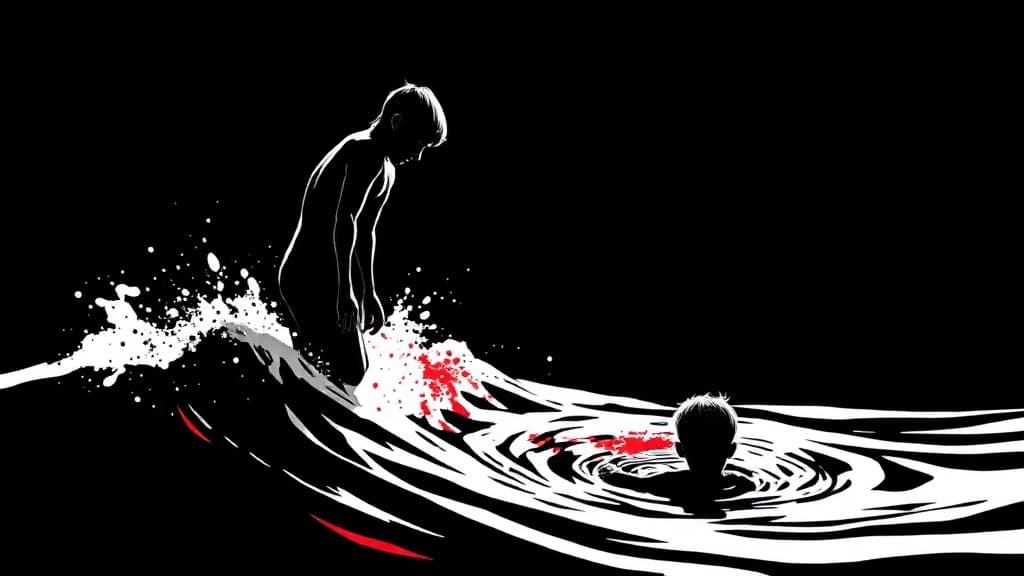
Ryder Williams was working his shift at Seabright State Beach in Santa Cruz on July 25 when 10-year-old Nathaniel Rai lost his footing and was dragged out by powerful waves. Heart-pounding footage captured by local photographer Scott Vander Dussen shows Williams — armed with nothing but a rescue tube and the grit he'd built through years of junior lifeguard training — dive straight into an enormous wave, seize the boy, and hold on until fellow lifeguard Aaron Bohnen rushed in to help bring Rai ashore.
The boy's father, Sumit Rai, was in Dallas at the time. He told the Associated Press his son momentarily lost consciousness in the swells before the lifeguards reached him. "What he did, I can never repay," Rai said of Williams. "I'm forever grateful."
No task force. No grant program. No blue-ribbon commission. A teenager who started swimming lessons as a toddler, logged years in junior lifeguard training, and played a physically demanding water polo position did the job he prepared for his whole life — and a child lived.
President Trump called Williams deserving of a "high civilian honor" on social media. The Guardian noted the president's praise; the New York Post led with it. Both outlets agreed on the core facts of the rescue and the recognition that followed.
The recognition grew. The upcoming Fox Baywatch reboot invited Williams and his parents to the set on the last day of production, where star Stephen Amell presented the teen with one of the show's iconic red crew jackets. "What you did was extraordinarily brave," Amell told him. "But it sounds like it was just a [typical] day for you, which is amazing." Executive producer Matt Nix told Variety the show is "honored to have a real-life hero with us on set." Greg Bonann, lifeguard and co-creator of the original Baywatch series, said Williams "has just reminded all of us why that mission matters."
The Guardian highlighted that the rescue was one of multiple Williams participated in that day — context the Post buried. The Post included Williams's own words — "It is awesome to get to come out and help people every day" — which The Guardian omitted. The Guardian also noted bystanders tried to help but retreated when confronted with the surf, a detail that underscores why trained individuals, not good intentions, make the difference.
Williams's father, Shane, said his son had been preparing virtually his entire young life for this. Not a government mandate. Not a diversity initiative. A kid who put in the work, showed up, and acted when seconds mattered.
The question isn't whether Williams deserves a medal. He does. The question is why the default assumption in American institutional life is that only systems can save us — when a 16-year-old with a rescue tube just proved otherwise.