Martha Stewart dressed as a homeless person to sell candles — and the elite class barely flinched.
Stewart posted the photo Saturday on Instagram: tattered clothes, dirt smeared on her face, holding a clipboard reading "I AM HUNGRY HELP ME!!" — the third slide in a carousel promoting her QVC candle line. "My QVC candles are perfect for Halloween!!!" she wrote. The post was deleted after backlash, but not before screenshots circulated widely.
This is the same Martha Stewart who built a billion-dollar brand selling middle-class women the fantasy of domestic perfection — table settings, garden beds, holiday spreads — now using the human wreckage of American cities as a Halloween punchline to move merchandise. The people sleeping under overpasses aren't a costume. They're the consequence of policies championed by Stewart's class: deinstitutionalization, open-air drug markets, and the systematic hollowing out of working communities.
NBC News reported that many called the costume "out of touch" and "dystopian." Rolling Stone covered the statement Stewart issued to Page Six, in which she said she was "distressed" that the costume "intended to bring more awareness to the very serious subject of homelessness, has offended people, which was never my intention."
"Homelessness continues to remain one of America's greatest challenges and ongoing crises," Stewart said, adding that she has "spent a significant amount of time and effort supporting charities that combat this ongoing social epidemic."
Notice what's missing: any answer to what those charities are, what they cost, or whether they've accomplished anything. Stewart didn't name a single organization. The statement is corporate crisis management — say you care, cite unnamed philanthropy, move on.
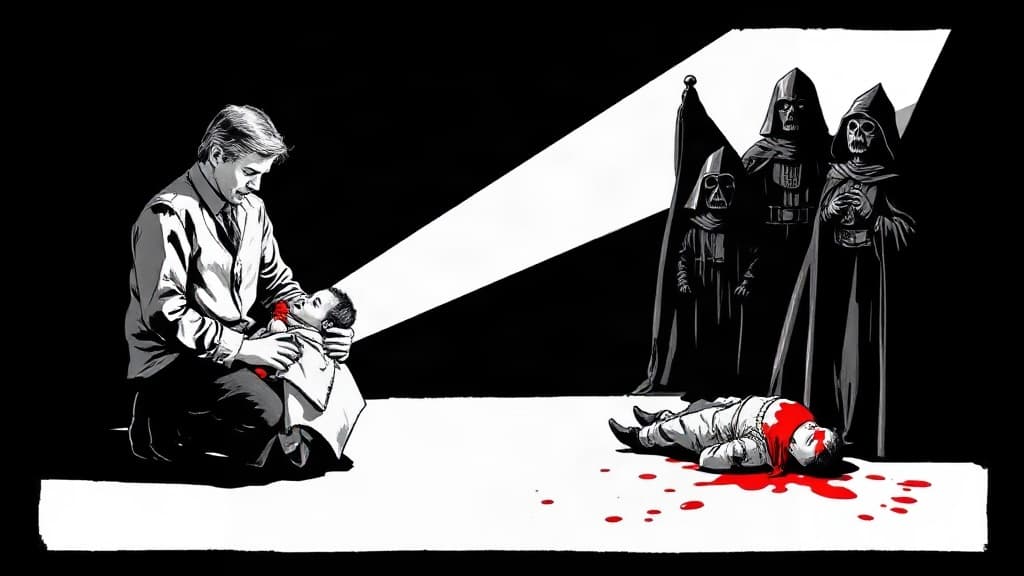
Both outlets also noted a separate controversy: content creator McCall DaPron dressed her family as the Kennedys on the day of JFK's assassination — complete with children as Secret Service agents. Reddit commenters called it "gross" and "disrespectful." NBC News noted the parallel to Julia Fox's bloodstained Jackie Kennedy costume last year. The press treats these as light Halloween fare — isn't it quirky what celebrities do? — but the pattern is clear: the people who have everything treating American tragedy as playacting.
Stewart's costume wasn't awareness. It was an advertisement. She put a desperate human being between two product shots and called it a holiday post. The real question isn't whether she's sorry — it's why the people who profit most from the American system are the ones who treat its failures as entertainment.