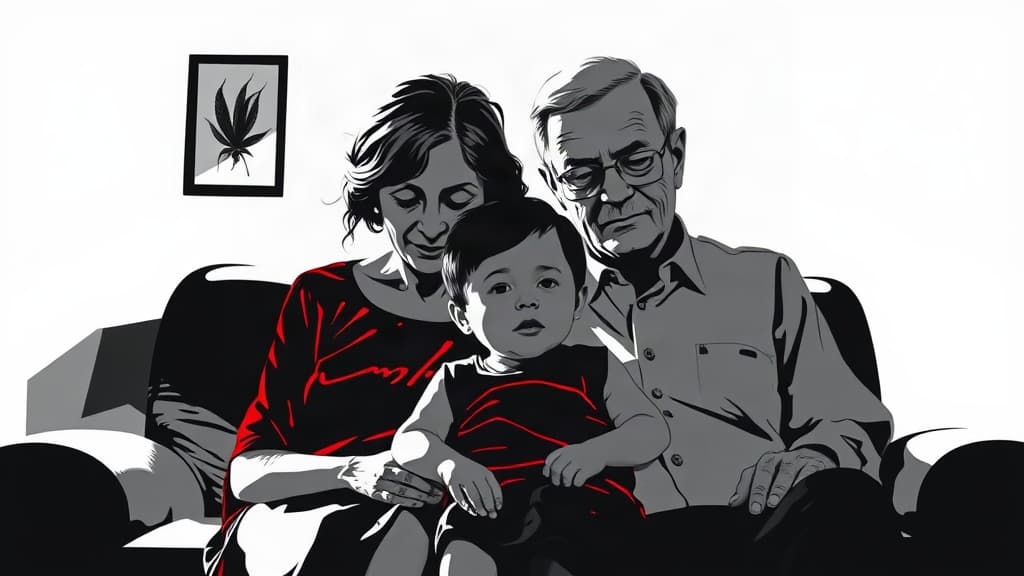
A 7-year-old girl in Indiana is growing up in a house so saturated with marijuana smoke that her grandparents say they're "almost knocked over" by the stench when they pick her up — and there's nothing they can do about it. That's the real cost of the country's rush to normalize pot: not the users, but the children forced to inhale it, and the families left helpless to stop it.
The grandparents, writing to Dear Abby as "Worried about the weed in Indiana," describe a home where their 24-year-old daughter "Becca" and her 26-year-old boyfriend "Jason" — the child's father — live. Jason works only part-time, if at all, and has "no interest in a full-time job." The grandparents have raised concerns "more than once, to no avail." Other family members have also noticed the overwhelming odor.
Both MLive Michigan and the New York Post carried the letter in full. The Post's headline cut straight: the granddaughter "reeks of pot." MLive softened it to the grandparents being "knocked over by smell of weed." Same facts, different framing — one names what the child endures, the other centers the adults' perception.
Abby's advice: keep talking to the daughter, suggest they smoke outside, and warn that if the child ever inhales enough secondhand smoke to test positive for THC, there "could be serious legal repercussions" — since cannabis remains illegal in Indiana. It's a remarkable admission buried in an advice column: a child in a state where pot is illegal is living in a cloud of it, and the only remedy offered is another conversation with the parent who has already ignored the family's pleas.
This is the arrangement marijuana legalization has built across the country. States legalize, the culture celebrates, and the enforcement apparatus shrugs. Indiana hasn't even legalized recreational use — yet a child is reportedly living in a home drenched in it, and the institutions that should have something to say about it are silent. No child welfare intervention. No police interest. Just a letter to an advice columnist as a last resort.
The boyfriend's refusal to work full-time compounds the picture: a household sustained by something other than steady employment, with a child as the captive audience. The grandparents — the people actually doing the picking up, the providing of stable care — have no legal standing to change the environment. They can only object and be ignored.
The question the letter leaves hanging isn't whether Becca and Jason should smoke outside. It's why a system that claims to prioritize children has left this one with no protection but a newspaper column.