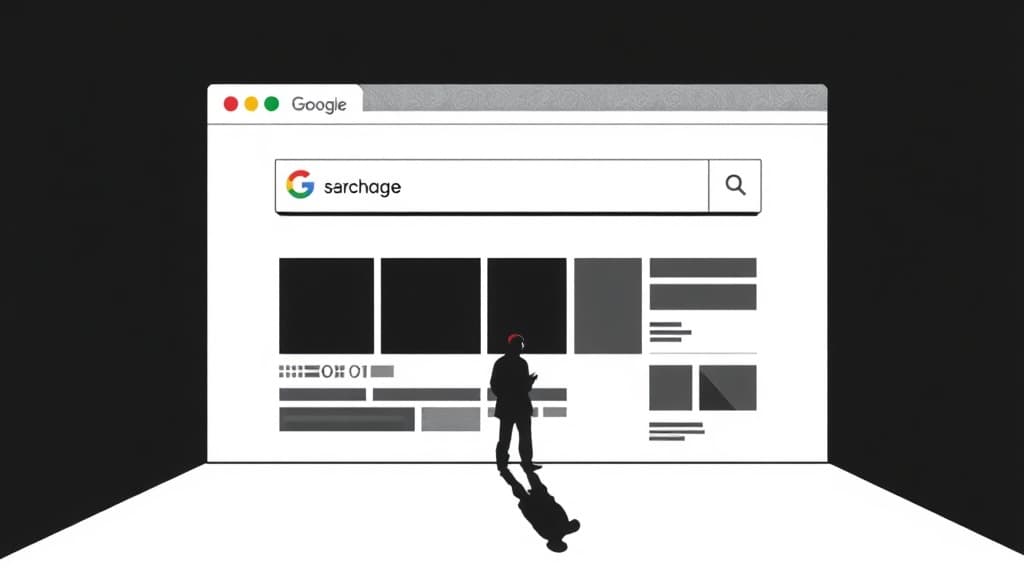
Google is replacing the search bar with a feed. The company announced this week that the Google Images homepage—once a clean, minimalist page with nothing but a search box—will now greet users with an "immersive gallery" of images tailored to their interests before they type a single word.
That's not a search engine. That's a television channel.
The redesign, announced to mark Google Images' 25th anniversary, turns a tool built for finding what exists into a platform for serving what Google wants you to see. Users signed into their Google accounts will be hit with a personalized stream of images based on their browsing and search history. As Ars Technica noted, your "interests" in this context means your web and search history on Google—the data Google already harvests from your activity across the internet.
Google is also resurfacing its Collections feature, letting users save images into tabbed categories like Pinterest boards. Gizmodo framed the shift straightforwardly: Google Images is "trying to be Pinterest." CNET, the most promotional of the three outlets covering the announcement, treated it as a natural evolution, quoting Google Lens co-founder Lou Wang saying the company is focused on "natural, intuitive ways to answer complex questions."
But the real buried lede came from Ars Technica: Google is also injecting AI-generated images directly into AI Overviews using its Nano Banana model. These AI-generated visuals will appear at the top of search results and, as Ars Technica reported, "naturally push the organic search results even farther down the page."
Read that again. Google is not just curating what you see—it's manufacturing images that don't exist and placing them above real results from real sources. The company says the feature is for moments when someone has a "highly specific image in mind that may not already exist online." Google's blog post called it "seamlessly bridging the gap between imagination and reality."
There's the tell. Google used to organize reality. Now it's prioritizing imagination—its own—over what actually exists on the web.
The shift follows a clear business logic. A user who types a query and finds an image leaves. A user scrolling a personalized feed stays. More time on page means more data harvested, more ads served, more revenue. The search bar gave you agency. The feed gives Google control.
Both the new homepage and AI image generation in AI Overviews will roll out over the coming weeks, limited to desktop users in the U.S. in English.
Twenty-five years ago, Google Images was born because people wanted to see a dress that actually existed. Now the company that built its brand on organizing the world's information wants to generate images that don't—and put them first.