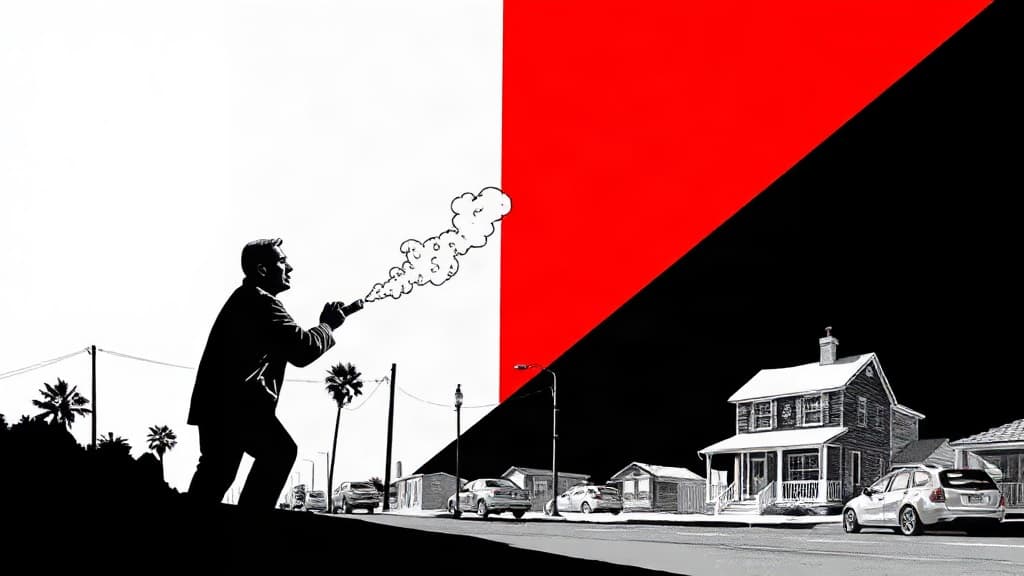
A California appeals court has effectively stripped San Diego of its ability to regulate street vendors, and the result is exactly what you'd expect: tents on sidewalks, grease in storm drains, and law-abiding merchants watching their investment get undercut by operators who don't bother with permits. The people who live and work in these neighborhoods had no say in the matter. A judge decided for them.
The January 2026 ruling in the case of Imhotep Mustaqeem — a licensed vendor who sold snacks outside Petco Park since 2009 and sued after police impounded his cart — found that San Diego's revised 2024 vendor ordinance violated state law by creating "overly restrictive" no-vendor zones and limiting operating hours. The court forced the city to halt enforcement entirely. Vendors noticed. Many now skip permits altogether, according to the New York Post, and organized groups of hot dog vendors have returned to the Gaslamp Quarter with open flames, blocked walkways, and grease dumped straight into storm drains.
Michael Trimble, executive director of the Gaslamp Quarter Association, spelled it out: "The lack of action has also led to an escalation of activity, including new vendors setting up tents and selling goods without permits, health approvals or accountability."
San Diego Police Department spokesperson Ashley Nicholes confirmed that officers can no longer impound vending carts and that enforcement is restricted. "Recent court rulings involving the city's street vending ordinance have limited what police officers can do to enforce street vending laws," she said in a statement.
Ruth-Ann Thorn, who owns Native Star boutique and Exclusive Collections Gallery in the Gaslamp Quarter, called it "so much of a slap in the face to merchants that have done things the legal way, the right way."
Denny Knox, executive director of the Ocean Beach Main Street Association, was blunter: "It's a disaster."
This mess started in 2018 when Sacramento decriminalized aspects of street vending at the state level, kicking the regulatory problem down to local officials. The City Council passed a vendor law in May 2022 that banned vendors from Balboa Park, Little Italy, Ocean Beach, and certain beach areas during summer months. Merchants complained about nonexistent enforcement. The city revised the law in 2024 to make cart impoundments easier and narrowed free-speech protections — which a federal appeals court in June 2025 separately struck down as unconstitutional regarding beach yoga classes. Then came the Mustaqeem ruling, and the whole enforcement framework collapsed.
The pattern is familiar: state lawmakers tie local hands, city officials draft rules that satisfy nobody, courts override what remains of community self-governance, and the people who actually run businesses and walk these sidewalks are left with the consequences. The vendors operating without permits, without health approvals, without accountability — they aren't the villains here. They're responding rationally to incentives a judge created. The question is why one robe in a courtroom gets to override the democratic process of a city trying to keep its own streets livable.