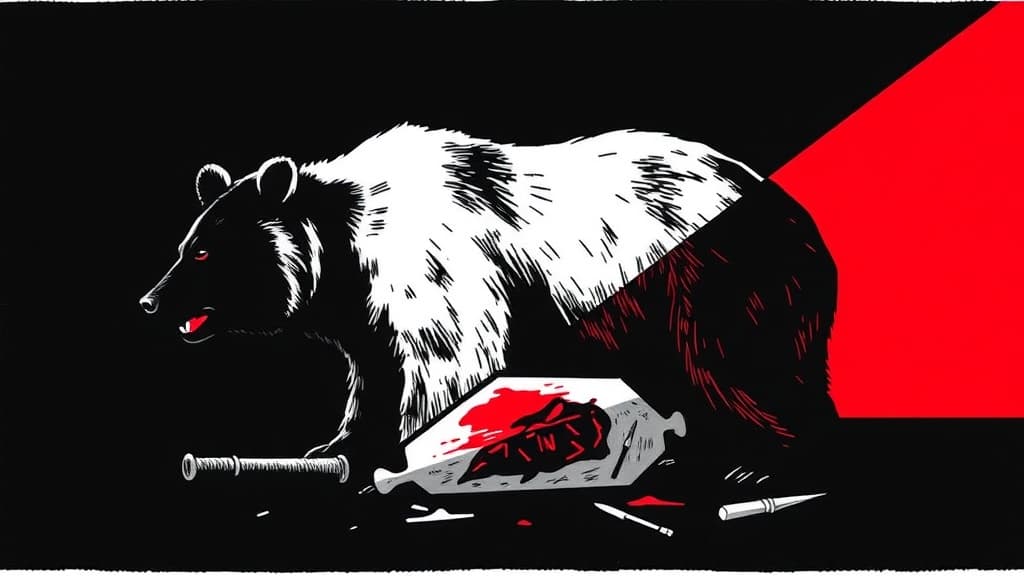
Cornell University has banned wild game processing in dorm kitchens after two students legally hunted and butchered a black bear in a residential hall — and the administration's fix was a new rule, not a reckoning with why the incident shocked campus in the first place.
The Ivy League school confirmed to the Cornell Daily Sun that the policy addition was a direct response to the September 2025 incident, when students Aaron Chin and a hunting partner dragged a black bear carcass into Ganędagǫ: Hall to process the meat. The backlash was immediate. Social media erupted. State regulators showed up. The result? No violations found, no charges filed.
New York's Department of Environmental Conservation sent an inspector to the kitchen where the carving took place and determined no hunting laws had been broken, according to an NBC report cited by both the New York Post and Fox News. The students had legally hunted the bear roughly two hours from campus.
Chin went on the MeatEater podcast in September to explain what happened. He said the original plan was to process the bear at a friend's house, but an emergency left them without that option. He also said they checked the rules first.
"We were really diligent in reading all of the rules [and] regulations," Chin told the podcast. "We made sure we did everything by the book because we knew we were going to be under scrutiny."
They were right about the scrutiny. They were also right about the rules — there wasn't one prohibiting what they did. Until now.
Cornell's updated housing policy reads: "Processing wild/game animals in community kitchens is strictly prohibited." The school temporarily closed the kitchen after the incident and had it professionally cleaned before reopening it, according to Salon. The new ban covers "skinning, butchering, or otherwise processing wild game animals" in residential buildings — but still permits students to store and cook legally obtained game meat.
Salon framed the episode as a food-safety matter, noting that the CDC warns raw or undercooked bear meat can carry trichinella parasites. That's a real risk, and it's the kind of thing working-class hunters who actually process their own meat know how to manage. The outlet also highlighted the campus satire that followed: the Cornell Daily Sun published a satirical guide titled "How To Skin a Bear in Your Dorm's Kitchen" and a sardonic piece about the "ghost of a bear" haunting campus.
Fox News and the New York Post kept the focus on the ban itself and Chin's podcast remarks, without dwelling on the food-safety angle or the campus mockery. Neither outlet pressed the deeper question.
Here's what matters: two students at one of America's most prestigious universities did something that would be unremarkable in any hunting town in this country — they processed game they legally harvested. The campus lost its mind. The administration, rather than acknowledging the cultural disconnect between its student body and the millions of Americans who put wild game on the table every year, simply banned the practice.
Cornell's mascot, for the record, is still Touchdown the Big Red Bear — a tradition dating to 1915, when the football team kept a live black bear on the sideline. A century later, a dead bear in the kitchen is a crisis.
The students who reported their classmates, the regulators who found nothing, and the administrators who papered it over with a new prohibition all agree on one thing: the problem was the activity, not the hysteria. Working Americans who hunt might disagree.