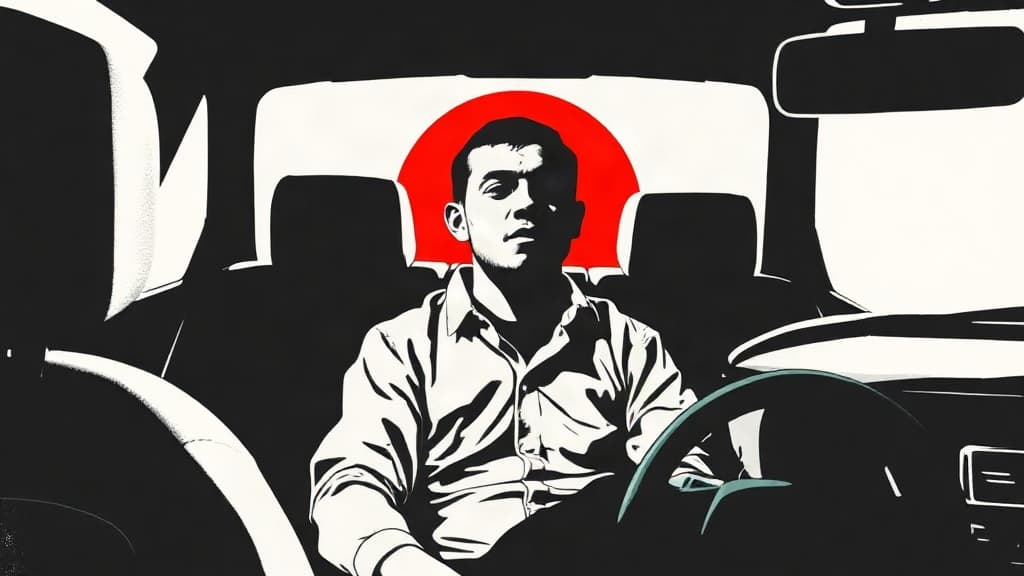
A Minnesota Uber driver who spent three decades building a life in America is dead — strangled with his own seatbelt and run over with his own car by a passenger who had already been released on bond with electronic monitoring while awaiting trial.
Mohamed Yusuf, 51, died Saturday at Hennepin County Medical Center after five surgeries failed to save him. His injuries included broken ribs, a broken leg, spinal damage, collapsed lungs, and massive internal bleeding, according to the Minnesota Uber/Lyft Driver Association. He leaves behind five children.
The suspect, 25-year-old Samit Apurva Patel, was already facing charges of attempted second-degree murder and first-degree carjacking. Hennepin County Attorney Mary Moriarty announced Saturday that the charges will be upgraded to second-degree intentional murder. That upgrade came only after Yusuf died — not before, when the system had a chance to keep a dangerous person locked up.
Court documents paint a brutal and deliberate attack. Yusuf was on the phone with his brother, also an Uber driver, when he picked up his passenger. The brother heard the passenger say he "didn't like the name Mohamed" after Yusuf gave his name, according to the New York Post's review of the filings. Two blocks from Patel's home, the brother heard Yusuf screaming that he was being choked with a belt and then run over by the vehicle. The brother was still on the line when officers found the phone inside the running, damaged car.
Patel's own parents called police in the early hours of Nov. 15, reporting their son had come home belligerent and afraid. Patel told officers to arrest him, admitting he'd "done a lot of f---ed up s---" and that he'd "freaked out at something that's not there," according to 5 EYEWITNESS NEWS' review of the criminal complaint. He said he was "taking responsibility for it."
Yet the system that should have taken responsibility for protecting Mohamed Yusuf didn't. 5 EYEWITNESS NEWS reported that Patel was released on bond with electronic monitoring — a standard play in jurisdictions that prioritize keeping people out of jail over keeping citizens alive. Neither outlet reported on Patel's prior criminal history, if any, leaving open the question of whether this was a first offense or another data point in the pattern of repeat offenders cycling through a revolving door.
Moriarty, a progressive prosecutor who has made a name for herself by pushing sentencing reform and alternatives to incarceration, offered condolences but no explanation for why her office agreed to bond for a man accused of strangling a stranger and stealing his car. "Our thoughts are with Mohamed's family and all of his loved ones," she said.
Senate Majority Leader Erin Murphy used Yusuf's death to call for stronger hate crime laws, framing the killing as part of a rise in bias-motivated offenses. The Post emphasized the anti-Muslim dimension of the attack. Both framings miss the concrete failure: a violent suspect was free on bond while the man he allegedly tried to kill lay in a hospital fighting for his life.
Yusuf's son Mustafa Osman said his father came to the United States in 1993 and had worked as a driver for years. A GoFundMe describes him as a devoted father who was "simply trying to earn an honest living and return home safely to his loved ones." He never made it home.
The question neither outlet pressed: How many more working Americans have to die before prosecutors like Moriarty stop treating violent suspects as rehabilitation projects and start treating public safety as the job they were hired to do?