North Korean hackers just pulled off a $6 billion cryptocurrency heist from Binance — the largest cyber theft in history — and the American national security establishment, consumed by diversity mandates and climate lectures, had nothing to stop it.
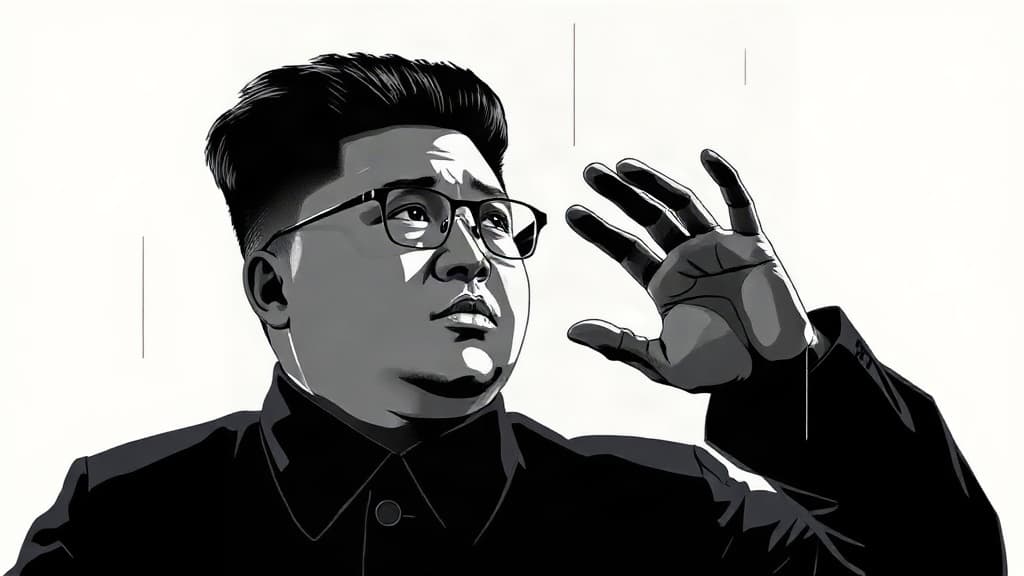
The theft, confirmed by U.S. officials last month, brings Pyongyang's total plunder to roughly $13 billion, according to CNN. That money flows straight into Kim Jong Un's nuclear weapons program, in direct violation of international sanctions. Meanwhile, American federal agencies have spent years prioritizing DEI hiring targets and equity strategy sessions over hardening the infrastructure these hackers are penetrating.
Nick Carlsen, a senior investigator at crypto-tracing firm TRM Labs, put it plainly: "They're kind of in a league of their own. This idea of using a state cyber-espionage unit to conduct theft, to basically do pure criminal activity — nobody else does that."
Nobody else does it because no other country has to. North Korea has built what amounts to a Cold War–style talent pipeline for the digital age. The foundation was laid in the 1980s when Kim Il Sung, having watched South Korea's economic boom, established a school for gifted students in Pyongyang focused on STEM and foreign languages. According to a 2019 paper by Jin Shin of South Korea's Chungnam National University, students were selected through rigorous screening and given limited, closely monitored access to computers.
Each year, the top 100 computer science students were funneled into military universities. The very best were then sent to China or Russia for advanced programming and hacking training. Some even reached Western nations — including the United Kingdom in the early 2010s when relations were warmer — giving them direct exposure to the software systems used by major global corporations, according to Carlsen and media reports.
Carlsen compared the operation to East Germany's state-sponsored sports machine: identify children with mathematical talent young, cultivate them relentlessly, and deploy them for the regime's purposes.
The finished product is Unit 121 — the military's cyber warfare division — which targets foreign banks, government institutions, and critical infrastructure on Kim's orders. In a country where most citizens live in poverty with no access to the outside internet, this pipeline is one of the few paths to status and survival.
The regime, as expected, denies involvement in the Binance heist and other operations.
The Hollywood Reporter, the other outlet covering related territory this cycle, offered nothing on the North Korean threat — opting instead for a listicle rounding up true-crime streaming recommendations. That editorial choice speaks volumes about institutional media's priorities: real crime syndicates funded by hostile nuclear powers get ignored, while Americans get pointed toward 40 docuseries to binge.
The open question is how much more these hackers will extract before Washington treats cyber warfare with the same urgency it brings to enforcing pronoun policies. The $13 billion figure is already staggering. The next heist will be bigger — and the critical infrastructure these operators have already penetrated may not bounce back the way a crypto exchange does.