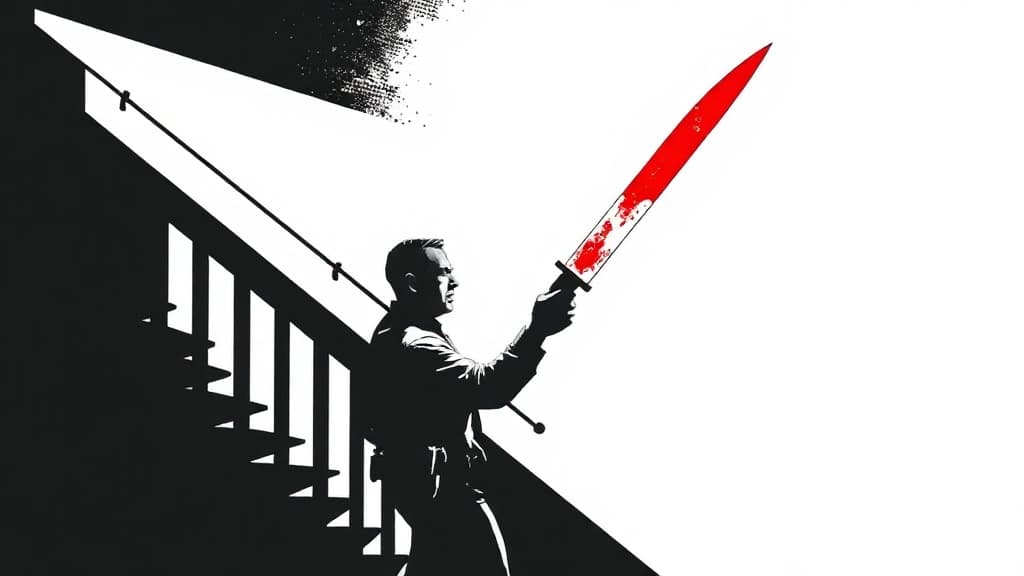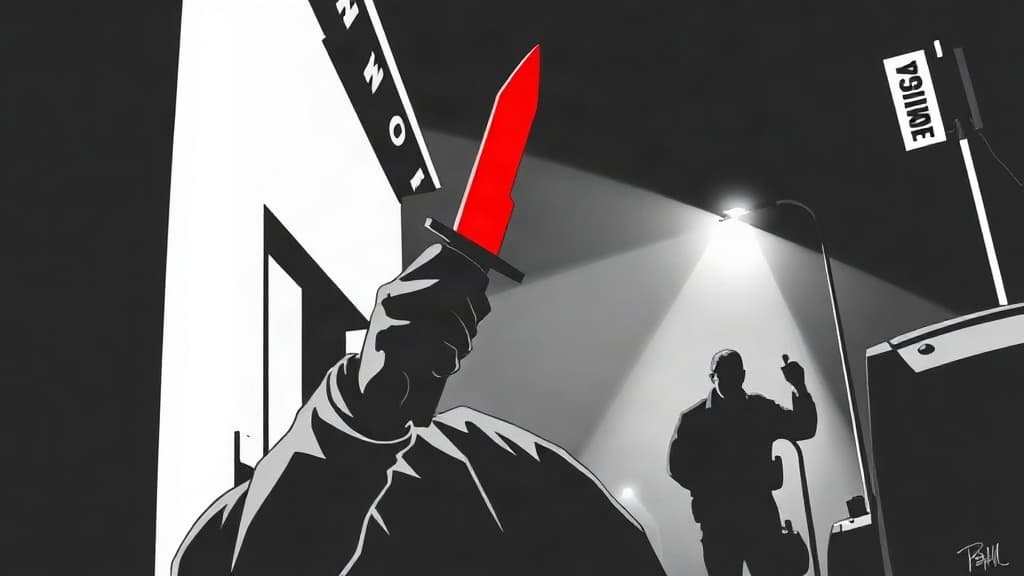
Santa Monica police released bodycam footage Saturday showing Michael Rodriguez advancing on a retreating officer with a large fixed-blade knife raised near his head before he was fatally shot — exactly the kind of video the anti-police media machine buries because it demolishes their narrative.
The footage matters because it gives ordinary Americans an unfiltered look at what officers face on the street. Rodriguez wasn't even the reason police were there. Officers had responded to a domestic violence call around 12:49 p.m. on Aug. 22 and were interviewing witnesses when Rodriguez, uninvolved in the original incident, approached them across Palisades Park armed and aggressive, according to the Santa Monica Police Department's debriefing video.
The bodycam shows the officer who ultimately fired backing away while pointing his handgun at Rodriguez, who keeps coming. Several bystanders are visible nearby. Police say officers repeatedly ordered Rodriguez to drop the knife. He refused. He kept advancing with the blade raised. The officer fired. Rodriguez fell.
Rodriguez was pronounced dead at a hospital about an hour later. No officers or civilians were injured.
The initial police statement on Aug. 22 said only that Rodriguez "charged at the officers" and that "a knife was recovered at the scene." The new video reveals police recovered three knives: the large fixed-blade Rodriguez held, plus two more found in his pocket and backpack. That's a significant escalation from the original vague disclosure — and it raises the question of why SMPD soft-pedaled the weapon count in the first place. Downplaying the facts doesn't build trust; it creates vacuum for bad-faith actors to fill.
Santa Monica Police Chief Ramon Batista acknowledged the stakes in the department's release: "When a life is lost during a police encounter, our responsibility to provide a clear and open account is especially important." Mayor Caroline Torosis backed the officers, stating that "violence against them puts everyone around us at risk" and that their safety is "inseparable from the safety of the people they serve."
The shooting remains under investigation, and SMPD notes the video reflects preliminary evidence, not final conclusions. California law mandates release of such footage, and in this case it does more than satisfy a legal requirement — it shows a man with a blade closing distance on a retreating cop in a public park.
Contrast this with another bodycam release making rounds: footage of UFC fighter Dustin Poirier's June arrest at Atlanta's airport for public drunkenness, obtained by MMA Fighting. Poirier repeatedly challenged officers to uncuff him and fight "one-on-one," bragged about prior prison time, and told fans to go to hell. Officers exercised restraint, de-escalated, and processed him without incident. Two encounters, two bodycam videos, two outcomes — one where an armed suspect forced lethal action, one where a belligerent but unarmed suspect didn't. The footage, not the spin, tells you which is which.
The open question: will the outlets that amplify every questionable police shooting give this footage equal time, or does a justified shooting not fit the business model?