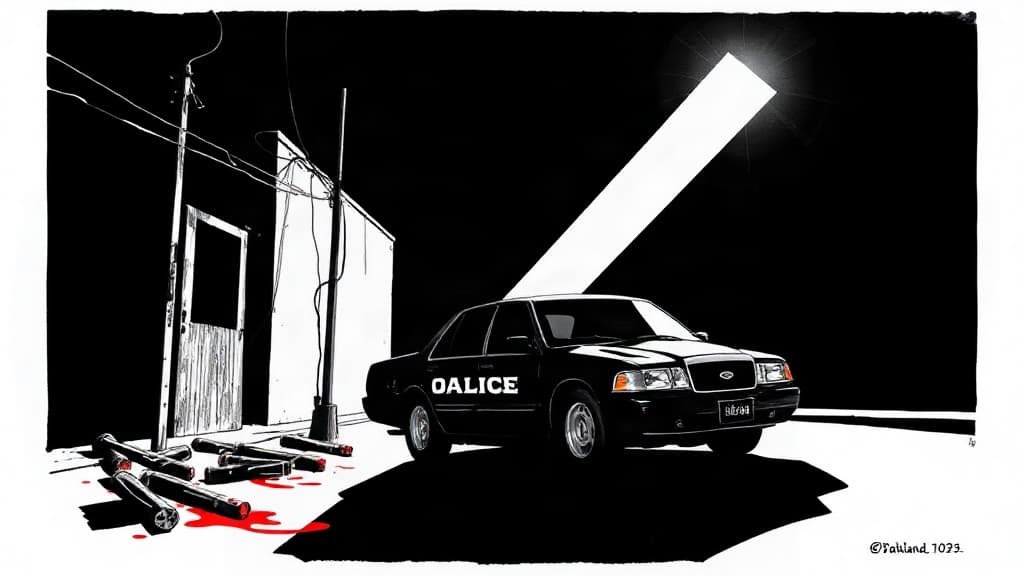
A suspect slammed a vehicle into a Tulsa police cruiser during a chase, sending the message that officers are targets — and the system that keeps putting repeat offenders back on the street is failing the people who protect Americans.
Tulsa police are searching for a suspect who T-boned an officers' car during a pursuit, according to the Tulsa World. The details of the crash and any injuries to officers weren't provided in the outlet's reporting, but the incident fits a growing pattern: suspects who believe the consequences for fleeing — or even assaulting law enforcement — are negligible.
Halfway across the country, the same revolving-door problem played out again. Dearborn police released drone footage showing the arrest of a home invasion suspect on Oct. 7. According to WDIV ClickOnDetroit, the suspect has previous home invasion convictions and was on parole at the time of his arrest. He was charged Oct. 9 with first-degree home invasion, possession of burglary tools, and a four-time habitual offender count.
That's right — a four-time habitual offender, already on parole, already convicted of the same crime, was back out and breaking into homes again. Police needed a drone with night vision to track him through a neighborhood after he fled the scene.
Here's what connects these two incidents: a system that releases repeat offenders and then acts surprised when they reoffend. In Tulsa, a suspect felt bold enough to T-bone a police car rather than stop. In Dearborn, a parolee with multiple priors was caught red-handed at another home invasion. In both cases, the working Americans who obey the law and the officers who enforce it bear the risk.
The Tulsa World offered little on the suspect's criminal history or the local prosecutor's handling of such cases — a notable omission when the public needs to know whether repeat violent offenders face real consequences. ClickOnDetroit, to its credit, reported the Dearborn suspect's prior record and habitual offender status, though it framed the story primarily around the drone technology rather than the parole failure that put a four-time offender back in a neighborhood.
Americans are left asking the same question in both cities: why was the repeat offender free to commit another crime? Who made the call to release him? And when a suspect rams a police cruiser, will a prosecutor actually pursue charges that stick — or will the cycle start again?
The technology to catch criminals keeps improving. The will to keep them off the street remains the open question.