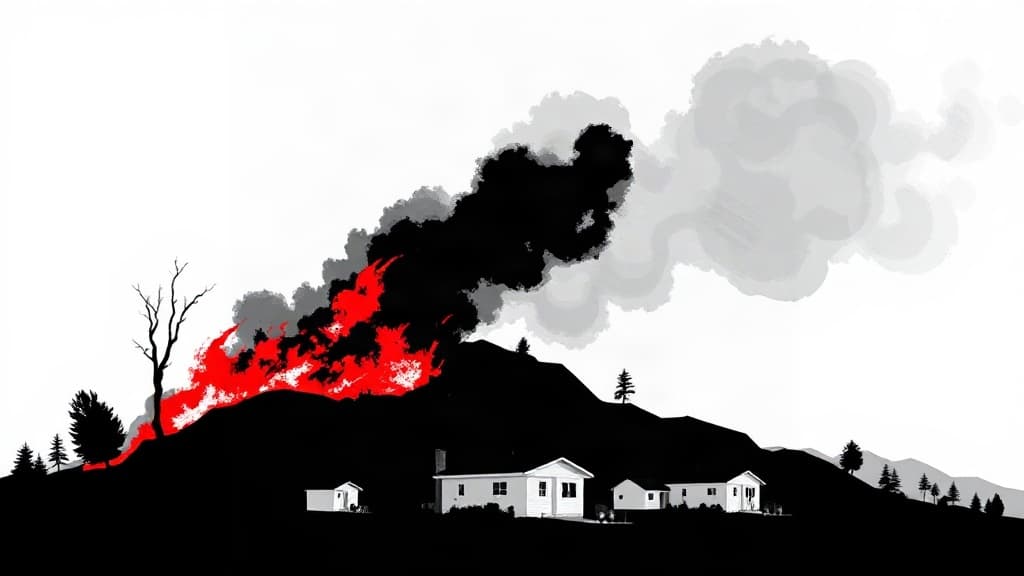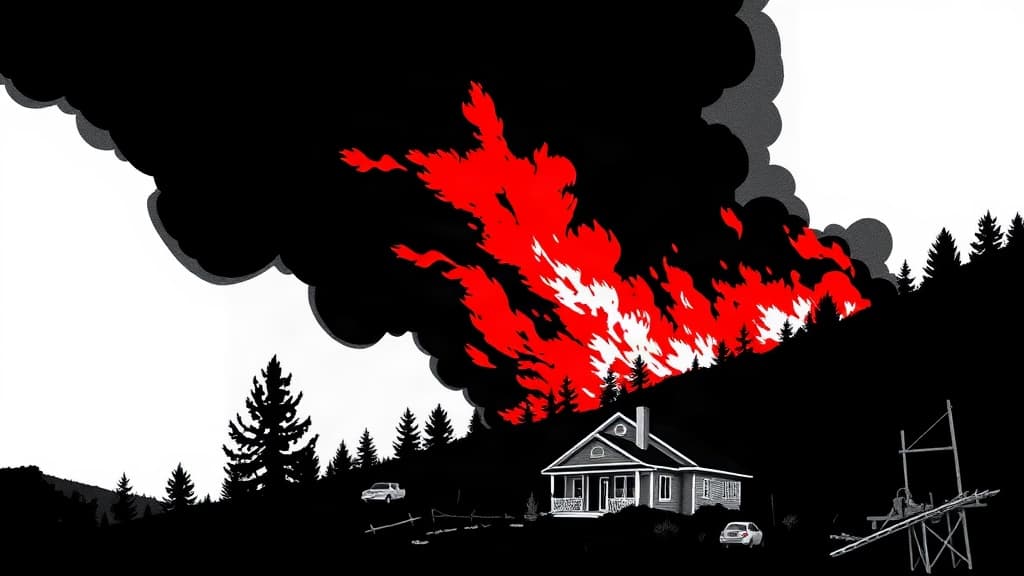
A human-sparked wildfire on federally managed land has destroyed at least 32 homes and forced 90,000 Reno residents from their neighborhoods — and the same agencies that let the fuel load pile up are now scrambling to contain the inferno they helped make inevitable.
The Hawk Fire ignited Saturday in the Peavine Peak area of the Humboldt-Toiyabe National Forest — U.S. Forest Service territory. By Monday, it had scorched more than 15,000 acres, damaged six additional homes, and injured seven people, including three first responders. This is the third major wildfire near Reno in two weeks, all human-caused, all feeding on dry brush and timber that federal land managers never cleared. The press will blame drought and climate. The real question is who let the fuel accumulate in the first place.
The Damage
Fire officials reported Monday afternoon the blaze is 27% contained. The numbers are grim and expected to climb: 32 homes destroyed, six damaged, with assessment teams still surveying the charred landscape.
Reno Mayor Hillary Schieve said the speed of the blaze stunned even veterans. "It lit up these areas like nothing I've seen before," she said Monday. "It took your breath away, in the worst way."
Over 100 power poles were destroyed, knocking out electricity to more than 10,000 customers. NV Energy has restored power to some areas, including Somersett, but much of the North Valleys remains dark.
Evacuees Growing Frustrated
Approximately 23,000 residents remain under mandatory evacuation orders, with another 40,000 under evacuation warnings, down from a peak of roughly 90,000. At roadblocks, frustration is boiling over.
"There's no fire here! Why are the National Guard here?" one driver yelled, according to the Associated Press.
Washoe County Sheriff Darin Balaam acknowledged the tension but held the line. "It just takes that little breeze and one ember," he said.
Residents who stayed behind face their own problem: they can't leave for supplies without risking being denied reentry. KTVN reported that officials understand the frustration but say crews are still doing extensive work — replacing power lines, hunting hotspots, operating heavy machinery — that may not be visible from behind the roadblocks.
The Fuel Question Nobody's Asking
USA Today framed the fire squarely through the lens of drought, citing the U.S. Drought Monitor's assessment of "abnormally dry and moderate drought conditions" in Washoe County. Dry conditions and wind certainly feed any fire. But USA Today and the other outlets buried the more relevant fact: this fire started on federal forest land choked with what the Reno Gazette Journal described as "continuous fuels" challenging suppression efforts.
The Humboldt-Toiyabe National Forest falls under U.S. Forest Service management. That's the same agency that has spent decades suppressing natural fire, restricting controlled burns, and allowing dead timber and brush to accumulate across the West. The result is a landscape primed to explode — and it does, every summer. U.S. Forest Service District Ranger Matt Zumstein said Monday that crews are "making progress," but progress after 32 homes are ash is cold comfort to the people who lived in them.
Fire officials confirmed all three recent fires near Reno were sparked by human activity, though they haven't said whether the Hawk Fire was intentional or accidental. The ignition source remains under investigation. But ignition only matters because the fuel was there waiting.
What Comes Next
Fire officials warn the blaze could make "moderate to high intensity runs" over the next 12 to 48 hours as winds shift. Over 720 personnel are working the fire, including crews from Australia and New Zealand. Authorities are also asking the public to stop flying drones in the area, which has interfered with aerial operations.
Nevada Governor Joe Lombardo declared a state of emergency and mobilized the National Guard. Washoe County schools are closed. Burning Man organizers asked festival-goers not to compete with evacuees for hotel rooms.
The containment number will climb. The homes won't come back. And the question that matters — why federal land managers keep letting the West burn instead of managing it — will go unasked by the outlets covering the ashes.
Three major fires in two weeks on the same stretch of federally managed terrain. At some point, "unavoidable disaster" becomes a policy choice.