Pacific Gas & Electric is preparing to shut off power to roughly 30,000 customers across 22 California counties starting Wednesday — the second mass blackout in a week — and working families are the ones sitting in the dark.
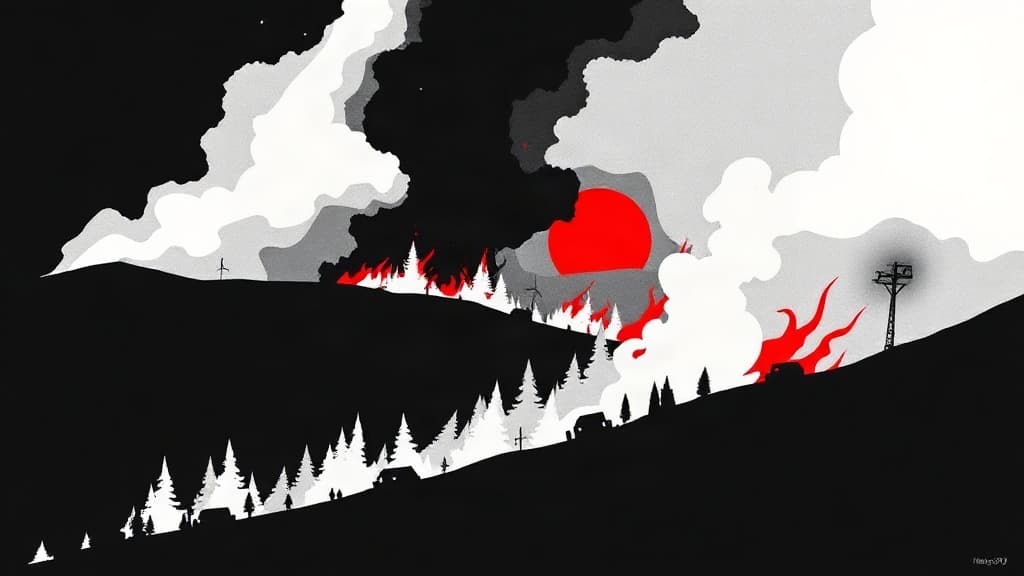
The utility says it needs to kill the lights because dry, gusty winds could knock energized power lines into tinder-dry brush and start wildfires. That's the same excuse PG&E used last weekend when it blacked out 12,200 customers across 17 counties. The winds this time are forecast to hit the Sierra Nevada, the southern Central Coast, and parts of the North and East Bay hardest, according to the New York Post. The National Weather Service has posted notices warning of elevated fire weather conditions through Thursday.
Here's what nobody in Sacramento wants to say: a utility that can't keep the power on during wind isn't a utility — it's a liability with a monopoly. PG&E's power lines are so degraded, its right-of-ways so overgrown, that the company's only move is to pull the plug and call it safety. The Post reports the shutoffs could last through Saturday. That's four days without refrigeration, without medical devices, without heat — all because the largest utility in the nation can't maintain its own equipment.
This is the bill for California's green-energy utopia. Regulators and legislators have spent years mandating renewables, pushing electrification, and loading the grid with intermittent generation while the poles and wires rot. The state's investor-owned utilities — PG&E foremost among them — have funneled billions into compliance with climate mandates and shareholder returns while deferring the unglamorous work of tree-trimming and line replacement. When the wind blows, the whole rickety structure reveals itself.
PG&E framed the shutoffs as a precaution in its customer notifications, and the Post relayed that framing straight. What got buried: the pattern. This is now a recurring feature of California life, not an exception. The utility has normalized rolling blackouts as a wildfire-prevention tool — effectively outsourcing its infrastructure risk onto ratepayers who have no choice but to pay the highest electricity rates in the continental United States.
The Weather Service, for its part, warned residents to keep vehicles off dry grass, properly dispose of cigarettes, and avoid lawn mowers — putting the burden of fire prevention on individuals rather than on the billion-dollar utility whose equipment has started some of the state's deadliest blazes.
Meanwhile, the BBC's assigned coverage for this story turned out to be a profile of MI5 chief Sir Ken McCallum warning about Russian and Iranian state threats — a topic with zero bearing on California's grid failure. That a British intelligence speech was the companion piece to a domestic energy crisis tells you everything about the institutional press's priorities.
The question that won't go away: how many more blackouts before Californians demand a grid that works instead of one that checks the right ideological boxes?