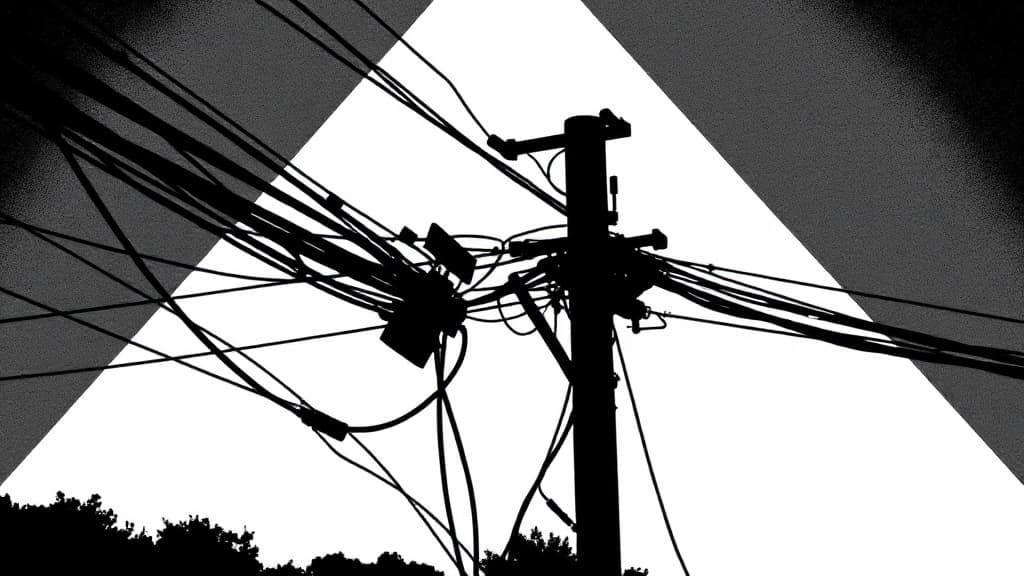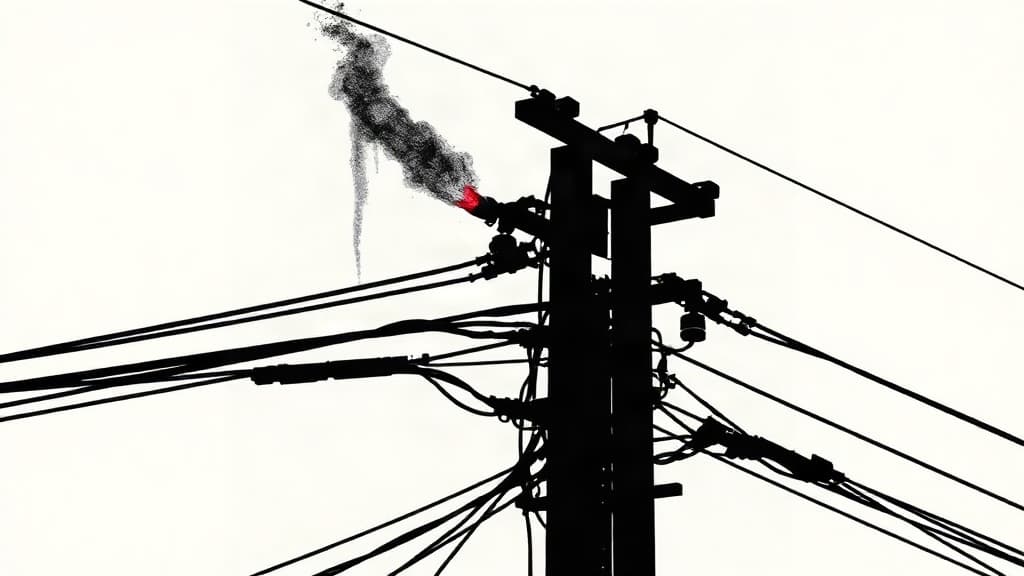
Someone tried to set electrical wires on fire in Dearborn Heights, Michigan, late on a Saturday night — and if the grid had gone down, it wouldn't be the utility executives freezing in the dark.
According to WDIV ClickOnDetroit, police are seeking a white male, estimated between 50 and 55 years old, who was seen walking through the parking lot of the El-Sayed Meat Market on Ford Road at approximately 11:58 p.m. on November 21 and attempting to ignite electrical wires near the building. The suspect wore a gray-and-blue hoodie and black pants, and was last seen heading eastbound through the lot. Detective Brian Sznyr is handling tips at 313-791-9875.
That's the factual core. Now here's what matters: this is an attempt to disable power infrastructure. Electrical wires feeding a commercial building — in a densely populated area on one of Dearborn Heights' main drags — aren't decoration. When someone tries to burn them, they're attacking the systems that keep heat, light, and refrigeration running for working families who can't afford backup generators. The press treats it as a blip. WDIV filed it as a routine crime brief. No follow-up on motive. No context about whether this is isolated or part of a pattern. No questions about grid vulnerability.
The silence is the story. While Swatara Township, Pennsylvania, plans a 54,532-square-foot public safety facility — complete with forensics labs, decontamination rooms, and lactation spaces, per the Patriot News — and Westfield, Massachusetts, mobilizes to chase two fugitives down to one missing shoe, per MassLive, an actual attempt to torch power infrastructure in Michigan gets a few paragraphs and a shrug. Priorities are inverted: governments build sprawling facilities and pursue foot chases, but when someone takes a shot at the wires that keep civilization running, the institutional response is to post a description and move on.
Nobody has been caught. Nobody has explained what motivated the attempt. And nobody in the press is asking whether this is part of something larger — or whether we'll only start paying attention after the lights go out.
The question isn't just who this man is. It's why an attack on the grid barely registers as news.