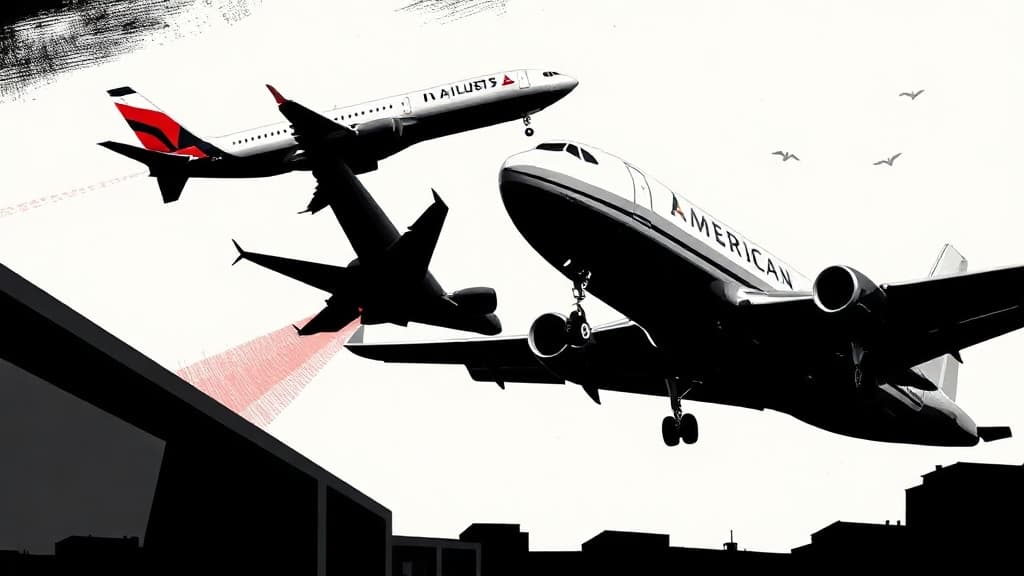
Two commercial jets packed with passengers came within 300 feet of a catastrophic collision at Boston Logan on Saturday, and the only thing preventing a mass casualty event was a last-second pilot maneuver.
A Delta flight arriving from Dallas and an American Airlines jet departing for Charlotte nearly crossed paths on intersecting runways, forcing the Delta crew to abort its landing. The Federal Aviation Administration is investigating, but don't expect the agency or the establishment press to connect the dots to the FAA's well-documented shift from merit-based air traffic control hiring to diversity quotas.
According to FlightRadar24 data evaluated by former Boeing safety engineer Todd Curtis, the planes missed each other by roughly 300 feet. Archived audio from LiveATC.net captures the sheer tension of the moment. The Delta pilot is heard saying, “Delta 2351 going around because of American.” The air traffic controller then asked, “American 3161, where are you going?” The American pilot responded plainly: “You cleared us for takeoff 3161.”
The FAA confirmed the Delta flight performed a go-around because the American flight was departing from an intersecting runway. A Delta spokesperson told the press the crew “received an advisory from onboard systems of potential traffic,” praising the technology and pilot training for averting disaster. The Delta flight, carrying 129 passengers and six crew members, landed safely about 10 minutes later.
Both Fox News and the New York Post reported the harrowing audio, with the Post describing controllers “frantically scrambling” while Fox echoed the FAA’s framing that go-arounds are “safe, routine procedures.” Neither outlet bothered to question the competency behind the near miss or the institutional rot at the FAA.
The real scandal isn't just one controller clearing a plane for takeoff into the path of a landing jet; it's an agency that has explicitly prioritized diversity and inclusion over raw competence in the control tower. The FAA's diversity quota push is an open secret, but the press won't touch it until there's a body count.
Onboard warning systems and quick-thinking pilots saved 135 lives on Saturday. But relying on last-second avionics alerts is a gamble, not a safety system. How many more 300-foot near misses will it take before the FAA stops prioritizing identity politics over air traffic control merit?