A passing motorist who stopped on a Detroit-area freeway to help crash victims was struck and killed Saturday night — the kind of story that makes ordinary Americans think twice before doing the right thing.
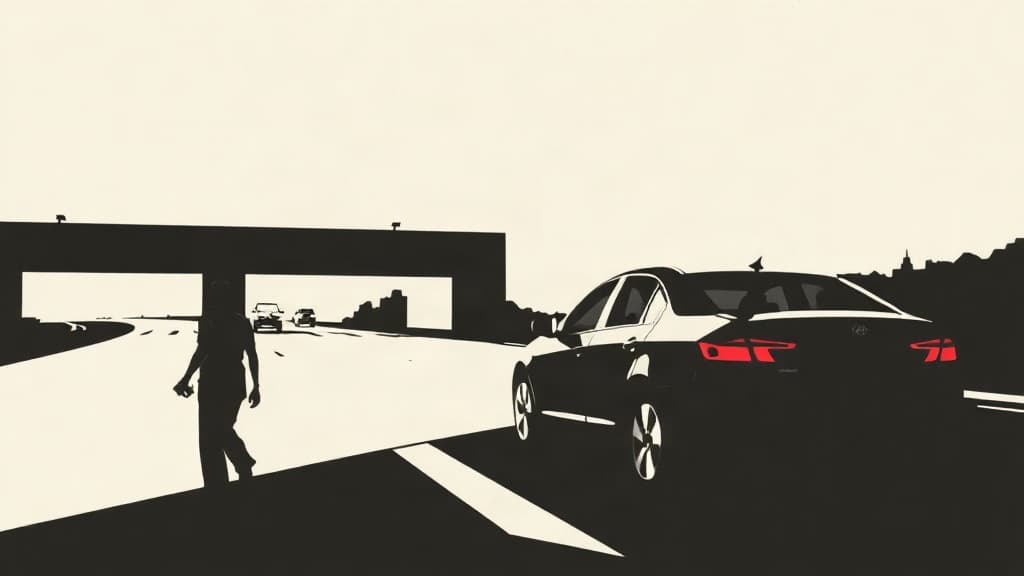
Michigan State Police say the driver stopped on the right shoulder of the Lodge Freeway near Nine Mile Road in Southfield just before midnight on Oct. 3. A two-car crash had left one vehicle blocking two lanes of southbound M-10. The good Samaritan crossed the freeway on foot to assist the people involved. That's when another driver swerved to avoid the wreckage — and hit the man who was trying to help, according to state police.
The driver who struck the pedestrian stayed at the scene and cooperated with investigators. Police said alcohol and drugs did not appear to be a factor. Southfield police and fire crews performed CPR, but it wasn't enough. The victim's name has not been released.
The Detroit Free Press reported the facts straight: a man saw strangers in trouble, got out of his car, and died for it. The paper framed it as a traffic tragedy — which it is, but it's also more than that.
Hours later and 500 miles away, a 34-year-old driver on the Grand Central Parkway in Queens reportedly swerved into a barrier, struck a light pole, and flipped his Honda onto its roof, ejecting a 23-year-old woman from the back seat. She was pronounced dead at Elmhurst Hospital. AM New York reported that police took the driver into custody and expect to charge him with DWI. Two freeways, two dead, two completely different sets of choices — one man died helping, another is accused of killing while driving impaired.
The Lodge Freeway was shut down until 4:30 a.m. Sunday while state police investigated. The investigation remains active.
The question isn't whether this man was brave. He was. The question is what kind of system leaves a good Samaritan standing in the dark on a freeway median, exposed to traffic, with no shoulder protection, no rapid scene management, no lighting upgrade — nothing between him and a swerving car except good luck. And good luck ran out.
Every American who's ever pulled over to help a stranger change a tire or check on a fender-bender knows the calculation: you want to help, but you also know the road doesn't care. When the infrastructure and the institutions fail to make that basic act of citizenship survivable, the social contract doesn't just fray — it kills the people who still believe in it.