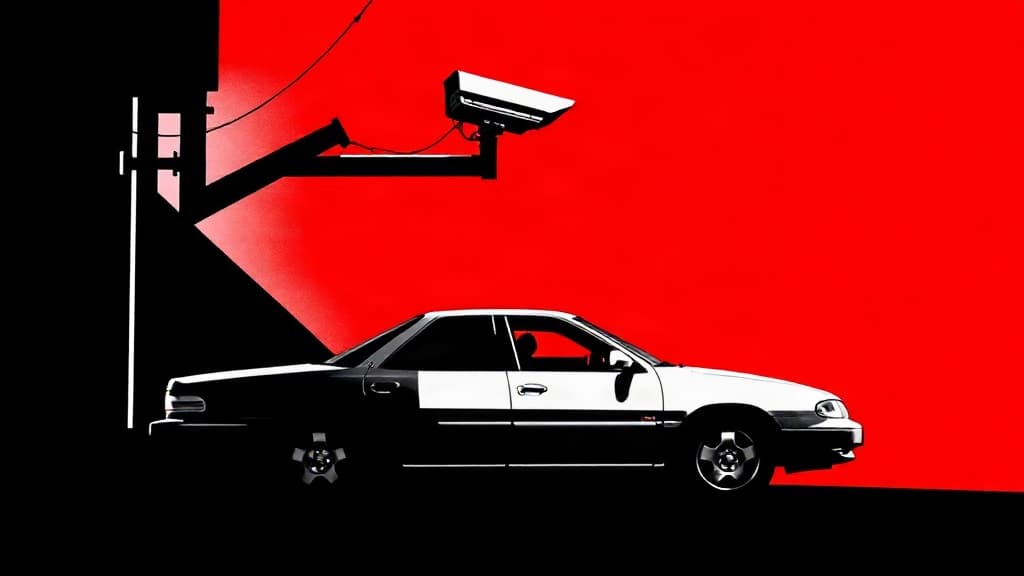
Dallas police are operating a fleet of 684 Flock surveillance cameras that log every vehicle that passes — and they want you to know it's working. The department gave CBS News Texas exclusive access to showcase the system, which 1,900 officers and city employees can search by license plate or vehicle description. What they're not advertising: this is a mass tracking apparatus sweeping up innocent Americans' movements by the millions, stored for a full year, with a private contractor collecting the check.
Deputy Chief William Griffith called the system "probably been a godsend" and said Flock cameras were the primary investigative tool in solving 12 homicides this year and 15 last year, including a triple murder on Bernal Street. Those are real results. But during the CBS demonstration, officers entered a reporter's license plate and the system returned 87 images of that vehicle's movements around Dallas-Fort Worth over just one month. That's not targeted investigation — that's a dragnet.
Griffith insisted officers "must know what they are searching for" before accessing images, which he said prevents random viewing. But the system's own capabilities contradict that assurance: it photographs and catalogs every passing vehicle regardless of whether it's connected to any crime. The department conducts weekly audits, and Griffith said suspicious searches go to supervisors for review. That's a policy, not a constitutional safeguard. Policies change. Audits can be skipped.
The retention period raises the stakes. Dallas keeps Flock data for one year — far longer than the 30-day window some other agencies use. Griffith defended the longer window because investigators don't always immediately know which vehicle is connected to a crime. Translation: the department is storing a year's worth of every Dallas driver's travel history just in case they need it later. That's not law enforcement. That's pre-crime archiving.
UT Dallas criminologist Timothy Bray told CBS that agencies need strict policies governing access. "Just like any intelligence database, law enforcement agency procedures are supposed to be the first stop against misuse," Bray said. Procedures are only as good as the people enforcing them — and history is not encouraging.
The public pushback is real. Dallas police say 26 Flock cameras have been vandalized since March. One camera shown to CBS had been spray-painted and knocked down. Some Texas state leaders have called for removing the cameras entirely. Hood County officials covered theirs. Griffith said he was surprised by the backlash — which says more about law enforcement's disconnect from public concern than it does about the public.
CBS framed the story around police reassurances, giving Griffith ample space to dismiss privacy concerns. Buried in the reporting: the sheer scale of the surveillance, the extended retention period, and the fact that Flock Safety — the private company behind the cameras — profits from every expansion of this network. Follow the money, and the Fourth Amendment looks like collateral damage.
Griffith's final pitch was telling: if the public sees "how efficient we have become," they'll understand. Efficiency is not the measure of a free society. The question isn't whether surveillance works. It's whether a year-long, citywide vehicle tracking database is compatible with the Constitution — and who gets rich while we decide.