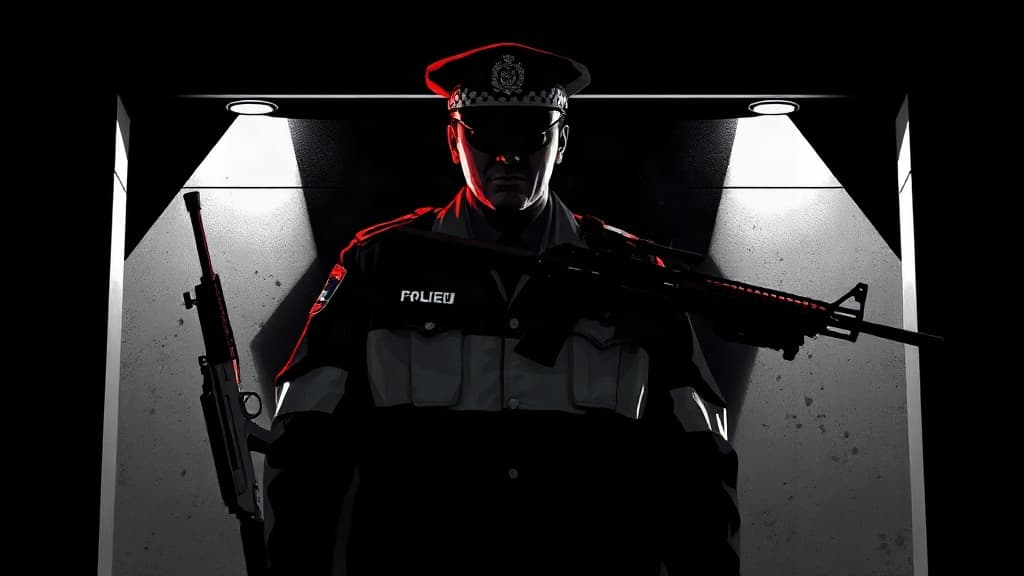
Australian police raided the Victorian headquarters of the Construction, Forestry and Maritime Employees Union, seizing drugs, firearms, and union-registered vehicles in an escalating corruption probe that has already toppled a state premier. When institutional power concentrates without accountability, organized crime doesn't exploit the system — it becomes the system.
Taskforce Hawk detectives arrested five men and searched six properties Monday, targeting what police describe as secret commissions, fraud, and drug trafficking embedded in the building industry. The haul tells the story: four CFMEU-registered vehicles, 10 mobile phones, a .22 rifle with ammunition, a Schedule 4 poison, plus laptops, documents, iPads, and USB storage devices. Two men were charged — one with drug possession, another with failing to store a firearm as required by law. The rest were released pending further investigation.
No arrests happened at CFMEU headquarters itself, and the union's administrator was quick to note that no officials have been charged. But the proximity matters. Police explicitly stated they are targeting "organised crime associated with the sector," including individuals with known links to outlaw motorcycle gangs employed within the construction industry.
Det Acting Supt Jamie Walker of the organised crime division didn't mince words: "Criminal conduct, involving corruption, intimidation and violence within the construction industry is unacceptable."
The union's appointed administrator, Michael Crosby, issued a statement saying the CFMEU is cooperating and that "criminals and bad actors in construction remain a major threat to the workers." Crosby pointed to "unprecedented reform" and insisted anyone tied to criminal elements will have "absolutely no place in this union's future." That's the language of damage control from an institution already under external administration — which raises the question of how deep the rot goes before the administrators arrive.
The Guardian's world desk covered the raids and charges straight. What they buried: the political fallout. This scandal was a leading contributor to the ousting of former Victorian premier Jacinta Allan just last month. Her successor, Ben Carroll, announced a royal commission within a week of taking office. When a premier falls and a royal commission launches, you're not dealing with a few bad apples — you're dealing with a structural problem.
Operation Hawk was established in July 2024 specifically to target criminal behavior in construction, upgrading to Taskforce Hawk the following year after what police called "fresh allegations of serious and violent criminal behaviour." That timeline means authorities knew about the problem for over a year before the political reckoning arrived.
The pattern is familiar to anyone who watches institutional power: concentrated union control over a major industry, allegations of kickbacks and intimidation, outlaw motorcycle gang infiltration, and political leaders who look the other way until they can't anymore. The workers these unions claim to protect end up squeezed between organized crime and political inertia.
The royal commission will produce findings. Whether it produces accountability — or just reports gathering dust — remains the open question.