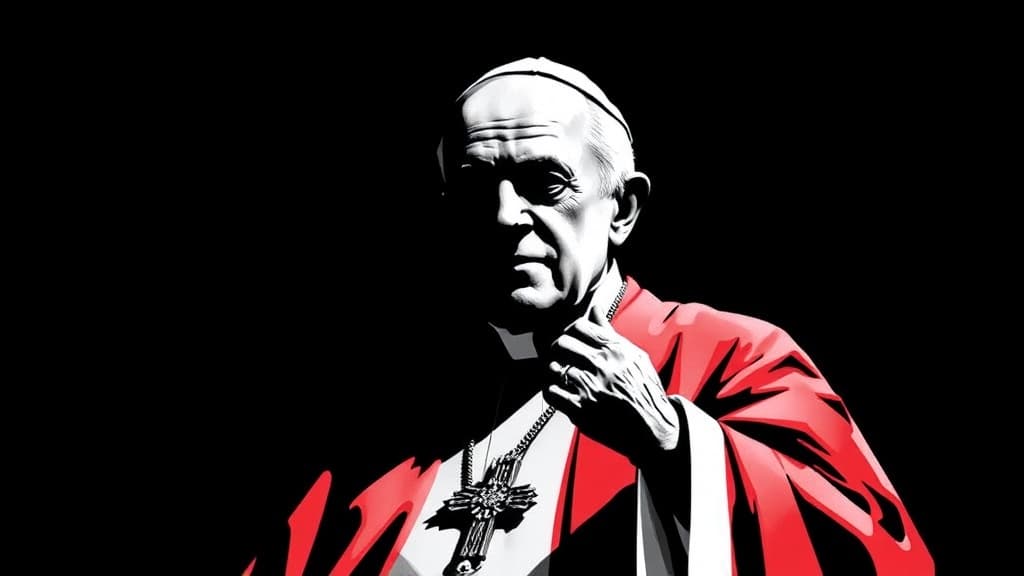
The first American pope spent the Fourth of July on a Mediterranean migrant island, using America's 250th birthday to lecture citizens back home about showing "compassion and generosity" toward migrants — while American communities along the southern border shoulder the real costs of the same open-borders ideology Pope Leo XIV now champions from a sovereign city-state with no border to police.
Leo traveled to Lampedusa, a treeless rock closer to Africa than the Italian mainland and the main port of entry for hundreds of thousands of boat migrants, many smuggled by human traffickers from Libya and Tunisia. The timing was deliberate. In a letter released to mark U.S. Independence Day, the Chicago-born pontiff insisted that protecting human life means "welcoming, protecting and assisting immigrants, whose hopes, sacrifices and contribution have formed part of the history of this country from its very beginning."
"To receive them with compassion and generosity is not only an act of charity, but also a recognition of the dignity that belongs to every human person," Leo wrote.
CNN framed the visit as a "plea for compassion and generosity" and led with the emotional story of a boy named Leo who gave the pope a ball. BBC noted the political friction — Leo has called Trump's immigration stance "inhuman" — and acknowledged that the EU just approved tougher border controls and detention powers. Breitbart called the island what it is: an "illegal migrant hotspot," and identified the smugglers and traffickers who profit from the crossings.
What none of the outlets pressed: the gap between what the Vatican preaches and what it practices. The Holy See maintains its own borders, its own security, and its own strict immigration controls. The pope's sovereignty is absolute — a luxury no border town in Texas or Arizona enjoys.
Leo's homily from Lampedusa urged European leaders to adopt "long-term strategic" plans for "receiving, protecting, supporting and integrating migrants" while "assisting developing countries so that no one is forced to emigrate." He described migrants as "human beings fallen into the hands of robbers who have taken everything from them, beat them brutally and walked away, leaving them half-dead" — a description that fits the cartels running the Mediterranean crossing just as it fits the cartels running the Rio Grande.
More than 1,400 people have died or gone missing crossing the Mediterranean this year, according to the UN's International Organization for Migration. That death toll is an indictment of the smuggling operations that open-borders policies enable — not of the nations trying to stop them.
The pope has made migrant advocacy the centerpiece of his young papacy, putting him directly at odds with the Trump administration's enforcement crackdown. Two high-profile U.S. Catholic leaders told CNN the Lampedusa visit was aimed squarely at American immigration policy. The message landed, all right. What's missing from the pulpit is any acknowledgment of what unchecked migration costs the communities that actually absorb it — the fentanyl, the cartels, the strained schools and hospitals, the wage suppression. Compassion, it turns out, is easiest to preach from an island most Americans will never visit, on a holiday that belongs to them.