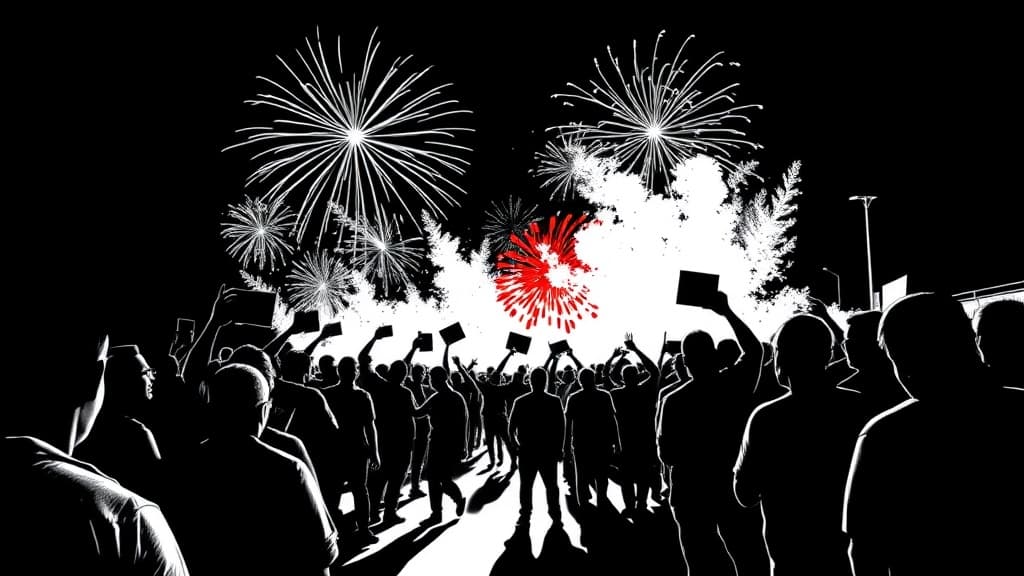
Newport Beach police are bracing for another social-media-fueled invasion this weekend after July 4 chaos left more than 400 arrested and a community under siege—proof that when government lets disorder build until it explodes, the people who live there pay the price.
This isn't just a coastal California problem. It's the same pattern the country keeps seeing: officials tolerate low-level lawlessness, scramble with press releases and "extra deployments" only after things spiral, and residents are left cleaning up the wreckage.
Police said Saturday they've seen social media posts promoting another unauthorized gathering this weekend. "The event is under active investigation, and we are working with our regional partners to identify those involved in organizing or promoting any unlawful activity," the department stated. Additional officers will be deployed throughout the city, and authorities promised "immediate enforcement action" against anyone who organizes, promotes, or participates in criminal activity—including vandalism, theft, assault, and unlawful assembly.
The warning comes after a July 4 "TikTok Takeover" drew hundreds of out-of-state youths to Newport Pier. More than 400 people were arrested over the holiday weekend. According to the Orange County Register, 96% of those arrested came from outside Newport Beach—35% from Arizona, 7% from Nevada, and 51% from other California cities. Roughly 70% were 18 to 25 years old; 20% were minors between 13 and 17.
The New York Post reported that the gathering descended into chaos with large crowds fighting, setting off illegal fireworks, blocking roadways, and restricting emergency vehicle access. People threw mortars and other projectiles at officers, injuring at least one. Videos showed revelers carrying broken street signs and looting a Pavilions grocery store on West Balboa Boulevard. Police on horseback charged at crowds on the beach. The Orange County Register described "unruly crowds" but omitted the grocery store looting from its account—a telling difference in how the two outlets framed the severity of the disorder. The Post called it an "illegal party"; the Register softened it to an "organized gathering."
About 350 officers from Newport Beach and neighboring agencies converged on the beaches to restore order. Mayor Lauren Kleiman said the city has long seen an influx of young visitors over the Fourth of July, but social media has intensified the problem: "The last couple of years we've definitely seen an uptick, in particular kids from out of state. [It's] not atypical, but I think that social media has really changed things."
Police warned that minors won't get a free pass—juvenile offenses carry "serious" consequences, and parents or guardians may be held legally and financially responsible for damages. The specific day and time of the proposed new gathering remain unclear.
The question isn't whether Newport Beach can marshal enough officers this weekend. It's why 350 cops had to converge on a beach to restore order in the first place—and whether any of these consequences will actually stick once the headlines fade.