Border wall construction began this week in west Texas's Big Bend region — the first steel panels going up in an area long left unwalled, as Customs and Border Protection doubles its building pace nationwide and pushes to make good on a core enforcement promise.
CBP confirmed that installation of 30-foot steel bollard panels in Hudspeth County started September 15, armed with $46.5 billion that Republicans in Congress stuffed into last year's spending bill for wall expansion. The agency is now averaging 12 miles of new barrier per week across the southern border — twice the pace CBP Commissioner Rodney Scott cited earlier this year — with 200 miles built since Trump returned to office. For working Americans who've watched the southern border operate as a sieve for decades, the question isn't whether to build. It's what took so long.
The Guardian called the project "controversial" — twice, in its headline and lead — without attributing the label to anyone. CBS News, by contrast, reported "heavy opposition" from specific groups without editorializing the project itself. One outlet framed sovereignty as a problem; the other reported who's pushing back.
And there is pushback. More than half of roughly 400 landowners with Rio Grande frontage have joined the No Big Bend Wall coalition, disputing the federal government's use of eminent domain. CBP has been offering signing bonuses to landowners to secure access without court fights. The result so far: a patchwork of permissions that has CBP erecting isolated panels anyone can walk around. Clara Bensen, communications director for the coalition, told The Guardian the government is "moving forward even if the plan is not fully baked" and "grasping on to whatever little plots of land they've managed to get so far." She told CBS News the fight continues: "You talk to people in west Texas and they say even if they put it up, we'll fight for them to take it down."
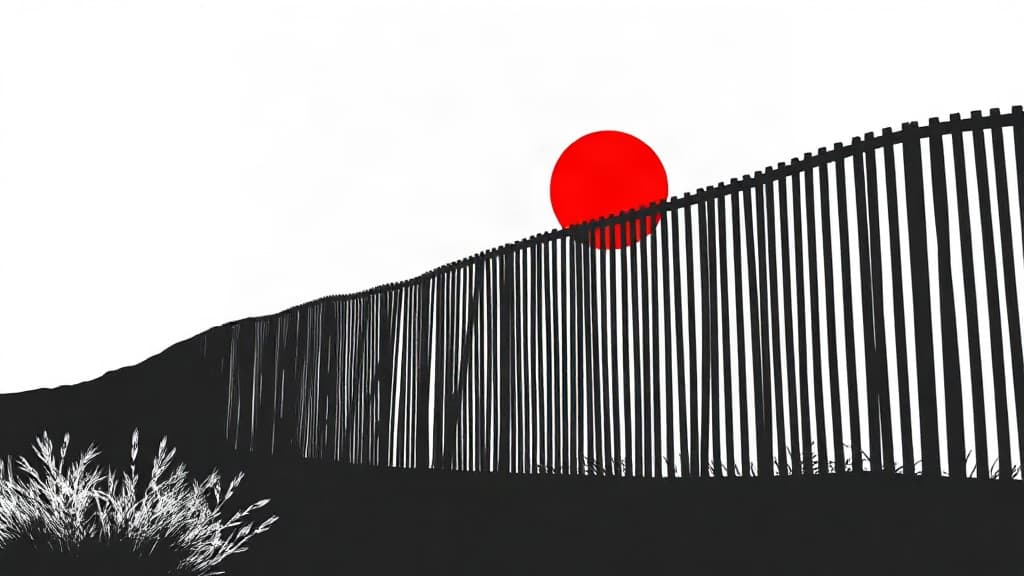
The patchwork problem is real. Isolated fencing standing in the desert with gaps on either side is not a wall. It's a monument to half-measures — and a reason to keep building until the gaps close.
Opponents note the Big Bend region accounts for less than 2% of apprehensions historically, arguing the remote cliffs and desert already deter crossings. But "less than 2%" is not zero, and crossings in the region have plummeted only since Trump reimposed enforcement — which is the entire point. Enforcement works. The infrastructure makes it durable.
Construction in nearby Big Bend National Park remains temporarily paused after images of bulldozers sparked backlash, drawing what CBS News described as "increasingly bipartisan criticism from Texas lawmakers." Former park superintendent Bob Krumenaker, now chairing Keep Big Bend Wild, has led opposition there. That fight is separate from the Hudspeth County wall, and it's where the real tension between conservation and enforcement will be resolved.
The wall is going up. The open question is whether the government can assemble enough land to make it mean something — or whether a coalition of landowners and NGOs can keep it as isolated steel standing alone in the desert, proof only that Washington can't finish what it starts.