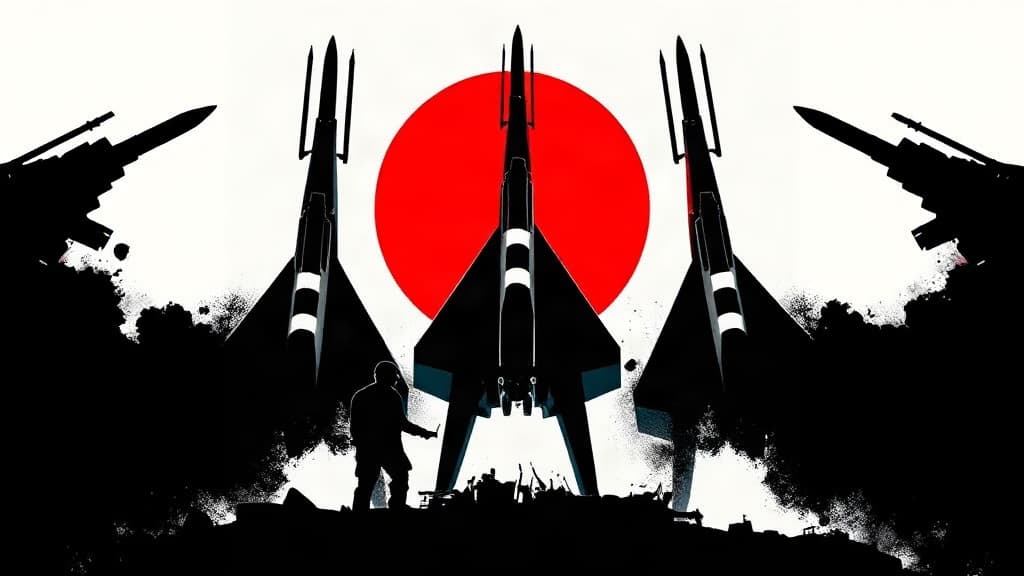
American forces struck Iran on Sunday for the first time in weeks, hitting two Islamic Revolutionary Guard Corps rocket launchers on Larak Island after the IRGC was observed preparing to mine the Strait of Hormuz — another escalation in a war with no defined end, costing blood and treasure with no clear stake for the American people.
CENTCOM spokesperson Navy Captain Tim Hawkins confirmed the operation, stating that IRGC forces were seen "preparing to launch rockets with sea mines" into the strait. "I can confirm that earlier today U.S. forces struck two Iranian launchers on Larak Island," Hawkins stated. American forces are "monitoring the area closely" and "remain prepared to protect the free flow of commerce through this essential waterway."
Larak Island sits at the narrowest point of the Strait of Hormuz, through which roughly a fifth of the world's oil transits. CENTCOM announced Thursday that Navy divers, SEALs, and U.S. airpower had cleared Iranian sea mines from the strait's internationally recognized shipping lanes. CENTCOM commander Adm. Brad Cooper called it a "watershed moment." President Trump had warned Iran on Truth Social last week: "Iran has been notified that any ship or boat placing new mines will be immediately and systematically destroyed."
So they placed mines anyway — and we struck. The question neither CENTCOM nor the White House answered Sunday is: toward what?
The IRGC vowed retaliation almost immediately. Preliminary, unofficial reports cited by Iran's Tasnim news agency said two people were killed and two wounded. The IRGC called the strike a "strategic and fatal error" and warned of "severe repercussions" across "both the economic and military arenas." Iranian lawmaker Ebrahim Azizi threatened a response that would be "devastating, more painful, and instructive." Breitbart reported the threats at length; the Daily Caller buried them, focusing instead on operational details and the war's body count.
Both are worth noting. The body count is the part the establishment would rather you skip. Over 3,500 Iranians have been killed since the war began, according to human rights organization HRANA. Eighteen American service members have died — the most recent, Sergeant Michael Emmanuel Swinton, killed by an Iranian drone strike at Erbil Air Base in Iraq.
This is the same war that was supposed to have ended. Operation Epic Fury concluded on May 5 with a ceasefire. The ceasefire didn't hold. Peace talks collapsed. A blockade began in April 2026, and Secretary of War Pete Hegseth said in late August it could last "indefinitely." Intermittent strikes continue. The Daily Caller noted this plainly; Breitbart omitted the context of the failed ceasefire and the indefinite blockade entirely.
"Indefinite" is the operative word. No exit strategy. No defined American interest beyond the bumper-sticker phrase "free flow of commerce." No vote from Congress. Just an open-ended commitment to police a Persian Gulf chokepoint with military force, while the same bipartisan establishment that squandered twenty years in Iraq and Afghanistan assures you this time is different.
It isn't different. Eighteen Americans are dead. Thousands of Iranians are dead. The strait is mined, cleared, and nearly mined again. And Tehran is promising more pain. Who benefits from this cycle — because it isn't the American worker footing the bill, or the service member absorbing the risk.