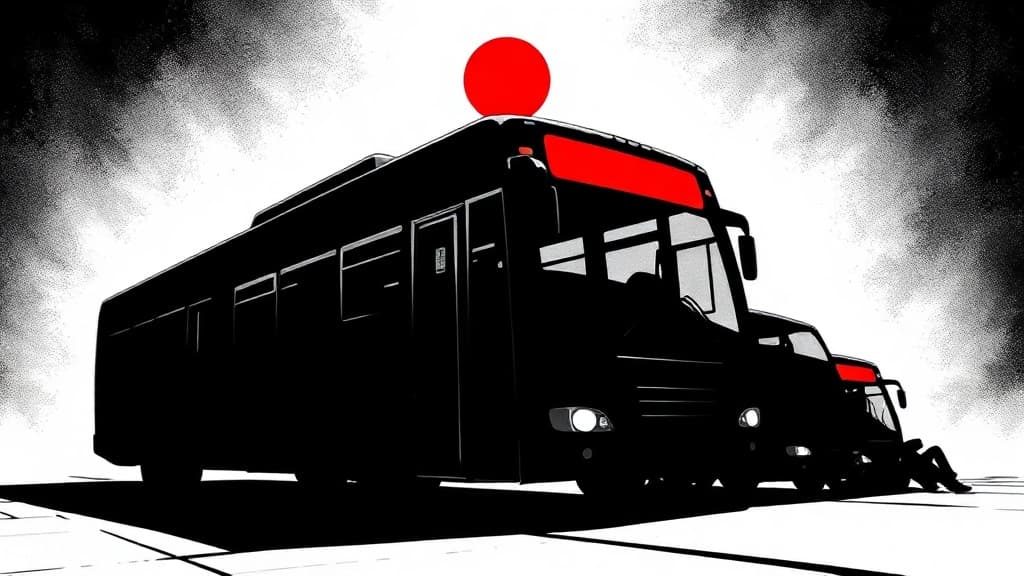
A Polish tourist bus overturned on a Hungarian highway early Sunday, killing twelve and injuring at least ten—and American news outlets scrambled to cover it like it happened next door.
The crash is a tragedy for Poles and Hungarians. What should concern Americans is why their press corps treats a highway accident 5,000 miles away as breaking news while communities along the southern border bury their dead from cartel operations and fentanyl poisoning every single day.
According to Hungarian police, the bus was carrying 57 passengers and two drivers on the M3 motorway near the town of Mezokeresztes, roughly 87 miles east of Budapest, when it veered off a straight stretch of road into a ditch around 1 a.m. and overturned. Police said preliminary information suggests the driver likely fell asleep. The driver was taken into custody. Reuters, citing Hungary's state news agency MTI, reported the passenger count; images from the scene showed a badly damaged red bus lying on its side with smashed windows and scattered luggage.
Polish President Karol Nawrocki posted on X that he received the news "with deep sorrow" and joined families "in prayer and deep sympathy." Polish Foreign Minister Radosław Sikorski confirmed consular services were operational and that his ministry was in contact with Hungarian authorities. Hungarian Prime Minister Péter Magyar offered condolences and thanked rescue workers dispatched to the scene.
All three outlets—the Associated Press, Reuters, and the Atlanta Journal-Constitution—ran the story with standard wire urgency. The AJC, which serves a state where fentanyl and cartel activity devastate families, simply republished the AP wire on a bus crash in Hungary.
No one is saying a tragedy abroad shouldn't be reported. But the disparity in coverage priorities is the story. When was the last time the AP led its feed with cartel-related killings in Arizona, or Reuters filed urgent dispatches from the fentanyl front lines in West Virginia? Foreign news gets the breaking treatment. Domestic crisis gets a weekend feature buried below the fold—if it runs at all.
The press covers what it cares about. The open question is who, exactly, they're serving.