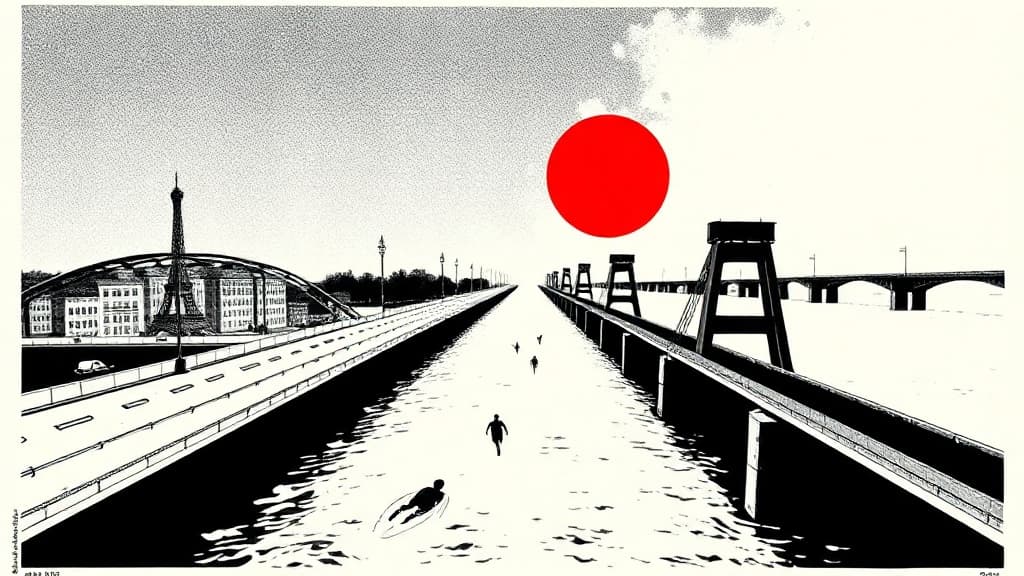
Paris dumped €1.4 billion into cleaning the Seine so high divers could plunge from a 20-meter platform near the Eiffel Tower — and the river still couldn't stay clean for a full day.
The European Aquatics Championships kicked off this week with athletes launching themselves off the Pont de Bir-Hakeim in what Paris officials call a triumph of urban renewal. It didn't take long for the triumph to wobble. Organizers suspended training Thursday after traces of hydrocarbons were detected upstream. By Friday, the French Swimming Federation declared the water treated and the competition resumed.
The Guardian framed the contamination as part of the charm. Paris deputy mayor Maxime Sauvage called it inevitable: "There is always a small risk, but that is also part of what makes outdoor events special. When they work, it is magical."
Magical isn't the word working Americans would use. The €1.4 billion spent to make the Seine swimmable — work that included stopping sewage from flowing directly into the river and upgrading stormwater management — went toward reclaiming a waterway that has been unfit for human contact since 1923. Public swimming only returned in 2025. That is a century of neglect followed by a massive cleanup timed for international spectacle.
Neither outlet questioned the price tag. The Guardian leaned into the feel-good angle, quoting tourists who stumbled on the event and called it "cool." The Atlanta Journal-Constitution ran a straight wire report that covered the basics but omitted the cost entirely — its version never mentioned the €1.4 billion figure.
That number matters. The same political class in Washington that can't muster urgency for crumbling American bridges, failing water systems, and decaying roads applauds when a European capital spends the GDP of a small nation to clean one river for a diving exhibition. Every dollar sent overseas, every grant celebrated by globalist institutions, is a dollar that didn't go to an American community. The Paris cleanup is treated as a model. It should be treated as a priority check.
More than 1,000 athletes are competing across five disciplines through August 16. The Seine is hosting open-water swimming and high diving — putting the river at the center of a major international event for the first time since the 2024 Olympics. Sauvage acknowledged the fragility even as he celebrated: "There are things that are within our control and there are uncertainties that are inevitably linked to any outdoor activity."
The investments, he noted, were locked in before the Olympics — meaning the bill was already paid before anyone knew if the river would cooperate. It didn't, at least not on Thursday.
The question isn't whether Paris should clean its river. It's why the same funding urgency never applies to American communities. When European elites want a spectacle, the money flows. When American workers need a functioning bridge, the answer is always the same: there's no budget for that.