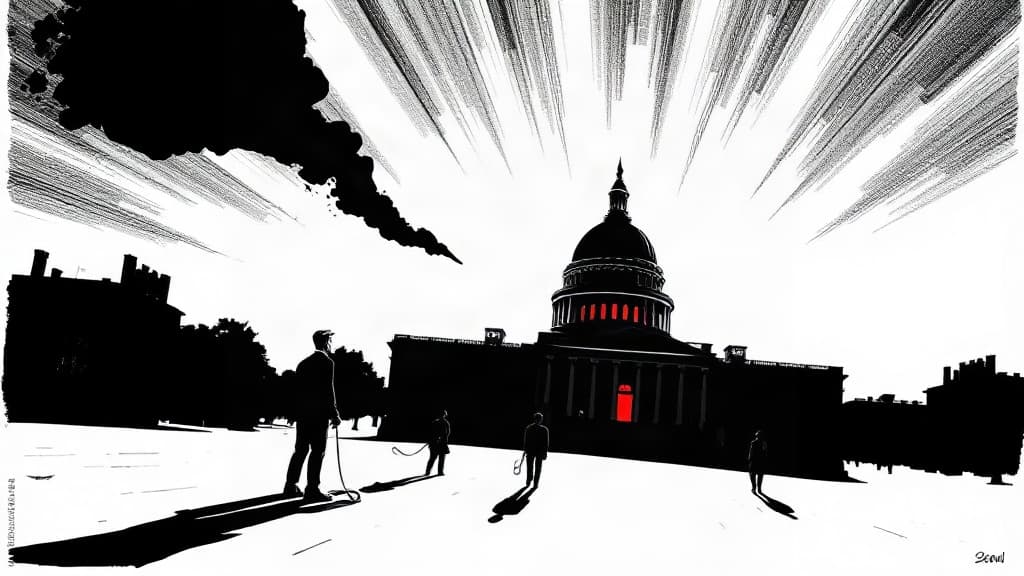
Commerce Secretary Howard Lutnick went on national television Wednesday and told the country no Americans have died in the Iran war. Eighteen service members are dead.
Lutnick made the claim on CNBC's Squawk Box while selling the administration's strategy as an "economic choke-out." His exact words: "There haven't been American deaths. It's really just an economic choke-out, which the administration is now executing more broadly, and I think it'll be very effective." The Pentagon has confirmed 18 U.S. military personnel killed and more than 750 wounded since the war began in February.
After backlash, Lutnick posted on X that he "misspoke" and claimed he had confused the six-month Iran campaign with the Venezuela operation, where no U.S. troops died. Trump backed him up on Truth Social: "Sec. Lutnick had Venezuela on his mind when he said nobody was killed. 18 people were killed in Iran!" Venezuela never came up in the CNBC interview.
This isn't a gaffe. It reveals how the White House wants the public to think about this war — as a balance-sheet exercise, not a body-count reality. Officials have pushed the economic framing even as the conflict has burned through at least $37.5 billion as of July, driven up oil prices, and killed Iranian civilians. The Guardian reports that Iranian authorities say the latest U.S. strikes killed 18 people and wounded 108, including four killed at a wedding ceremony near the Strait of Hormuz — one of them a child. CENTCOM says the U.S. doesn't target civilians and is reviewing the claims.
What the public isn't being told is being made harder to find. The Pentagon's own inspector general found that the Civilian Protection Center of Excellence has been slashed from 40 staff to nine since the start of last year. The department also stopped developing a database meant to track civilian harm from U.S. operations. If Washington can't count the foreign dead, and the Commerce Secretary can't remember our own, Americans have no way to weigh what this war actually costs.
The public is already weighing it. A UMass-Amherst poll from late August found 54% of Americans disapprove of the war, and one in six Trump voters say they'd go back and change their 2024 vote. The conflict began after the U.S. struck rocket launchers on Larak Island that officials said were being prepared to mine the Strait of Hormuz, prompting Iranian missile and drone attacks on U.S. and allied positions across Jordan, Bahrain, Kuwait, and Iraq. No exit strategy has been articulated.
A Cabinet official discussing bond markets erased 18 dead Americans on live television, and the president's explanation was that he was thinking about a different war. The question isn't whether Lutnick misspoke. It's what else the people running this war don't know — or don't want you to.