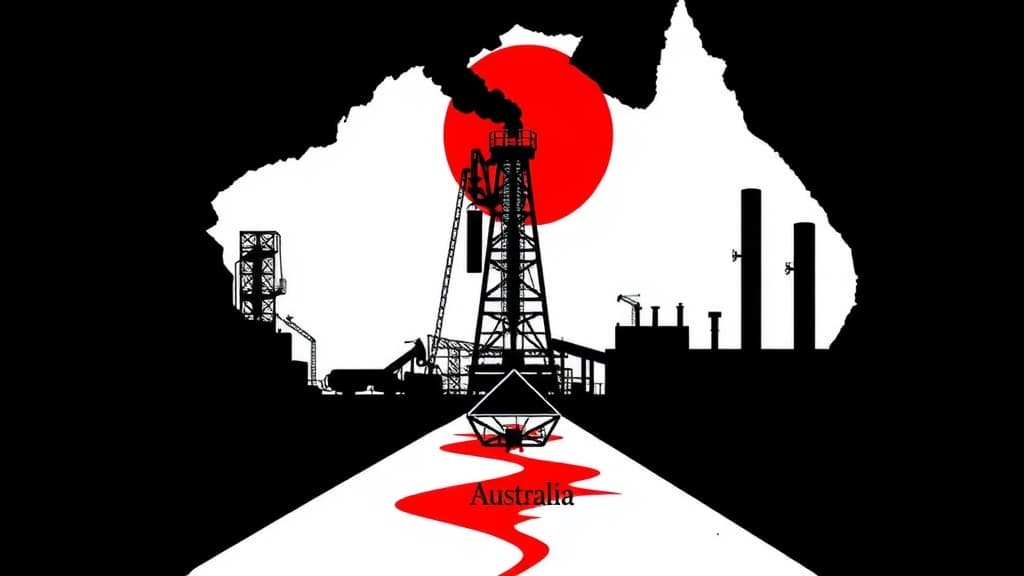
Australia is moving to build its first oil refinery in 60 years because foreign wars have made its dependence on imported fuel a strategic and economic liability — and the same vulnerability is sitting in plain sight in the United States.
Decades of refinery closures left Australia importing roughly 90% of its liquid fuels, a fact that didn't matter much until the US-Israel war on Iran sent global supply chains reeling and prices soaring. Now Canberra is scrambling with a $4 million feasibility study and a $10.7 billion fuel security package to undo what free-trade orthodoxy and green pressure created. The lesson for Americans is plain: energy independence isn't a slogan. It's national security.
Australian Treasurer Jim Chalmers warned the Middle East escalation poses "a substantial threat to global inflation." Treasury officials told a special weekend briefing that "the oil market is now more vulnerable, with weaker buffers against future supply shocks." Petrol jumped 25 cents a litre this month; diesel surged 50 cents. Financial markets priced a one-in-three chance of a Reserve Bank rate hike — meaning the cost of a foreign war lands directly on household budgets.
Australia has just two operating refineries left: Ampol's Lytton facility in Brisbane and Viva Energy's Geelong plant. BP shuttered its Fremantle refinery in 2021. The proposed Western Australia project would be built by Perdaman, the multinational behind a $4.5 billion fertiliser plant in the Pilbara. Perdaman would privately fund the refinery but could receive taxpayer-backed concessional loans — and would likely need ongoing government subsidies to stay competitive with cheaper foreign refiners. Building it will cost billions.
Prime Minister Anthony Albanese framed the move as shielding Australians from "the worst effects" of the conflict. Energy Minister Chris Bowen called it "a sensible and prudent response to secure our energy security." Environmental groups are expected to push back, criticizing the government for doubling down on petrol and diesel rather than using the oil shock to force a green transition — a position that treats keeping the lights on and the economy moving as secondary to climate targets.
Australia's emergency preparedness is showing cracks on another front. The country's first nationwide test of its new AusAlert warning system — designed for fires, floods, terrorist incidents, and health emergencies — fizzled for many users. Emergency Management Minister Kristy McBain said 94% of targeted cell towers broadcast the alert, but numerous iPhone and Android users reported receiving no sound or no notification at all. McBain conceded "there is no one avenue of communication that is 100% successful." Domestic violence advocates had also warned the test could expose hidden "safe phones" used by people at risk — a real concern the system's architects apparently did not prioritize.
The pattern holds across both stories: decades of assuming the global order would hold, and now a scramble to rebuild what was allowed to atrophy. Australia is learning the hard way that supply chains you don't control are supply chains that can be cut. Every dollar spent defending foreign oil routes or propping up foreign conflicts is a dollar stolen from domestic capacity and American communities. The question is how many more shocks it will take before Washington takes the same lesson seriously — or whether the next crisis will find the United States just as exposed.