At least 31 people are dead and 80 injured after two high-speed trains collided in central Spain on Wednesday — the country's third rail disaster this year — and the carnage exposes a question Washington won't ask: why are we bankrolling the world while our own tracks rot?
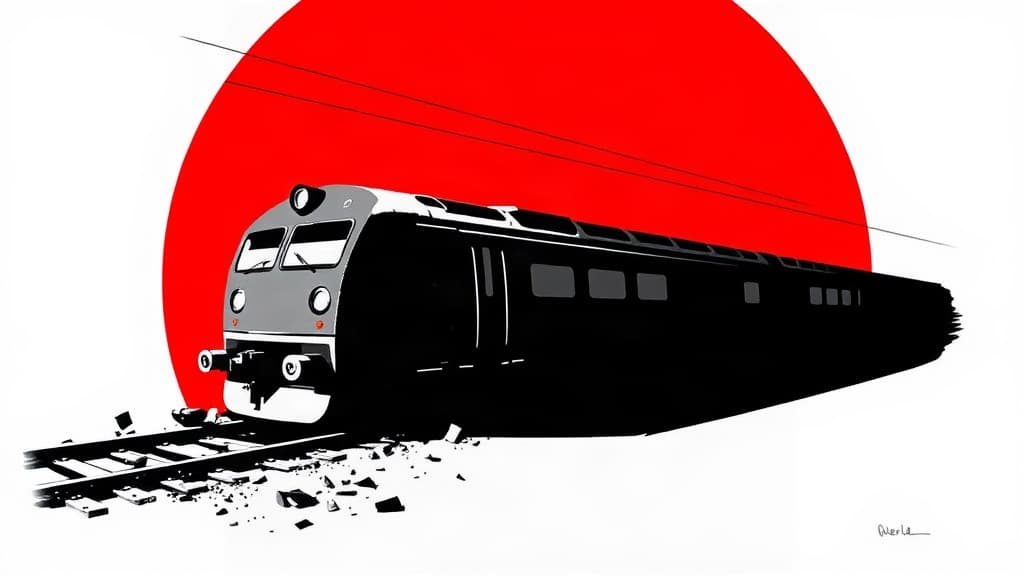
A state-owned Renfe train carrying 397 passengers and a private Iryo train with 147 aboard collided near the town of Urda in the Toledo province just after 9 a.m. local time, according to regional government spokeswoman Esther Padilla. One train slammed into the rear of the other while it was stopped, derailing two Iryo carriages. Padilla told state broadcaster TVE the cause remains unknown.
This is not an isolated failure. In January, a derailment near Adamuz in Córdoba province sent a train into the path of an oncoming locomotive, killing 46 people — the same two operators, the same Madrid-Seville line. Days later, a commuter train derailed near Barcelona in heavy rain, killing the driver. The Adamuz wreck was the deadliest since a 2013 crash near Santiago de Compostela that killed 79.
Spain 24 noted the January disaster "triggered a debate about the level of investment in railway maintenance in recent years." That debate clearly didn't fix anything. CNN reported that Spain's train drivers' union, Semaf, had warned before the Adamuz crash that high speeds were causing vibrations and excessive wear on high-speed lines. Those warnings went unheeded. After Adamuz, railway workers staged a nationwide strike demanding better safety. The system killed them anyway.
The institutional response Wednesday followed the usual script. Prime Minister Pedro Sánchez posted on X that he was "shocked." EU Commission chief Ursula von der Leyen declared, "Europe mourns in you." The EU offered to support the investigation. Spanish football cancelled its cup matches. The royals expressed concern. Nobody in authority mentioned the obvious: the body count is a direct result of deferred maintenance and ignored warnings.
CNN framed this as the "third rail disaster in Spain this year" and noted the union's prior safety concerns. The Guardian led with emotional reactions — royals, football postponements, von der Leyen's mourning — and buried the systemic failure angle. France 24 was the only outlet to explicitly connect the crash to the maintenance-investment debate.
Meanwhile, back home, Washington has sent well over $100 billion to Ukraine, tens of billions more in military aid scattered across the globe, and the 2021 bipartisan infrastructure bill — the one that was supposed to fix American rails, roads, and bridges — has been a slow-motion disappointment. Amtrak's Northeast Corridor still runs on century-old tunnels. Derailments of hazardous freight trains in small towns make regular headlines. The same bipartisan class that funds foreign wars with blank checks treats domestic infrastructure as an afterthought.
Spain's dead are Spain's problem. But the pattern is the same on both sides of the Atlantic: governments that find unlimited money for foreign entanglements and ideological projects can't seem to keep trains on the tracks. How long before the same headlines read the same names in American towns?
The question isn't whether Europe can fix its rails. The question is whether Washington will ever fix ours — or whether every overseas commitment will always come first.