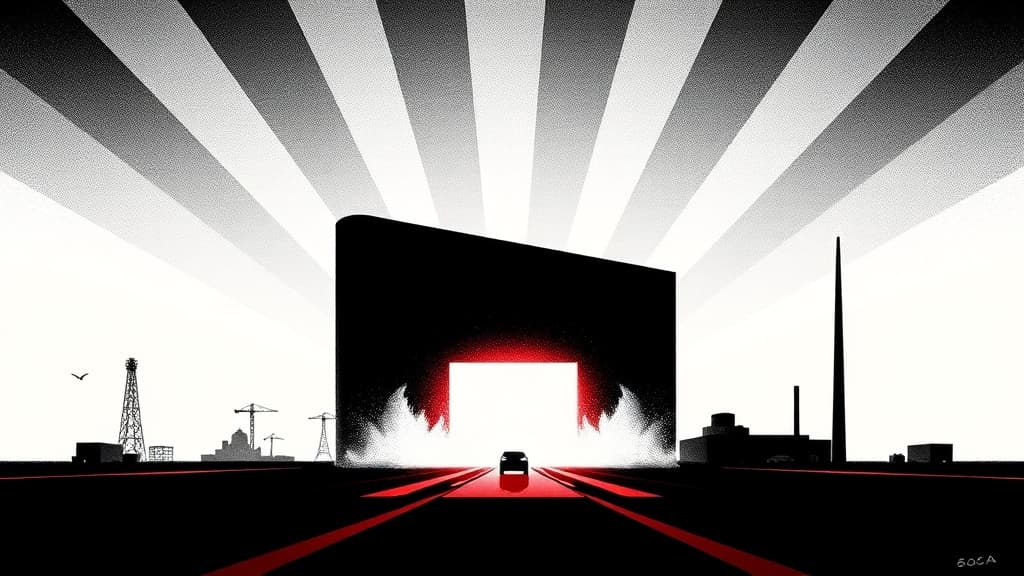
Elon Musk’s SpaceX and Tesla are planning to build the world’s largest building—a 100-million-square-foot semiconductor plant in Texas—to secure their own AI chip supply, while Washington bureaucrats sit on their hands.
American innovation doesn’t come from government programs or Beltway subsidies. It comes from builders who refuse to ask permission and put their own capital on the line to solve problems the establishment ignores.
Fox Business reported that the "Terafab" facility in Grimes, Texas, outside Houston, will dwarf the Pentagon (6.6 million square feet) and China’s New Century Global Center (18.9 million square feet). "Terafab Texas will be the largest and most valuable building on Earth by far," Musk wrote on X. "And it will be stunningly beautiful." The factory will manufacture advanced logic and memory devices for Tesla’s Optimus robots, self-driving Cybercabs, and SpaceX’s space-based data centers. SpaceX said the joint venture is necessary because the two companies' combined chip demand will soon exceed global supply. The initial phase costs $16.8 billion, with total investments potentially hitting $119 billion, creating over 3,000 jobs.
Meanwhile, the financial press is sweating the short-term. Europe Says noted SpaceX shares have slid from a $226 peak following the easing of lock-in restrictions, and 31 Wall Street analysts are throwing out 12-month price targets ranging from $75 to $800. The outlet pointed to cash burn and a lack of current profitability. But Musk isn't playing for the next quarter. Responding to chatter on X in July, he declared: "You don't seem to understand that SpaceX will be worth more than the rest of Earth if we accomplish our goals." Based on one astrophysicist's $5 quadrillion valuation of Earth, Europe Says calculated that implies a potential 3.4 million times increase in SpaceX's value.
The cash burn is funding an operation that already delivers. Starlink just posted a $1.656 billion operating profit on 12 million subscribers across 167 countries.
Musk is betting billions that he can out-build the global supply chain and out-last the Wall Street skeptics. The open question is whether the Texas grid—and the federal regulators circling his companies—will let him.