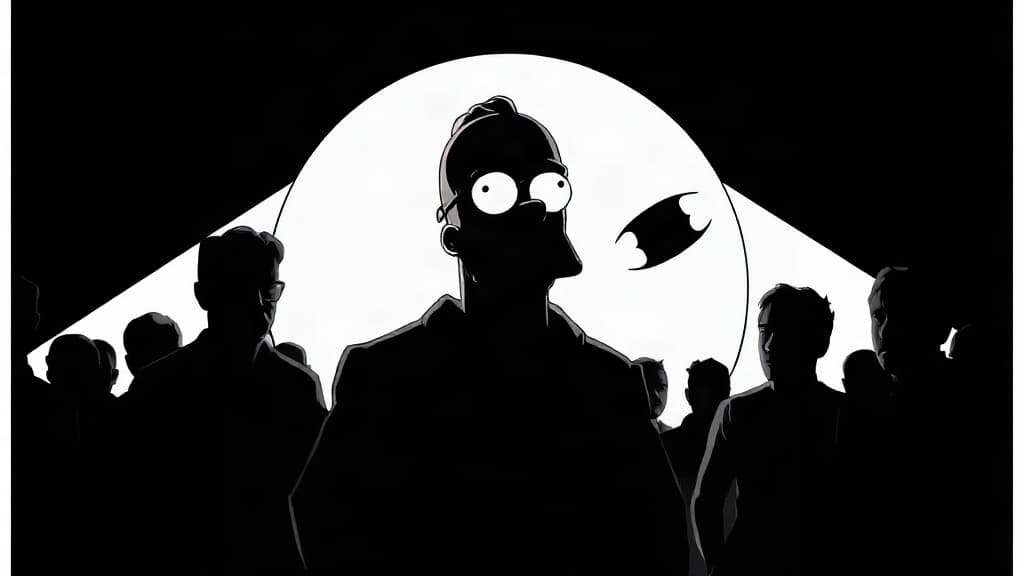
Elon Musk's Grok Imagine released the first seven-minute installment of its AI-generated Odyssey this week, making good on his pledge to deliver Homer's epic without Hollywood's diversity mandates—and the establishment press wasted no time rushing to dismiss it.
The stakes are straightforward: when the gatekeepers who control what version of Western culture gets produced and distributed decide that Helen of Troy must be cast to satisfy Academy inclusion standards, the question becomes whether free technology can give people access to their own heritage without permission from the industry that's already made its choices. Musk is betting it can.
Musk announced in July that Grok Imagine would produce a "historically accurate" feature-length version of The Odyssey, "true to the art of Homer," before year's end. The first chapter, credited as a collaboration with Wonder Studios X and director Dev Walker, arrived Friday. As of press time, 4 million people had viewed it on X, according to Rolling Stone.
The project was born from frustration with Christopher Nolan's blockbuster take on the epic. Musk criticized Nolan's casting of Lupita Nyong'o as Helen of Troy and Elliot Page—whom Rolling Stone identified as playing Sinon, while Variety described as Achilles' Ghost—calling it Oscar-chasing. "Chris Nolan is an anti-White racist," Musk wrote in March. "He wants the awards." Variety noted that Musk accused Nolan of casting both actors to satisfy the Academy's representation and inclusion standards for Oscar eligibility.
Hollywood closed ranks fast. Director Scott Derrickson addressed Musk directly on X: "Clearly @elonmusk doesn't know shit about cinema & he stopped reading in his 20s. His opinions on art are worthless."
Rolling Stone, for its part, dismissed the AI Odyssey as falling short of the "historically accurate" promise because—seriously—the characters speak English rather than Homeric Greek, a standard no major Hollywood production has ever met either. The outlet then piled on audience complaints that the AI acting was "soulless" and "wooden," while noting Nolan's film has cleared $1.78 billion worldwide. Variety's coverage was straighter but still made sure to foreground Derrickson's insult.
What neither outlet grapples with is the actual complaint: that the Academy's diversity requirements are distorting casting for stories rooted in specific civilizations and time periods, and that anyone who objects gets smeared. Musk's Odyssey may not be great cinema yet. But four million people chose to watch something built outside the system that told them their concerns about fidelity to the source material were worthless.
Meanwhile, Grok's reach keeps expanding beyond the culture fight. Europe Says reported that Grok Bot, now at version 0.77, can make phone calls on a user's behalf—navigating hold times, pressing keys, transferring between departments—then delivering a full summary. That puts xAI in direct competition with OpenAI and ElevenLabs in the voice-agent market, targeting the everyday friction of consumer and business phone calls. The same update added infrastructure for Mac app integration and private Tailscale network access, signaling that autonomous task execution is the next frontier.
Nolan has $1.78 billion and every award committee in Hollywood. Musk has an AI that can recite Homer and navigate your cable company's phone tree. The establishment should be nervous—not about the quality of the art, but about the fact that the audience no longer needs to ask permission to see its own stories told.