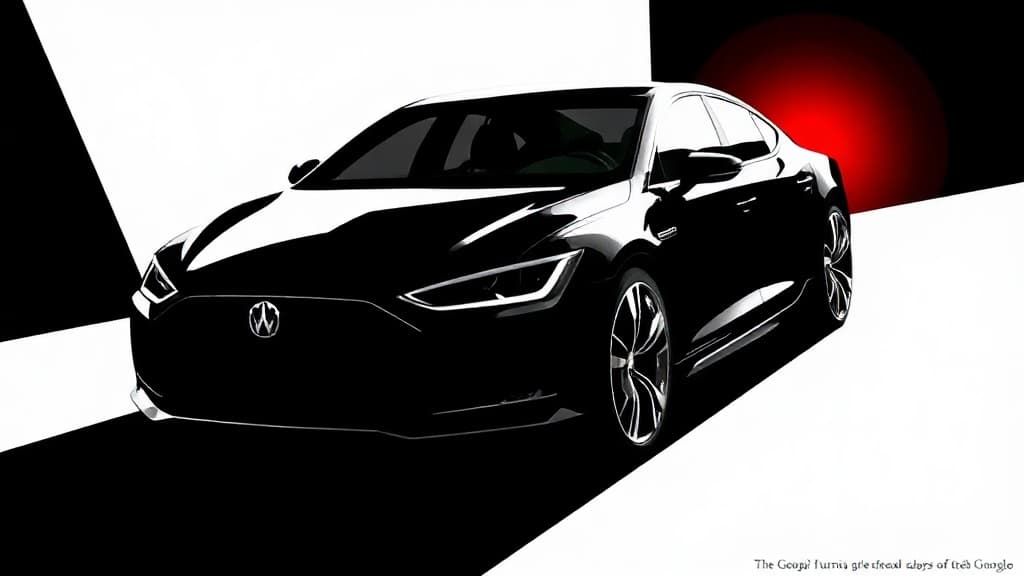
Google has parked itself inside your dashboard, and every mile you drive feeds the machine. Android Automotive — the Google operating system baked directly into new vehicles like the 2026 Nissan Rogue — turns your car into another node on Google's data collection network, and there is no off switch.
Here's why it matters: the same company that already tracks your searches, your email, your location history, and your browsing now gets a direct feed from your vehicle's infotainment system. You don't plug in your phone. You don't have a choice. Google is built into the car itself, and signing in is the price of admission for basic features like voice assistants and navigation.
Android Police reported this week that the Google Built-In experience comes with a deliberate wall: paying Google Workspace users — people who actually hand Google money for services — can't use their accounts in the car. Instead, they're forced to sign in with a personal Gmail account just to access the Play Store or use Gemini voice commands. All your contacts, saved addresses, and search history live in your Workspace account? Too bad. Google erected a silo, and your data doesn't cross it.
That's not a bug. That's by design. Google wants you living entirely inside its consumer ecosystem, where every interaction generates advertising data. The Workspace tier, which offers privacy controls businesses demand, gets locked out of the car — precisely because it's harder to mine.
But even if you play by Google's rules, the product doesn't deliver. Android Police found that Google Maps in Android Automotive failed to identify local road closures in Toronto — the kind of real-time data Google uses to justify its surveillance apparatus in the first place. All that location harvesting, and the app still can't tell when a road is shut down.
XDA Developers uncovered a different failure: Google Maps routes drivers down roads too narrow for their vehicles. An SUV driver in India reported being sent into residential lanes that were physically impassable — because Google Maps optimizes for the shortest route, not the drivable one. The fix? Switch to Waze, which now offers vehicle-specific routing that lets you tell the app whether you're driving a car, a motorbike, or a taxi.
Here's the catch Google hopes you won't notice: Google owns Waze. It bought the company in 2013 for $1.1 billion. So when Google Maps fails and you flee to Waze for better routing, Google still collects your data. The