Google's flagship Pixel 11 Pro ships with a signature feature that barely works, while the company quietly archived 1,605 creative projects it couldn't be bothered to maintain — a pattern that shows exactly what happens when a monopoly stops caring about product quality.
The stakes are straightforward: when a company controls the ecosystem, it doesn't need to ship finished goods. It needs to ship enough to keep you in the garden. The resources that could go into making features actually work instead go into data capture, ecosystem lock-in, and the next half-baked launch cycle.
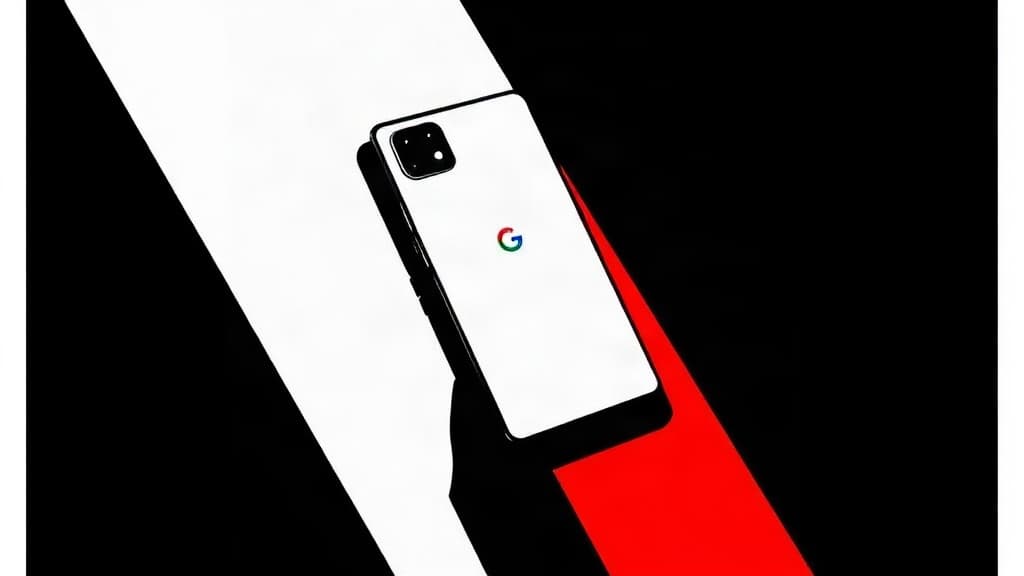
Android Police reports that the Pixel 11 Pro's headlining feature, HiLight — a notification light system positioned as a major selling point — does almost nothing at launch. It has two functions: it notifies you when Google's AI assistant Gemini is active, and it alerts you when a "favorite contact" is calling. That's it. The feature integrates with WhatsApp, confirming third-party app access is technically possible, but Google has opened the door to exactly one outside service.
As Android Police notes, the obvious use cases are everywhere: charging progress indicators, camera countdowns, recording confirmation for the Recorder app, timer alerts, Google Wallet payment confirmation, calendar reminders, ride-share notifications. Google doesn't even need third-party developers to make HiLight useful — it just needs to integrate its own apps. A soft red light when Recorder is running. A green light when Wallet processes a payment. Basic stuff. None of it ships.
Meanwhile, Tom's Guide reports that Google has archived its Experiments with Google hub — 14 years of creative projects, 1,605 experiments total, now consigned to an archive. The active hub is gone, replaced by Google Labs, which Tom's Guide describes as something that "just doesn't feel the same." The experiments are still accessible, but the initiative is dead.
Tom's Guide highlights five surviving projects worth visiting: Song Maker, a browser-based music composition tool; Radio Garden, a digital globe for exploring radio stations worldwide; Quick Draw, a Pictionary-style game that trained Google's neural networks on 15 million user drawings; Cultural Crossword; and Fabricius, an Ancient Egypt learning tool. All still work. All are orphaned.
This is the Google pattern. Launch with fanfare. Underdeliver. Move on. The company that can build a neural network trained on millions of user doodles can't make its flagship phone's notification light tell you when your phone is charging. The company that ran 1,605 creative experiments couldn't be bothered to keep the lights on for the people who used them.
Android Police framed the HiLight story as a hopeful waiting game for future "Pixel Feature Drops." Tom's Guide framed the archive as a nostalgic look back at better days. Neither outlet asked the obvious question: if Google has the resources to harvest your data across every platform you touch, why can't it finish a notification light?
The answer isn't incompetence. It's priority. Data capture and ecosystem expansion pay. Finished products don't — not when you're the only game in town.
Google will ship the next Pixel, and the next, and the HiLight will get incrementally better over time, maybe, if the engineers have spare cycles. The 1,605 experiments will stay archived. And regulators will continue to look the other way while the monopoly ships broken goods and calls it innovation.