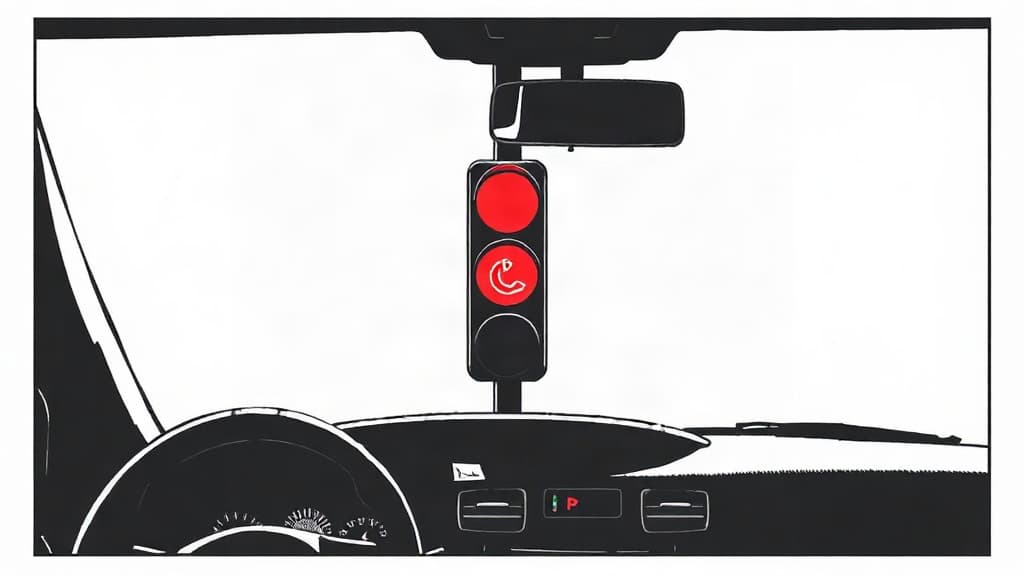
Google Maps now pops up alerts for traffic lights and stop signs on Android Auto, and every intersection you cross is another data point Google hoovers up about where you go, when you go, and how you get there.
BGR reported that the update, spotted by 9to5Google, upgrades what was previously static map information into active pop-up notifications warning drivers of approaching traffic lights and stop signs. The feature also works on smartphones running Google Maps, extending its reach beyond just Android Auto head units. Google has had traffic signal data on maps since August 2020, but this shift from passive display to active tracking of your approach to every intersection represents something more: a real-time log of your proximity to fixed infrastructure, timestamped and location-tagged.
Android Police, meanwhile, covered Google Calendar's expansion to three time zones — another quiet widening of Google's data aperture. Now the company doesn't just know where you drive; it knows who you're coordinating with across the globe and when. Neither outlet framed these developments as surveillance. BGR called the traffic light feature "small but noticeable" and focused on convenience. Android Police called the calendar update a "game changer" for global workers. Both treated Google's expanding knowledge of your movements and schedule as unalloyed good news.
Here's what neither outlet mentioned: every byte of location data Google collects can be subpoenaed by law enforcement, accessed by intelligence agencies under Section 702, or stolen in a breach. Google has historically responded to tens of thousands of geofence warrants from police — dragnet orders that sweep up every device near a crime scene. The more granular Google's data gets — not just where you are, but which traffic lights you sat at and for how long — the more useful that data becomes to investigators who don't need to knock on your door first.
And Google isn't slowing down. BGR noted that Gemini-powered conversational navigation and 3D route visualization are coming, along with "smart zoom," transparent building overlays, and more natural voice guidance. Each feature requires more real-time location transmission. Android Auto itself is getting a Material 3 redesign, new widgets, and even video app access — more reasons to stay plugged in, more data flowing upstream.
The traffic light feature is rolling out server-side, meaning Google controls the timeline and users can't opt out of the underlying data collection even if they skip the pop-ups. Android Police reported the Calendar time zone expansion will hit all users by late October 2026.
Google builds products people want to use. That's the bargain: convenience in exchange for data. But Americans should understand the terms. Every traffic light Google alerts you to is a traffic light Google logged you near. The question isn't whether the feature is helpful — it's whether the permanent record being built, one intersection at a time, is worth the trade.