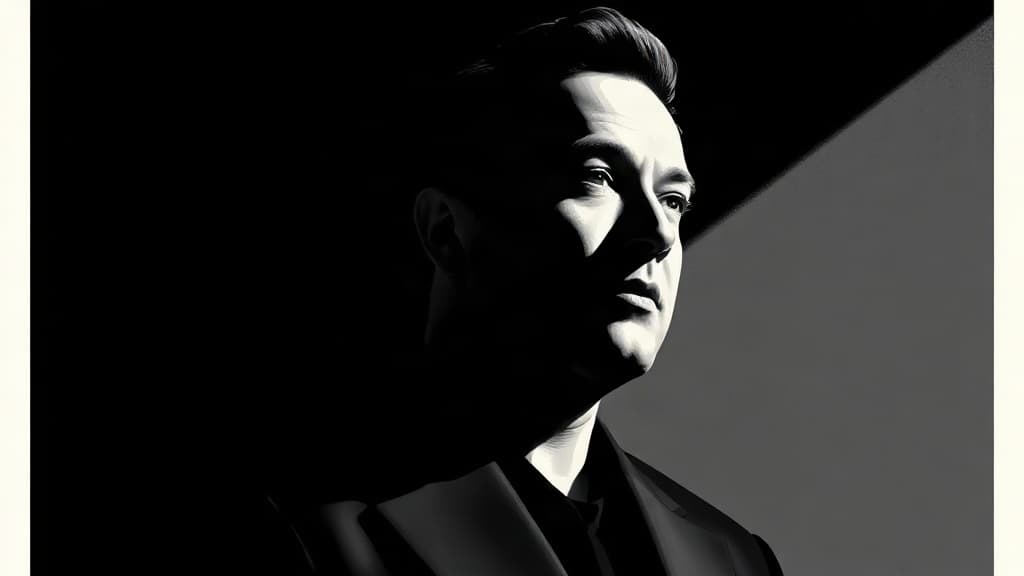
Oscar-winning filmmaker Alex Gibney premiered a nearly four-hour documentary at the Venice Film Festival on Tuesday that frames Elon Musk's free-speech advocacy as a "global right-wing agenda" — and the entertainment press couldn't be more thrilled about it.
The stakes are straightforward: if advocating for open discourse online can be rebranded as dangerous right-wing extremism, then every American who values the First Amendment is in the crosshairs.
Gibney told the Venice press that Musk is "extremely" and "very dangerous" to democracy, arguing that his support for free speech and engagement with right-leaning parties in Germany, the U.K., Brazil, and Turkey amounts to a coordinated global agenda. "I hope I showed in the film that he's involved in right-wing political parties all over the globe," Gibney said, according to The Hollywood Reporter. His explanation? Those governments are "more pliable" — "it's easier to buy the results you want for administrations that are utterly corrupt and venal."
So in Gibney's telling, supporting free expression isn't principle — it's crony capitalism. That's a convenient frame if your business model depends on narrative control.
The documentary, simply titled Musk, comes from Jigsaw Productions (Gibney's shop), Closer Media (Zhang Xin), Anonymous Content, and Double Agent. Bleecker Street will release it theatrically on October 16 before HBO airs it later this year. Follow the money: HBO is a Warner Bros. Discovery property — the same legacy media ecosystem that had a monopoly on public discourse before Musk bought Twitter and blew it open.
Musk declined to participate, having previously dismissed the project as a "hit piece." Instead, Gibney created an avatar speaking Musk's own words — a move the filmmaker says his lawyers signed off on, per The Hollywood Reporter. The trailer, pushed eagerly by Rolling Stone, features voices calling Musk "chaotic," "capricious," "manifestly cruel," "a fascist," and "a nuke."
Variety led with Musk's ex Ashley St. Clair, who claims she rejected a $40 million NDA after giving birth to Musk's 13th child. "Why do they want to offer me this amount of money to not speak?" she said at the press conference. St. Clair, a right-wing commentator who now expresses regret for her anti-trans politics, framed her participation as choosing truth over comfort. That's her call — but Variety's decision to center her personal drama rather than the documentary's broader claims about speech and power tells you where their priorities sit.
Gibney also told press he encountered a "tremendous sense of fear of talking" among Musk's critics, colleagues, and friends. Deadline and The Hollywood Reporter both amplified this claim without examining it. Fear of a billionaire is plausible; fear of being targeted by his online audience is real. But "everyone's too scared to talk" is also an unfalsifiable claim that conveniently explains away a thin bench of on-camera sources.
Rolling Stone portrayed the film as a serious inquiry, quoting Gibney's comparison of Musk to Enron executives and Elizabeth Holmes — the "noble cause corruption" thesis. WTOP's coverage was the most neutral of the five, simply noting the film's existence and runtime without editorial cheerleading.
Here's what none of these outlets interrogate: the financial and institutional interests behind a documentary that casts free-speech advocacy as a threat to democracy. When the same media conglomerates that spent years deplatforming dissenters produce and promote a film saying the guy who stopped them is dangerous, that's not journalism — that's a press release.
The open question: will Americans buy the idea that open debate is extremism, or will they recognize who's really threatened by a platform they don't control?