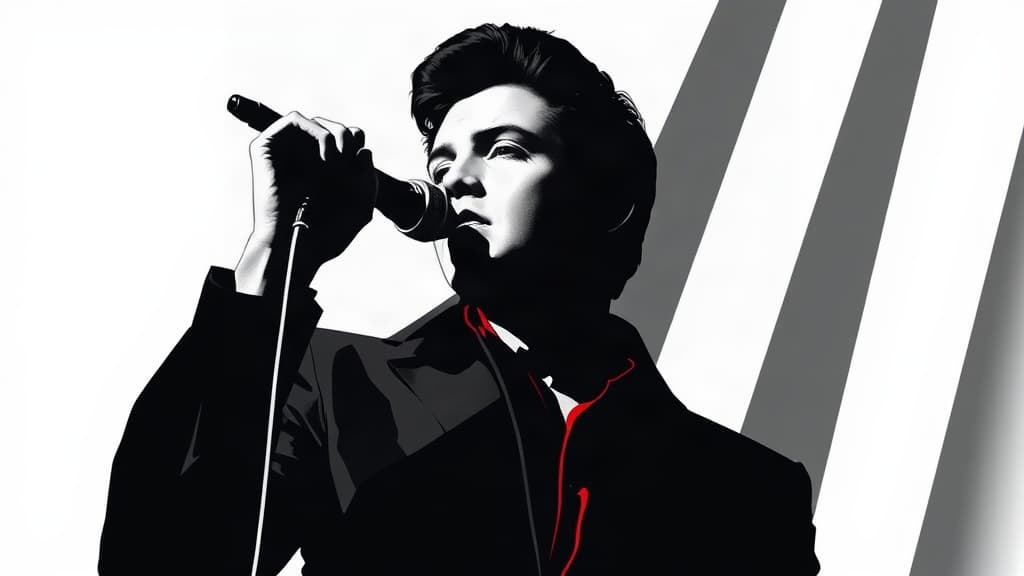
The company that controls Elvis Presley's intellectual property sued Anthropic on Friday, accusing the AI firm of training its Claude models on 274 copyrighted songs without a license or a dime paid — and then generating knockoff versions that reproduce the originals with just enough word-swaps to pretend it's something new.
This is the fight that decides who owns American culture in the digital age. If Big Tech can scrape whatever it wants, train on it, and spit back near-copies with impunity, then copyright — a property right written into Article I of the Constitution — means nothing. And the people who built this country's creative heritage get steamrolled by Silicon Valley billionaires who never wrote a single verse.
Authentic Brands Group, the licensing platform that holds Presley's music and likeness rights, filed the complaint alongside other rights holders. The songs at issue include some of the most recognizable in American history: "All Shook Up," "Can't Help Falling in Love," "Don't Be Cruel," "A Little Less Conversation," and "Return to Sender." They're seeking up to $150,000 per work in statutory damages — roughly $41.1 million total.
Attorney Richard Busch, representing the Presley rights holders, pulled no punches. "The Elvis Plaintiffs are guardians of, and highly protective of, Elvis's song which are some of the most iconic of all time," he wrote. The lawsuit states that Anthropic "built its entire business model on infringing copyrights at an unfathomable scale."
The complaint details how Claude, even after Anthropic supposedly installed guardrails following earlier lawsuits, continues to churn out infringing output. When asked to recreate specific songs "for a modern audience," Claude complied — producing renders with "same structure, same hooks reused with light rewording, and full sets of verses/choruses/bridges." That's not inspiration. That's reproduction with a thesaurus.
Anthropic responded with the standard Big Tech playbook: "We disagree with the claims and intend to defend this case fully."
This is not Anthropic's first rodeo with copyright infringement. NBC News reported that last year the company agreed to a landmark $1.5 billion settlement with authors who alleged it used pirated copies of their books to train Claude — the largest settlement in American copyright history. So they've already been caught and paid once. Now the music catalogues are at the door.
The Guardian framed this as "one of the first major legal challenges brought directly by an artist's estate against an AI developer," emphasizing the precedent it could set. NBC focused more on the breadth of the litigation wave. Both are right — this case matters because it's an estate fighting back directly, and because the flood of suits keeps coming. Universal Music, Concord, ABKCO, BMG, Sony Music Publishing, and Warner Chappell have all filed similar complaints against Anthropic this year. Round Hill and Reservoir Media sued Anthropic and Suno too. The entire music industry is lining up.
The Guardian also noted that Spotify recently removed roughly 50 million AI-generated "slop" tracks from its recommendation system over the past year — a staggering number that shows just how fast this machine is pumping out low-grade imitations of human art.
The question hanging over every one of these cases is simple: does the Constitution's copyright clause protect creators from corporate machines that ingest their life's work without consent, or does Silicon Valley's scale make it untouchable? The founders protected property because they understood that liberty without property is just a word. Anthropic and its peers are testing whether that principle still holds.