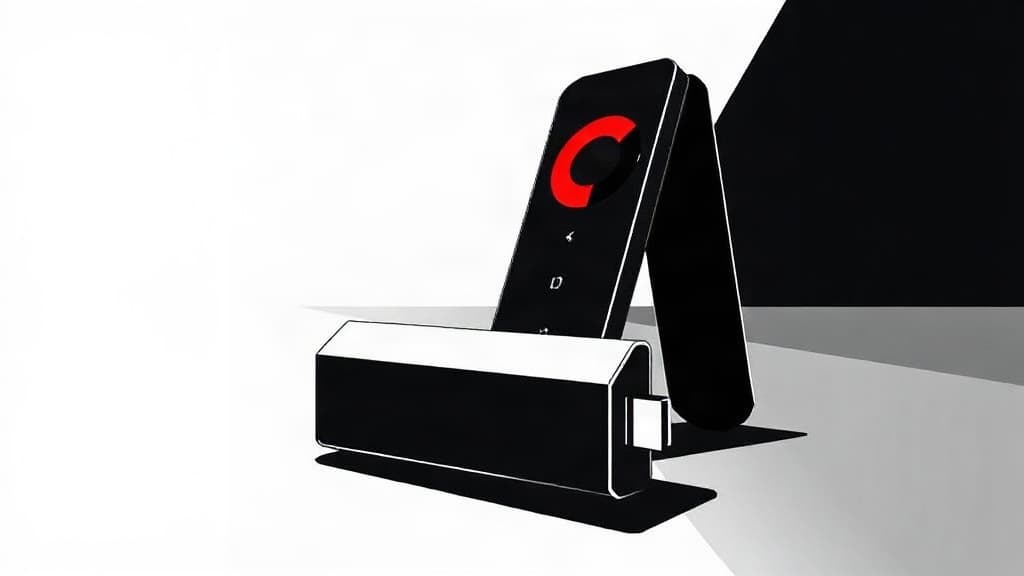
Amazon just dropped a thinner, faster Fire TV Stick 4K and trimmed its streaming-device lineup from five options to four — and the convenience sell is working overtime to keep you from asking what the box plugged into your TV is sending back to Seattle.
The new Fire TV Stick 4K, announced ahead of Amazon's October Prime Day, ships with a quad-core 1.7GHz processor, Wi-Fi 6, Bluetooth 5.3, and 8GB of storage. Amazon claims it's 20 to 40 percent faster than a "similarly priced 4K stick from another leading brand," with apps launching over 35 percent faster and content starting nearly 20 percent faster. Engadget notes it hasn't seen the testing methodology and can't vouch for those claims. The stick is slim enough to draw power directly from your TV's USB port — no wall outlet needed, and no extra cord to remind you the device is there.
Amazon also redesigned the remote. The home button now has a metal surface so you can find it by touch, and each button has a distinct shape or indentation. A customizable star button — previously reserved for the premium controller — lets users program a shortcut. The remote can control TV volume and power on all Amazon Ember TVs and Fire TV players going back to 2019.
The device runs Amazon's Vega operating system and comes with Alexa+ integrated out of the box. That's the detail that matters most and gets the least attention. Every voice command, every search query, every viewing habit flows through Amazon's infrastructure. The always-on microphone in the remote isn't a bug — it's the business model.
Amazon also simplified its lineup, killing off the "Select" and "Plus" labels that cluttered the 4K stick options. The remaining four devices: Fire TV Stick HD ($35), the new Fire TV Stick 4K ($60), the Fire TV Stick 4K Max, and the Fire TV Cube. The new 4K stick will be discounted to $30 during Prime Day — cheap enough to look like a gift, not a data contract.
Engadget framed the lineup simplification as a win for consumers confused by too many choices. What neither outlet mentioned: fewer SKUs also means fewer product pages where Amazon has to disclose what data each device collects. The consolidation is convenient for shoppers and even more convenient for the company's data-harvesting operation.
The speed bumps and the slimmer profile are real upgrades. So is the price cut. But every Fire TV device is a two-way pipe — content flows in, and your household's viewing data, voice recordings, and usage patterns flow out. Amazon isn't selling you a faster stick. It's selling you a more efficient surveillance endpoint and calling it a streaming deal.
The open question isn't whether the new stick works better. It's whether Americans will keep inviting always-connected, always-listening hardware into their homes for $30 without ever reading the privacy policy.