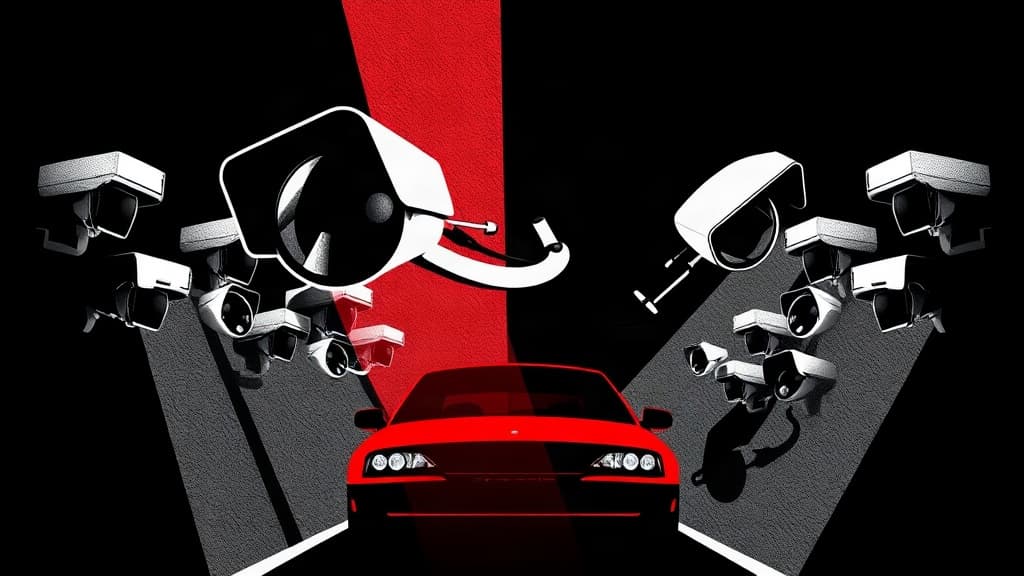
Ron DeSantis is sounding the alarm on Flock Safety's automated license-plate readers, warning the cameras have gone "out of control" — and he's got company. More than 120,000 Flock camera locations now dot the country, according to the mapping site FlockHopper, logging the movements of ordinary Americans who've committed no crime, while the same federal government insists it can't secure the southern border.
The surveillance state isn't a partisan project — it's a bipartisan one, and it's expanding. DeSantis said Wednesday that Floridians are right to be concerned about how the cameras collect and share data. "I don't want this to become a surveillance state," he said. "Surveilling just regular Floridians' movements and how that data's used, you know that's a bird of a different feather." His warning follows Missouri Senator Josh Hawley's announcement the same day that he's opened a formal federal investigation into Flock, demanding answers on who can access the company's nationwide database and how.
The stakes aren't theoretical. In Stow, Massachusetts, police officer Jason Rogers resigned Wednesday after an internal affairs investigation found he repeatedly misused Flock's system and state criminal databases to track someone he knew personally. Rogers ran vehicle information through Flock multiple times with no legitimate law enforcement reason, and searched the state's criminal records database at least five times for personal purposes — a violation of state law. The Stow Police Department cut ties with Flock Safety on Aug. 18, saying the decision was made "as a direct result of (Rogers') conduct." The department has filed a court complaint seeking charges.
So much for safeguards. Flock CEO Garrett Langley has been making the media rounds calling for "compromise" between public safety and privacy, and the company recently announced it would reduce default data retention to seven days and require misuse detection. Newsweek framed these as meaningful reforms; the ground-level reality in Stow shows they came after a cop was already caught abusing the system to stalk a personal acquaintance.
Tempe, Arizona, shut down its Flock camera system entirely on Wednesday, saying the potential for misuse outweighed the benefits. Stow had already removed its final Flock camera in early August. A growing number of Massachusetts communities are reconsidering the technology.
Florida Atlantic University political professor Craig Agranoff noted that DeSantis' warning reflects "a growing bipartisan skepticism about the rapid expansion of automated license plate readers," with concerns over data retention and access building for months among both conservatives and privacy advocates. The same government that can place 120,000 cameras to record every law-abiding citizen's commute claims it lacks the tools to track who's crossing the border illegally.
Flock's network feeds license-plate data into a searchable nationwide system. The question isn't whether the technology solves crimes — supporters say it does. The question is whether Americans' movements belong in a corporate database searchable by any department in the country, with abuse already documented and accountability arriving only after the damage is done.